
Great Wall Motor Opens Brazil Plant, Already Scouting Site for Second
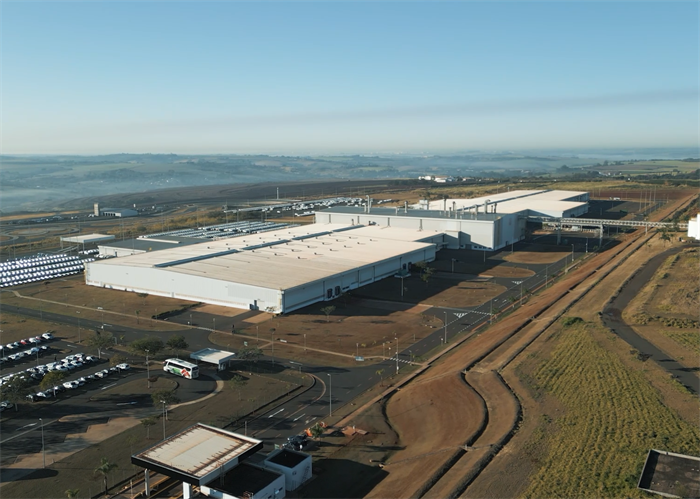
Great Wall Motor Co. (长城汽车) has launched its first factory in Brazil and is already planning a second, a dual move underscoring the Chinese automaker’s aggressive expansion strategy in South America’s largest market. The expansion is part of a 10 billion reais ($1.8 billion) investment plan aimed at establishing a major production and export hub in the region.
The company on August 15 inaugurated its new facility in Iracemápolis, São Paulo, in a high-profile ceremony attended by Brazilian President Luiz Inacio Lula da Silva. The plant, which Great Wall Motor Co. acquired from Daimler AG, will initially produce the Haval H6 and H9 sport utility vehicles and the Power P30 pickup truck.
The announcement sent a clear signal to investors, with the company’s Hong Kong-listed shares surging more than 10% in early trading on August 18. The move positions Great Wall to challenge established players in a key emerging market and reflects a broader trend of Chinese electric vehicle and automaker expansion into Latin America.
While the new facility has an annual production capacity of 50,000 vehicles, company executives have set a far more ambitious long-term sales goal. GWM International Chief Executive Officer Parker Shi stated the company aims to eventually sell between 250,000 and 300,000 vehicles annually in Brazil, combining locally produced and imported models.
Ambitions for a Second Plant
Even with its first facility just online, Great Wall is actively scouting locations for a second factory to support its growth targets. Ricardo Bastos, director of institutional affairs at GWM Brasil, confirmed the company has received proposals from several Brazilian states, including Santa Catarina, Paraná, São Paulo, and Espírito Santo.
“We may eventually consider the option of a larger factory through consolidation, but there is also the opportunity to build a factory from scratch,” Bastos said, noting that a final decision on the second plant is expected from mid-2026 onwards.
Targeting the Mass Market
The potential second plant is key to Great Wall’s strategy of penetrating Brazil’s mainstream auto market. The company’s current offerings are priced above 200,000 reais, while a significant portion of the Brazilian market is centered around the 150,000 reais ($27,700) price point.
A new facility would likely be dedicated to producing a new family of more affordable vehicles to compete in this segment. “We need to have competitive products in this segment, below 200,000 reais,” Bastos said, adding that the new lineup could include a compact SUV and a compact pickup truck.
Investment and Export Hub
The expansion is backed by a 10 billion reais investment pledge through 2032, with 4 billion reais allocated by 2026. This second phase of investment will target the supply chain, new business lines like heavy vehicles, and the local assembly of battery packs.
Bastos highlighted battery assembly as critical for increasing the level of local components in its vehicles. Achieving a higher localization threshold would enable Great Wall to export its Brazilian-made cars tariff-free to other Mercosur trade bloc countries, such as Argentina and Uruguay, transforming Brazil into a regional export hub.
Strengthening Local Operations
Alongside its manufacturing push, Great Wall is deepening its local operational footprint. At the inauguration event, which was also attended by GWM CEO Mu Feng, the company announced the creation of its first South American research and development center. The center will employ over 60 engineers and technicians focused on adapting vehicles for local conditions, with an emphasis on flex-fuel technology.
Reflecting its growing confidence in the market, Great Wall has raised its sales forecast for 2025 to 36,000 vehicles, up from a previous projection of 31,000 units. “Brazil has served as a laboratory for good experiences, both with the brand and in relationships with dealers,” Bastos said.