
Leapmotor's 200% Stock Surge Signals a New Powerhouse in China's EV Race
Zhejiang Leapmotor Technology Co., once a lesser-known name in China’s fiercely competitive electric vehicle market, is rapidly emerging as a formidable contender, with its soaring stock price and record sales validating a strategy centered on aggressive pricing and in-house technology.
The carmaker’s Hong Kong-listed shares have more than doubled since the start of 2025 and surged over 200% from a low in August of last year, outpacing well-known rivals like XPeng Inc. and Xiaomi Corp. Leapmotor delivered over 50,000 vehicles in July—the only Chinese EV startup to do so—and has raised its full-year sales target to 500,000 units, a significant jump from around 290,000 the previous year.
This surge in investor confidence and consumer demand is putting the ten-year-old automaker on track to deliver its first annual profit. Analysts forecast the company’s success will intensify pressure on competitors as it leverages a unique cost-control model to win over price-conscious buyers in a slowing Chinese economy.
Leapmotor’s rising prominence is reshaping the pecking order among China’s EV startups, demonstrating that its focus on vertical integration is a winning formula in a crowded field. The company’s recent performance, including a weekend that saw over 6,300 new orders, underscores its growing market influence.
A Strategy Built on In-House Tech
At the core of Leapmotor’s competitive edge is its deep commitment to vertical integration. The company develops and manufactures approximately 70% of its vehicle components in-house. This includes critical systems like electric drives, motor controls, and advanced electronics.
This strategy gives the automaker significant control over its supply chain and costs, a key advantage over rivals who rely more heavily on external suppliers. “Leapmotor develops and manufactures almost everything in-house, apart from batteries, which gives it more control over costs,” said Rosalie Chen, an analyst at global research firm Third Bridge. As a result, the company has been dubbed a “more affordable Li Auto,” a reference to the premium positioning of Li Auto Inc.
The price difference is stark: Leapmotor’s family-oriented C11 SUV starts at just 148,800 yuan ($20,700), whereas the cheapest vehicle from Li Auto, the L6 SUV, begins at 249,800 yuan. This mass-market positioning has proven highly effective as Chinese consumers become more budget-conscious.
From Domestic Player to Global Contender
Leapmotor is aggressively translating its domestic success onto the global stage. The company became the top exporter among China’s EV startups in the first seven months of 2025, shipping 24,980 units overseas—a sharp increase from the 13,726 units it exported in all of 2024.
A key driver of this international push is its joint venture with European automaker Stellantis NV, which was formalized in May 2024. The partnership, named Leapmotor International, will manufacture and sell Leapmotor models outside of China, a capital-light strategy that contrasts with the approach of rivals like BYD Co, which is building its own overseas factories. In a recent milestone, a vessel carrying over 2,500 new Leapmotor vehicles departed for Europe.
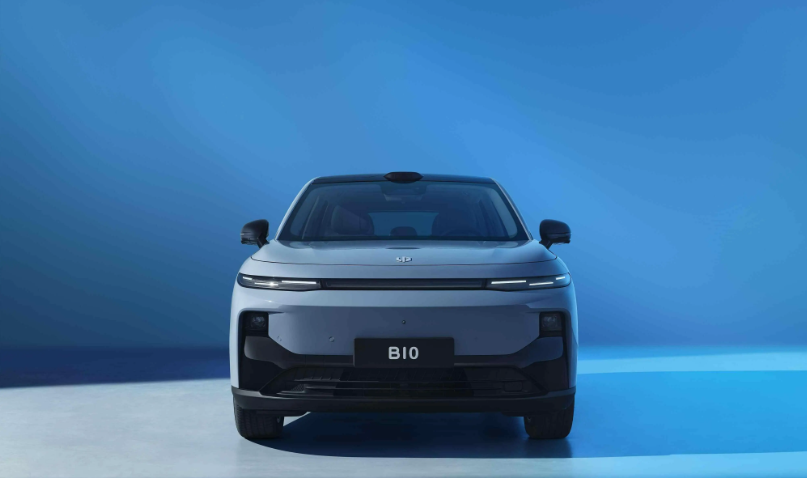
With a presence in over 30 regions and more than 1,500 global sales and service points, Leapmotor plans to expand its international lineup with the launch of its B10 model in overseas markets this September. “Export traction and software monetization could serve as near-term catalysts, reinforcing Leapmotor’s transition from a domestic player to a scalable global EV brand,” said Gary Tan, a fund manager at Allspring Global Investments.
The Road Ahead: Scalability and Profitability
Despite its impressive growth, Leapmotor faces challenges in maintaining its momentum and achieving sustained profitability. The company is forecast to report its first annual net income of 558 million yuan for 2025, according to a Bloomberg survey of analysts, with its first-half results due Monday set to provide a crucial progress update.
The primary hurdle will be achieving greater scale. Analysts note that while Leapmotor has captured a significant share of the mass market, its long-term valuation will depend on its ability to expand successfully.
“To reach the market capitalization of more established Chinese EV peers, it must demonstrate scalability across more segments in the China EV space and move toward the one-million-unit inflection point, which many segment-focused EV makers struggle to cross,” said Allspring Global’s Tan. Investors will be watching closely to see if Leapmotor's cost-effective model can propel it past this critical threshold and solidify its position as a long-term industry leader.