
Hesai Targets Hong Kong IPO After Reaching Profit Milestone
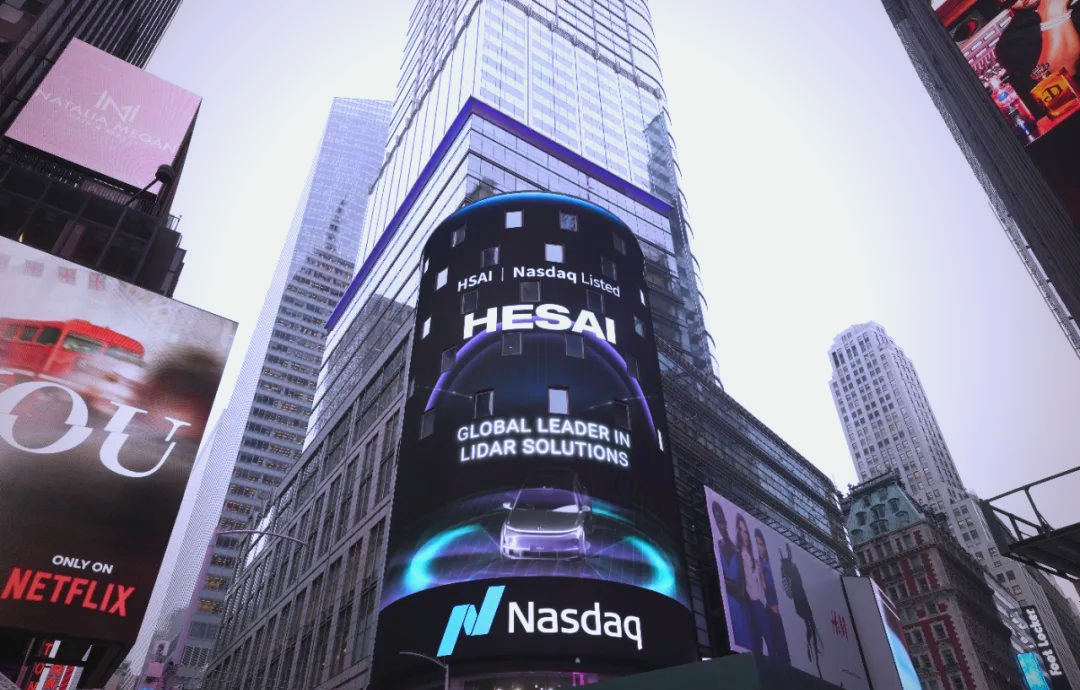
Global LiDAR leader Hesai Group is launching a Hong Kong initial public offering, pursuing a dual listing to fuel growth just as it reaches a critical profitability milestone while navigating intense competition and geopolitical headwinds.
The Shanghai-based company, already listed on Nasdaq since February 2024, plans to offer 17 million Class B shares under the stock code “2525”. The offering has a maximum price of HK$228(US$ 29) per share, as Hesai seeks to tap into a new pool of capital amid its ambitious expansion.
The move comes as Hesai solidifies its market dominance. According to Frost & Sullivan, it was the world’s largest supplier of light detection and ranging sensors by revenue from 2022 to 2024. Its sensors are key components in popular electric vehicles from automakers including Xiaomi and Li Auto.
Despite its market leadership, the listing follows a long period of unprofitability. The company posted its first-ever quarterly net profit in the second quarter of 2025, signaling a potential turning point after years of heavy investment and significant losses in its bid to lead the global autonomous driving sensor market.
From Red Ink to Black
Hesai’s journey to its Hong Kong listing has been marked by rapid growth coupled with substantial losses. The company’s revenue grew from RMB 1.20 billion yuan (US$166 million) in 2022 to RMB 2.08 billion yuan in 2024, but it accumulated net losses of nearly 900 million yuan over the same period. This trend finally reversed in the second quarter of 2025 when Hesai reported a net profit of 44.1 million yuan, marking a significant operational breakthrough for the firm and the broader LiDAR industry.
Winning Through Scale
The company’s path to profitability is built on a "volume-price-profit" strategy, underpinned by massive research and development spending that exceeded 2 billion yuan between 2022 and 2024. By securing high-volume contracts with leading Chinese automakers like BYD and international clients including a new Toyota Motor joint venture model, Hesai achieved significant economies of scale. This allowed it to drastically reduce prices—its flagship ATX sensor now costs around $200—making LiDAR technology accessible for mass-market vehicles. This cycle of increasing volume, lowering costs, and expanding market share has established Hesai as the only profitable LiDAR company globally.
Concentration Risks and Geopolitical Headwinds
While Hesai’s commercial strategy has been successful, its financial reports reveal underlying risks. The company exhibits a strong dependence on a small number of major clients, with its top five customers accounting for 68.3% of its revenue in the first quarter of 2025. A shift in orders from any of these key partners could significantly impact its bottom line.
Furthermore, its accounts receivable nearly doubled from 485 million yuan in 2022 to 958 million yuan by the end of March 2025, raising concerns about potential bad debt if its customers face financial difficulties. The company also faces challenges in the U.S., where it was targeted by a short-seller report in March 2025 and was added to a Pentagon list of "Chinese military companies" in January 2024, a designation Hesai is currently appealing.
Robotics as the Second Growth Engine
To counter these risks and fuel future growth, Hesai is increasingly turning to the robotics market as its "second growth curve." Founder and CEO Yifan Li has noted the sector's vast potential, remarking, "You can't drive two cars at the same time, but you can have many robots working for you simultaneously." The strategy is already showing results, with robotics-related deliveries surging 743.6% year-over-year in the second quarter of 2025, far outpacing its automotive ADAS business. This segment, which includes partners like Unitree Robotics, promises higher profit margins due to greater demand for customization and lower price sensitivity, positioning it as a key future profit center for the company.