
Honor Enters Humanoid Robotics Race as Billions Flood China's Embodied AI Sector
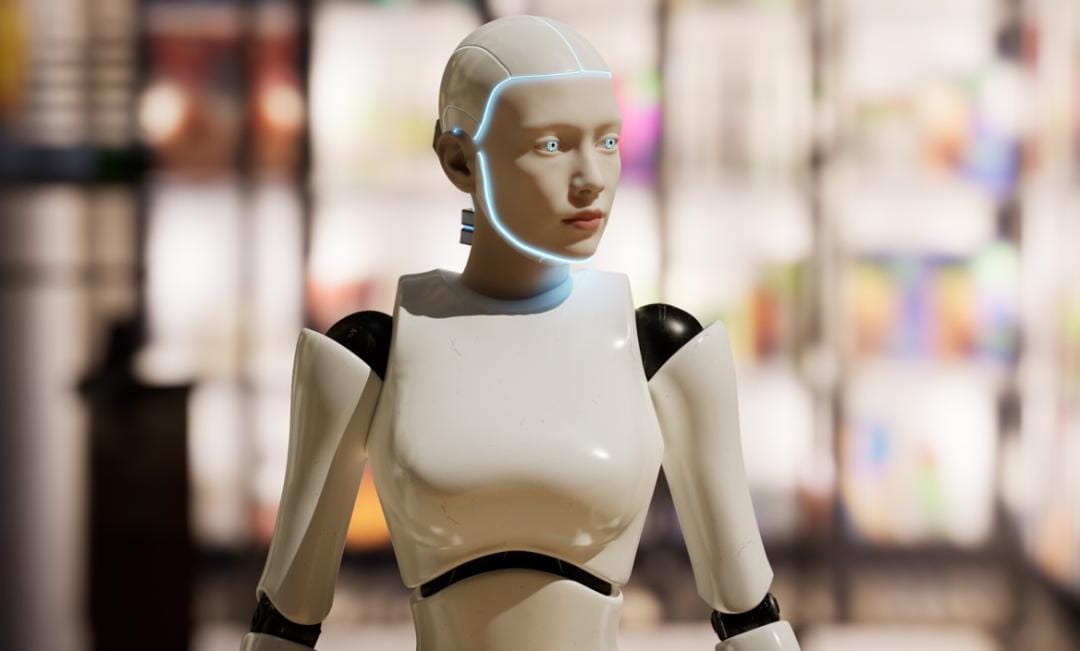
China's smartphone maker Honor Device is set to unveil its first humanoid robot next week, marking a significant strategic pivot for the handset brand and underscoring a broader capital surge into China's embodied intelligence sector that shows no signs of slowing.
The debut, scheduled during Mobile World Congress 2026 in Barcelona beginning March 1, will position Honor as one of the few consumer electronics manufacturers to develop a self-designed humanoid robot, targeting the mass consumer market. The announcement coincides with a wave of billion-yuan funding rounds that have swept the sector since the start of 2026, with total investment in embodied intelligence and humanoid robotics already exceeding RMB 20 billion yuan (approximately US$2.75 billion) across at least 20 deals globally in January alone.
The convergence of smartphone capital, autonomous driving talent, and top-tier academic expertise into a single sector signals a structural shift in how China's technology industry views humanoid robotics — no longer a niche research pursuit, but a commercially viable frontier attracting mainstream industrial players.
Honor's Strategic Pivot: From Handsets to Humanoids
Honor's entry into robotics is not impulsive. The groundwork was laid in early 2025, when the company underwent a leadership transition — founder and former CEO Zhao Ming stepped down citing health reasons, replaced by Li Jian, a former senior executive overseeing Huawei's overseas operations and Honor's human resources.
Li moved quickly to redefine Honor's trajectory. At MWC 2025 in March last year, he unveiled the HONOR ALPHA PLAN, committing more than US$10 billion over five years to build a global AI terminal ecosystem. Under this framework, AI and robotics were designated as core strategic pillars.
Within a month, Honor established a New Industries Incubation Division, housing multiple dedicated laboratories: an Embodied Intelligence Lab, an Embodied Data Lab, an Interactive Security Lab, a Powertrain Lab, and a Bionic Body Research Lab. The company simultaneously initiated deep collaborations with leading robotics firms, top universities, and research institutions.
By May 2025, Li publicly confirmed Honor's formal entry into robotics at the launch of the Honor 400 series. At the event, he disclosed that a robot running Honor's proprietary motion control algorithm had achieved a speed of 4 meters per second — faster than the then-reigning champion of a robot marathon competition, which the company claimed broke an industry record.
Talent War: Million-Yuan Salaries Signal Serious Intent
The scale of Honor's ambition is perhaps most legibly expressed through its hiring activity. Job listings on recruitment platforms show that Honor began posting robotics positions as early as February 2025, with openings spread across Beijing, Shanghai, and Shenzhen.
The roles span the full engineering stack: embodied AI architects, powertrain engineers, dexterous hand designers, motion control algorithm specialists, and perception-and-planning algorithm experts, among others. Compensation packages listed on Boss Zhipin indicate annual salaries ranging from RMB 640,000 to RMB 1.12 million (approximately US$88,000 to US$154,000).
Internal sources indicate that the salary structure for robotics software roles within the New Industries Incubation Division follows a formula of (N+4)·15, where N represents years of experience. For senior engineers, this translates to annual compensation comfortably in the seven-figure range in renminbi terms.
To contextualize the competitiveness of these packages: according to a 2025 Robotics Industry Talent Development Report published by Zhilian Recruitment, the average monthly salary for robotics algorithm engineers stood at RMB 25,368, rising to RMB 33,665 for those with more than five years of experience. Honor's offering sits materially above these benchmarks, reflecting the premium the company is willing to pay to attract scarce talent in a rapidly tightening labor market.
The same report noted that humanoid robotics job postings surged 409% year-on-year in the first five months of 2025, while the number of applicants rose 396% — a supply-demand imbalance that is driving compensation inflation across the sector.
The Robot Phone: A New Product Category
Alongside the humanoid robot, Honor will introduce what it describes as the industry's first "Robot Phone" — branded ROBOT PHONE — at the same March 1 event. The device reportedly integrates AI smartphone capabilities, embodied intelligence functions, and high-definition imaging, positioning it as a convergence product that blurs the boundary between mobile hardware and robotic systems.
The dual launch reflects Li Jian's stated vision that the AI era will fundamentally reshape the form factor of terminal devices, and that Honor intends to build multiple growth curves beyond its core smartphone business.
Notably, former CEO Zhao Ming, after a period of recovery, has re-entered the technology arena through Qianli Technology, a startup focused on embodied intelligence and the intersection of AI and automotive technology — a parallel trajectory that suggests the robotics opportunity is compelling enough to attract even those who have stepped back from frontline corporate leadership.
Capital Flood: Billions Bet on Embodied Intelligence
Honor's move arrives amid an extraordinary concentration of investment activity. Several funding rounds completed in early 2026 illustrate the depth of capital conviction in the sector.
ACE ROBOTICS, founded in July 2025, recently closed an angel round led by Ant Group, with participation from Qiming Venture Partners, Jinjing Capital, Hony Capital, Lenovo Capital and Incubator Group, and SJTU's endowment fund Hanyuan Asset, among others. The company's draw stems from its founding team: Chairman Wang Xiaogang is a co-founder and executive director of SenseTime and president of its autonomous driving unit; Chief Scientist Tao Dacheng is a distinguished university professor at Nanyang Technological University in Singapore and a fellow of the Australian Academy of Science, the European Academy of Sciences, IEEE, ACM, and AAAS.
Zhijian Power, founded around the same time as Daxiao, has completed four funding rounds as of January 2026, with backers including Tencent Investment, Alibaba, Legend Capital, and Lanfeng Capital. Its current valuation is approaching unicorn status. The founding team hails from Li Auto: CEO Jia Peng previously led autonomous driving R&D at Li Auto, while Chairman Wang Kai served as Li Auto's Chief Technology Officer.
AI² Robotics, established in Shenzhen in 2023, just closed a Series B round exceeding RMB 1 billion yuan (approximately US$138 million), pushing its valuation above RMB 10 billion. Its founder Guo Yandong previously worked at Microsoft's core AI division in the United States before serving as Chief Scientist and R&D executive at Xpeng Motors and OPPO.
Other notable transactions include a RMB 1.5 billion Series B for dexterous hand specialist Linkerbot; a nearly RMB 2 billion raise by Spirit AI backed by Yunfeng Fund, Sequoia China, and TCL Ventures, valuing the company above RMB 10 billion; and a RMB 1 billion Series B for Xinghaitu.
Autonomous Driving Talent Becomes Robotics Fuel
A pattern emerges across the newly funded cohort: the majority of founding teams are veterans of China's autonomous driving industry. The technical overlap — sensor fusion, motion planning, real-time control algorithms, and large-scale data pipelines — has made autonomous driving engineers among the most sought-after recruits in humanoid robotics.
This talent migration carries strategic implications. It suggests that the embodied intelligence sector is not building from scratch, but is instead absorbing and repurposing a mature engineering workforce developed over a decade of investment in self-driving technology. The result is a compression of development timelines and a rapid elevation of baseline technical capability across new entrants.
For Honor specifically, the challenge will be to translate smartphone manufacturing scale and consumer brand equity into a credible robotics platform — a combination no major handset maker has yet demonstrated at commercial scale. The MWC 2026 debut will offer the first public test of how far the company has progressed, and whether its hardware ambitions can match the capital and talent it has committed to the endeavor.