
China's Automakers Are Teaching Europe the PHEV Lesson It Once Ignored
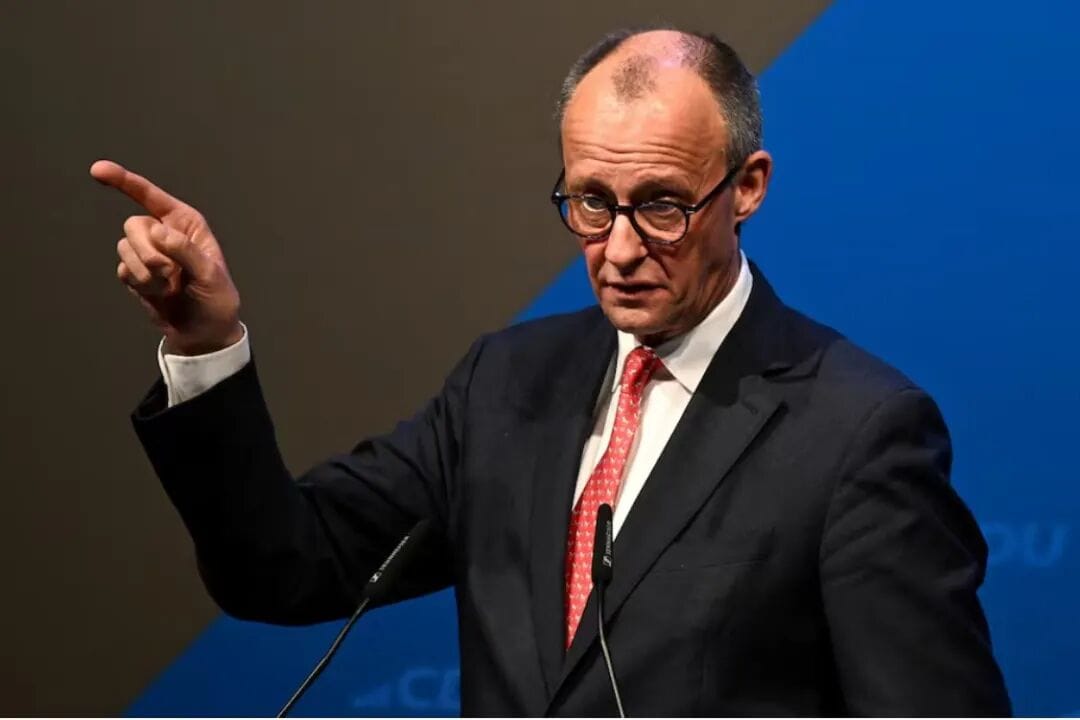
China's automakers are reshaping the European automotive landscape with a technology that the continent's own manufacturers largely abandoned — plug-in hybrid electric vehicles. As Chinese brands collectively posted 80% sales growth in Europe in January 2026, capturing a 7.4% market share, the reversal of fortunes in Sino-German automotive trade has become impossible to ignore, prompting German Chancellor Friedrich Merz to lead an unprecedented business delegation to Beijing.
The visit, Merz's first to China since taking office, carried a delegation that included the chief executives of Volkswagen, BMW and Mercedes-Benz, alongside roughly 30 of Germany's most senior business leaders. The optics were unmistakable: the country that once exported its automotive expertise to China through joint ventures is now seeking terms of engagement with a resurgent competitor. Merz said publicly that "fair and transparent trade" was a prerequisite for successful Sino-German relations, calling for dialogue on "systemic overcapacity, export restrictions and market access barriers."
The stakes are concrete. German auto exports to China have collapsed from nearly €30 billion three years ago to below €14 billion in 2025, according to the German Economic Institute — a decline that has materially weakened one of Germany's most strategically important industries. Meanwhile, Chinese brands sold 70,465 vehicles in Europe in January alone, gaining ground even as the overall European market contracted 3.6%.
A Trade Relationship in Structural Reversal
The deterioration in Germany's automotive trade position with China is not cyclical noise. It reflects a structural shift in where competitive advantage now resides in the global auto industry.
German automakers built their dominance in China over decades through joint ventures that transferred manufacturing know-how and brand prestige into a fast-growing market. That model is now under pressure from two directions simultaneously: Chinese domestic brands have achieved product parity — and in some dimensions, superiority — in the electric and intelligent vehicle segments, while Chinese brands are actively expanding into Europe, Germany's home market.
Mercedes-Benz China CEO Hubertus Troska acknowledged the pressure in blunt terms this month: "All sectors are facing price wars and new entrants — the market structure has changed dramatically."
The numbers bear this out. In January 2026, BYD registered 2,069 vehicles in Germany, a 1,000% year-on-year increase, surpassing SAIC's MG brand to become the best-selling Chinese automotive brand in the German market. Across Europe, BYD's total January sales reached 17,630 units, up 173% year-on-year.
SAIC's MG retained its overall European lead at 18,537 units, though a 3.8% decline narrowed its advantage considerably, with the MG ZS compact SUV recording a 20% volume drop. Chery posted the fastest growth among Chinese brands, with 17,106 units sold — a 354% increase — through a multi-brand strategy encompassing Jaecoo and Omoda. Geely Automobile ranked fourth with 5,079 units, while Leapmotor placed fifth at 4,249 units, with a 409% growth rate.
The PHEV Wedge: Exploiting a Market Gap European Automakers Left Open
The most analytically significant element of China's European advance is not raw volume growth, but the technology vector driving it. Plug-in hybrid vehicles — long dismissed in European industry circles as a transitional or peripheral technology — now account for 29% of Chinese brand sales in Europe, up from just 11% a year earlier.
This is not coincidental. It reflects a deliberate strategic calculation that has exposed a gap European manufacturers created themselves. After Jeep Renegade PHEV and Renault Captur PHEV were discontinued, the small SUV PHEV segment in Europe was effectively abandoned. Dataforce data shows that in 2025, the small SUV segment sold over 2.24 million vehicles in Europe, yet PHEV variants accounted for just 3,602 units — a penetration rate of 0.16%.
BYD identified this vacuum and is moving to fill it. Its Seal U model (sold domestically as the Song Plus) became Europe's best-selling PHEV in 2025 with 79,518 units — a nearly 600% increase — and extended that momentum into January 2026 with 7,390 units, a 178% gain, ranking second only to the Skoda Kodiaq in the mid-size SUV segment. The result validates a hypothesis that European automakers had implicitly rejected: that consumers would embrace PHEVs if the products were genuinely compelling.
BYD's forthcoming Atto 2 PHEV (Yuan UP) targets the small SUV gap directly. The model carries an 18 kWh battery with approximately 90 km of WLTP electric range and a combined range exceeding 1,000 km. In Germany, after accounting for BYD's €11,500 manufacturer incentive and approximately €4,500 in government subsidies, the effective price reaches €22,990 — against a starting price above €35,000 for comparable Toyota Yaris Cross and Volkswagen T-Roc hybrid variants.
BYD Germany product director Florian Ulbrich offered a data point that frames the product's positioning: only 2% of Germans drive more than 100 km per day. A 90 km electric range, he argued, covers the daily commute for the vast majority of users. "For most people in Germany, 90 km of range means they can drive in pure electric mode most of the time," he said.
There is also a tariff dimension to BYD's PHEV emphasis. The European Union currently imposes a 27% tariff on Chinese battery electric vehicles, while PHEVs face only a 10% levy. Until BYD's Hungarian factory reaches full capacity — where the Dolphin Surf and Atto 2 BEV are slated for local production — PHEV models serve a dual commercial function: filling market gaps while partially insulating the business from trade barriers.
German Automakers: Structural Constraints on the Recovery Timeline
German automakers are not passive observers. Volkswagen Group's technology partnership with Xpeng, including a roughly $700 million investment in 2023 and a joint venture with Horizon Robotics, represents a genuine effort to absorb Chinese expertise in intelligent vehicle systems. BMW's joint venture with Desay SV Automotive is similarly aimed at strengthening smart cockpit capabilities in China. Mercedes-Benz has announced increased investment in hybrid powertrains as it reassesses its electrification roadmap.
On the supply side, CATL and EVE Energy have established manufacturing operations in Germany, offering European automakers localized battery supply. Huawei Technologies has reportedly engaged with certain European brands on intelligent driving solutions — a form of technology procurement that could help compress the catch-up timeline.
Yet the most fundamental constraint facing German automakers is organizational, not technological. A new vehicle program in Germany typically requires three to five years from concept approval to mass production. Chinese automakers have compressed that cycle to approximately 18 months. This gap cannot be closed through supplier partnerships alone; it requires changes to decision-making structures and development culture that take considerably longer to implement than any single product deal.
Merz's visit can be read, in part, as an attempt to buy time — to stabilize the commercial relationship while German industry undertakes the deeper restructuring required to compete. The German automotive industry association had previously urged the chancellor to engage Beijing directly on these issues. His itinerary in China, which included visits to a Mercedes-Benz EV factory and Siemens Energy facilities, was itself a signal: German companies remain deeply invested in China, and the bilateral economic relationship retains significant mutual stakes.
A Market Relationship Rebalancing in Real Time
What is unfolding in European automotive markets is more than a competitive shift in one product category. It represents the maturation of a technology transfer that once flowed exclusively from West to East, and is now operating in both directions.
Chinese automakers are using European markets to validate their product definition capabilities against sophisticated, demanding consumers. German automakers are using their China R&D centers — increasingly repositioned from local adaptation to global development — to absorb lessons in electrification speed and software integration. The interaction is no longer pedagogical in one direction; it has become genuinely bilateral.
For investors, the near-term read is straightforward: Chinese brands have identified and are systematically exploiting structural weaknesses in European competitors' product portfolios, and the tariff environment, while restrictive on BEVs, does not fully protect the PHEV segment where Chinese brands are currently most aggressive. The medium-term question is whether German automakers can accelerate their development cycles sufficiently to reclaim lost ground — or whether the market share gains Chinese brands are recording in January 2026 represent the early stages of a durable realignment.
The answer will depend less on diplomatic outcomes from Merz's Beijing visit than on whether German industry can match the organizational velocity of its Chinese competitors. On current evidence, that gap remains wide.