
Honor's Identity Crisis Deepens as Market Share Slips to 10.6%, IPO Stalls
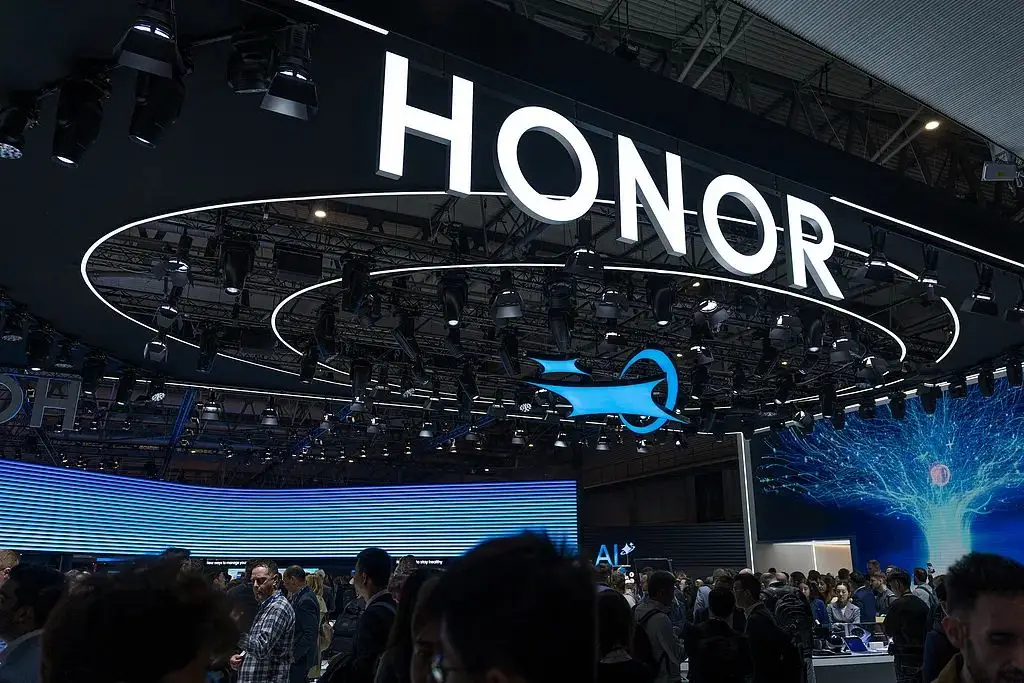
Honor is losing the battle for relevance in China's smartphone market on three simultaneous fronts — market share erosion, a suspended IPO timeline, and a product identity crisis that has migrated from mimicking Huawei to mimicking Apple.
Weekly sell-through data for the period ending May 31, 2026 (Week 22) shows Honor holding just 10.6% of the domestic market — stranded outside the top five and roughly 10 percentage points behind market leader Huawei, which commands 20.7%. The gap is not a blip. Over the roughly nine weeks since Huawei locked in the top position starting Week 14, Honor's weekly share has averaged around 10%, while rivals OPPO, Xiaomi, and vivo have each maintained averages above 14%, forming a durable second tier that Honor has failed to penetrate.
The structural implications are significant: in a market where IDC projects China smartphone shipments will contract 10.5% year-on-year to 255 million units in 2026 — part of a global decline of approximately 12.9%, or roughly 200 million fewer devices shipped worldwide — a brand stuck at 10.6% share in a shrinking pool faces compounding volume pressure with limited room for error.
IPO Process Freezes, Forcing Honor to Open Employee Exit Window
The share-price story investors care about most right now is not on any stock exchange. On May 22, 2026, Honor convened an internal shareholder meeting after the company failed to complete an initial public offering within one year of completing its joint-stock restructuring — a statutory trigger under Chinese securities regulations. The company's management committee announced it would open a voluntary buyback channel allowing employees to exit their holdings at the original subscription price.
Honor CEO Li Jian addressed the full company, explicitly denying that the IPO had been terminated, while declining to provide any target listing date. The ambiguity is itself a signal: employees who spoke to Tech Planet described the meeting as offering cautious hope rather than a clear roadmap. One former employee said he received a call asking whether he wished to redeem his shares at cost. "I didn't hold much. I haven't decided yet," he said, adding that a successful listing "could still mean a decent return."
For institutional observers, the IPO pause is a material disclosure event. Honor was spun out of Huawei in 2020 at a valuation of RMB 260 billion (approximately US$36.1 billion) and acquired by Shenzhen Zhixin New Information Technology, a vehicle led by Shenzhen Smart City Development Group and more than 30 former Honor distributors and dealers. A listing would have provided liquidity for that consortium. Its delay tightens the financial calculus for all stakeholders.
Channel Restructuring Triggers High Attrition Across Provincial Teams
Concurrent with the IPO pause, Honor is executing a nationwide overhaul of its retail distribution architecture — a restructuring that is generating meaningful internal friction. In September 2025, the company piloted the elimination of its "national distributor" (first-tier wholesaler) model across 10 provinces including Beijing, Shanghai, Zhejiang, Guangdong's Shenzhen, Heilongjiang, Jilin, Yunnan, Guizhou, Xinjiang, and Tianjin.
By mid-2026, the rollout has expanded materially. A Honor employee working at a northern provincial platform told Tech Planet that he and a significant number of colleagues have been called in for transfer discussions, with positions being reassigned to the new provincial distributor entities. "In my batch, roughly 10% of provincial headquarters staff are being transferred. At the city level, it's essentially everyone," he said.
The strategic rationale is straightforward: compressing the distribution chain reduces gray-market diversion and price undercutting that has chronically suppressed retail margins. Multiple Honor employees confirmed that online prices had persistently undercut brick-and-mortar outlets, creating a structural disincentive for physical retail partners to push Honor hardware aggressively. By eliminating the national distributor layer, Honor aims to reclaim terminal pricing power.
The execution risk, however, is visible. The same employee noted that attrition among staff transferred during the pilot phase has been high — an outcome that complicates the rollout's pace and institutional knowledge retention precisely when the company needs its channel teams most.
Six Years After Huawei Split, Honor Still Searches for a Distinct Identity
The deeper competitive problem is strategic, not operational. Honor was divested by Huawei in late 2020 at a moment of geopolitical duress — U.S. export controls had severely constrained Huawei's component supply, and spinning off Honor was intended to give the brand access to suppliers that Huawei itself could not reach. In the two years that followed, Honor capitalized effectively on the vacuum Huawei left behind, reaching peak quarterly market shares of 19.5% in Q2 2022, 19.3% in Q3 2023, and 17.1% in Q1 2024.
But former employees who spoke to Tech Planet are consistent in their retrospective assessment: those market share peaks were borrowed, not built. "Honor never really cultivated its own channel relationships or upgraded its sales management systems," one former employee said. "It was running on Huawei's old playbook." When Huawei returned to the market in August 2023 with the Mate 60 Pro — equipped with a domestically developed chipset and the HarmonyOS ecosystem — Honor had no differentiated moat to defend. By Q1 2024, Huawei and Honor were tied for first place. By Q1 2025, Honor had dropped out of the top five entirely. Founder-era CEO Zhao Ming, who had led the brand for a decade, departed citing health reasons.
His successor, Li Jian, has moved quickly. He introduced the "8848" technology framework — eight AI capabilities, eight AI experiences, four imaging pillars, and eight performance benchmarks — as a unified marketing architecture. Stores were required to replace all point-of-sale materials with 8848-themed displays; frontline staff were required to memorize and recite the framework on demand, with spot checks conducted. The discipline is notable. The consumer impact, so far, is not.
Copying Apple Carries Its Own Brand Risk in a Shrinking Market
The most reputationally sensitive dimension of Honor's current positioning is its design strategy. During its Huawei-aligned era, Honor products borrowed heavily from Huawei's design language — the ring-shaped camera module Huawei introduced in 2020 appeared across multiple subsequent Honor models. Dealers told Tech Planet that simply telling customers Honor was "Huawei's heritage brand with a similar look" was enough to close sales.
That narrative collapsed when Huawei returned. The brand Honor chose to shadow next was Apple Inc. Beginning with the Honor 400 Lite released in early 2025 and extending through the Magic 8 Pro Air later that year, Honor has attracted sustained criticism for what observers describe as systematic design imitation of Apple's iPhone lineup. The Honor 600 series — which generated controversy overseas for its resemblance to the iPhone 17 Pro — launched in China in June 2026 under the domestic branding "Vitality Edition". Honor has not publicly addressed the design comparisons. Consumer commentary on Chinese social platforms has been pointed, with users noting overlapping proportions, frame curvature, and camera array layouts.
The strategic liability is compounding. In a contracting market where IDC forecasts China volumes falling to 255 million units in 2026, consumers are concentrating purchases around brands with clear, proprietary identities. Huawei offers sovereign technology and a nationalist narrative. Apple offers a premium ecosystem with proven retention. OPPO, Xiaomi, and vivo each have distinct price-to-performance propositions reinforced by years of channel investment.
Honor, at 10.6% share and drifting between fifth and sixth place, currently offers consumers a derivative of whichever competitor it is tracking most closely at a given moment. Until the brand resolves that fundamental positioning question — and until the IPO timeline provides employees and distributors with a clearer financial horizon — the internal restructuring underway, however necessary, is unlikely to reverse the trajectory on its own.
Related Coverage:
Honor Pivots to Hardware-Heavy AI ‘RobotPhone’ to Arrest Market Slide and Salvage Stalled IPO