
HSBC Sees BYD Platform Launch as Quarter's Key Catalyst as China EV Pricing War Shows Signs of Fatigue
In a research note published February 25, 2026, HSBC's China autos team laid out a carefully calibrated case for cautious optimism in the country's electric vehicle sector — one where pricing discipline is finally beginning to take hold, autonomous driving is transitioning from lab to road, and a handful of well-positioned names stand to capture disproportionate gains as the market consolidates around scale and technology.
The report, authored by Head of China Autos Research Yuqian Ding and her team, arrives at an inflection point: January 2026 data was distorted by the Chinese New Year holiday, EV penetration dipped sharply to 39%, and overall auto retail sales fell 14% year-on-year. But HSBC argues these are seasonal artifacts, not structural deterioration — and that the real story begins in March.
BYD Sets the Tone
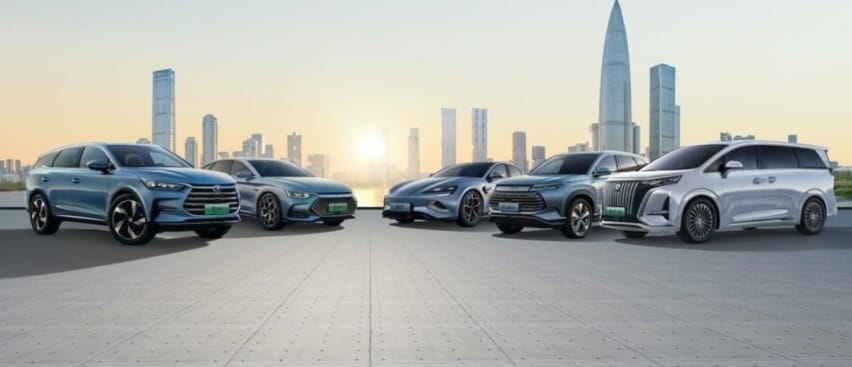
The most immediate catalyst on HSBC's radar is BYD Co., Ltd.'s (比亚迪股份有限公司) anticipated new platform launch in early March. The bank describes it as "the most important tone-setter catalyst of the quarter," expecting it to drive sector-wide benchmarks in battery range, efficiency, and — critically — pricing. How BYD prices this launch is expected to ripple through competitive strategies well into the second quarter.
HSBC maintains a Buy on both BYD's A-shares and H-shares, with target prices of RMB123.00 (approximately US$17.00) and HKD139.00, implying upsides of 36% and 46% respectively from February 20 closing prices.
The pricing backdrop has shifted meaningfully. On February 12, China's State Administration for Market Regulation issued "Compliance Guidelines for Pricing Practices in the Automotive Industry," a regulatory signal that Beijing is actively trying to curb the destructive discounting that has plagued the sector. During the Chinese New Year holiday, promotions were largely confined to moderate cash discounts and financing incentives — seven-year low-interest loans being a notable example — with deep price cuts limited to destocking of slow-moving or outgoing model-year inventory. HSBC expects this relative resilience to persist, with OEMs selectively passing on cost inflation to consumers by bundling high-value features such as LiDAR, fast-charging, and advanced driver assistance systems, while quietly trimming less visible components.
Autonomous Driving: From Frontier to Commercialisation
Beyond the near-term pricing dynamics, HSBC frames advanced autonomous driving (AD) and Robotaxis as "the most compelling structural theme" of 2026. The competitive axis has shifted: it's no longer about who has the best algorithm, but about who can deploy at scale, deliver a smoother user experience — measured by handover frequency and ride comfort — and monetise through subscriptions and feature packages.
Recent February policy developments, which HSBC covered in a separate note on February 24, suggest Beijing is constructing a comprehensive legal framework for autonomous driving that should accelerate commercial rollout. The bank advises investors to watch for OEM feature launches, partnership announcements, and progress in Robotaxi pilot programs as near-term milestones.
Market Concentration Deepens
January's market share data underscores an accelerating consolidation trend. The top 10 EV brands captured 73% of the market in January 2026, while 62 brands competed for the remaining 27%. In the broader passenger car market, the top 15 brands held 63% share, with 145 brands fighting over the rest. The long tail is getting squeezed — and HSBC's stock picks reflect a deliberate bet on the winners.
Battery chemistry is also shifting. LFP (lithium iron phosphate) cells now account for 78% of China's EV battery market, with Contemporary Amperex Technology, or CATL, holding 50% of total EV battery installations and 41% of the LFP segment in January 2026. HSBC rates CATL a Buy on both its A- and H-shares, with target prices of RMB450.00 and HKD594.00, calling it "our preferred core holding for earnings visibility" given its share-defence strategy and growing energy storage and overseas businesses.
Stock Picks: Scale, Catalysts, and Structural Optionality
HSBC's conviction list reads like a portfolio built around two themes — smart EV cycles and the autonomous driving buildout:
Leapmotor is flagged as "best positioned for trading-down and high perceived value demand," with a Buy rating and HKD66.70 target implying 53% upside. The stock trades at just 13.1x 2026 estimated PE, with earnings expected to surge 444% this year as the company scales.
XPeng earns a Buy with a USD27.70 target (57% upside), with HSBC highlighting improving fundamentals alongside a Robotaxi and robotics narrative that should attract growth and technology-oriented capital flows.
Horizon Robotics is described as the AD "crown jewel." Near-term debate centres on price cuts driving volume and a consequent margin reset, but HSBC sees the longer-run ecosystem and scale pathway as compelling, maintaining a Buy with an HKD11.00 target.
Tuopu Group rounds out the list as HSBC's top pick in humanoid robot components, supported by solid growth from domestic brand customers. Buy-rated with an RMB82.00 target.
The broader message from HSBC is that the China EV market is maturing in ways that reward discipline — in pricing, in technology investment, and in capital allocation. The chaotic discounting era may not be over, but the regulatory guardrails are going up. For investors willing to look past the January noise, March could mark the beginning of a cleaner narrative.