
Huawei Eclipses Apple in Global Smartwatch Market With 53% Shipment Surge
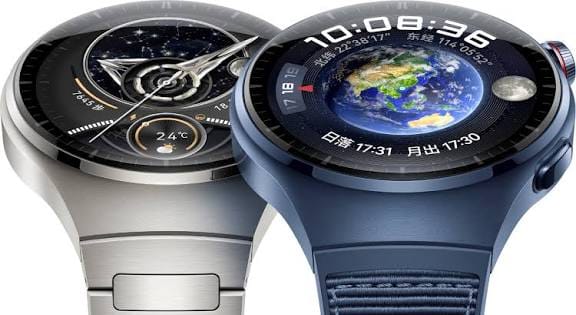
Huawei Technologies has overtaken Apple Inc. to become the world’s top smartwatch vendor for the first time, a landmark shift driven by a diverse product strategy and surging demand linked to its resurgent smartphone business.
The Chinese technology giant’s global smartwatch shipments jumped 53% year-on-year to 7.2 million units in the second quarter of 2025, capturing a 21% market share, according to data from Counterpoint Research. Figures from IDC corroborated this lead, placing Huawei’s shipments at 9.9 million units for a 20.2% share of the worldwide market. In its home market of China, Huawei’s dominance was even more pronounced, with a commanding 33.4% share.
In contrast, Apple’s shipments fell 3% to 5.8 million units during the same period, with its market share slipping to 17%, Counterpoint’s data showed. The shake-up reflects the diverging strategies of the two tech titans, with Huawei rapidly expanding its product lines and retail footprint while Apple maintains a more focused, premium-oriented annual release cycle.
Analysts attribute Huawei's rise to a powerful synergy between its watches and rebounding smartphone sales, a broad product portfolio catering to all price points, and key advantages in battery life and health monitoring that are resonating with a wider consumer base. The global smartwatch market grew 8% year-over-year in the second quarter to 34.4 million units.
A Multi-Pronged Product Strategy
Huawei’s ascent is underpinned by a product strategy that combines frequent updates with a wide array of choices. The company typically releases new models in both the first and second half of the year, with a portfolio that spans from the sub-1,000 yuan bracket with its Watch Fit series to premium models like the Watch GT and the high-end Ultimate series.
Recent visits by Cailian Press reporters to retail stores in Shanghai showed strong consumer interest in new models from both brands, including Huawei’s Watch 5 and Watch GT 6 series, released in June and September of 2025, respectively, and Apple’s new autumn lineup. Sales staff at a Huawei store noted that the brand’s extensive selection attracts a diverse customer base, from children to the elderly. “For parents and elders focused on health monitoring, we recommend the Watch 5,” one salesperson said. “The GT 6 is bought more by young people, as it’s more sport-oriented and is currently selling better.”
In contrast, Apple maintains a more streamlined product lineup — the Apple Watch Series, Ultra, and SE — with new versions typically unveiled alongside new iPhones in the fall. Its entry-level model in China starts at 2,399 yuan ($333). Sales staff at an Apple store noted that the new Apple Watch Series 11 offers improved battery life of 24 hours, up from 18, but features limited functional updates.
Ecosystem and Key Differentiators
Analysts believe Huawei’s close integration of its devices, superior battery life, and broader compatibility have been crucial to its success.
“The linkage effect between Huawei’s phones and watches is significant,” said Shenghao Bai, a senior analyst at Counterpoint. “As phone sales recover, the attach rate for its watches is also rising.” He added that Huawei’s comprehensive product line and leadership in health functions like ECG, blood pressure monitoring, and sleep analysis have enhanced its reputation and repeat purchase rate.
This is further strengthened by its HarmonyOS ecosystem, which improves the user experience with seamless cross-device connectivity and boosts customer loyalty. Pan Xuefei, a research director at IDC China, noted that Huawei has built a professional brand image around its GT series in the sports domain while its Fit series has successfully filled a gap in the lower-priced segment.
A key differentiator highlighted by store staff is battery life, with models like the GT 6 offering about seven days of typical use. Another significant advantage is that Huawei watches are compatible with phones from various brands, whereas the Apple Watch is restricted to the iPhone ecosystem — a closed strategy that ensures a seamless experience but may limit market expansion.
Channel Strength Drives Growth
Beyond product, Huawei's powerful distribution network has been a critical component of its strategy. The company has aggressively expanded its retail and partner channels both domestically and abroad. According to its 2024 annual report, Huawei had 16 global flagship stores and 393 large-scale Smart Life Pavilions worldwide by the end of 2024.
The company is also reinforcing its presence in Europe, the Middle East, Africa, and Southeast Asia through local partnerships and marketing. In the summer of 2024 alone, Huawei hosted over 100 offline events to engage customers. “From a channel and marketing perspective, Huawei’s overseas channels are gradually expanding and strengthening local operations, and it has enhanced local brand recognition by cooperating with overseas KOLs,” said IDC’s Pan.
Analysts agree that Huawei’s strong execution in offline retail, e-commerce, and carrier partnerships gives it a competitive edge. This, combined with the recovery of its smartphone business in China, has created a powerful pull-through effect for its wearable products.
The Future of the Smartwatch Market
The smartwatch is evolving from a smartphone accessory into a standalone health and wellness hub, a trend that is reshaping the market. Features have advanced from basic heart rate tracking to sophisticated functions like ECG analysis, blood pressure health studies, and one-click health check-ups, positioning the device as a personal health manager.
“While the sports functions of smartwatches are relatively mature, there is still room for further development in health,” said Pan. She anticipates that as sensing technology for blood pressure and especially blood glucose matures, it will trigger the next wave of demand, driven by an aging population and health-conscious younger consumers.
Looking ahead, Counterpoint’s Shenghao Bai identified several key trends:
- Deeper AI Integration: AI capabilities will shift from simple data recording to providing personalized, proactive health and lifestyle advice.
- Medical-Grade Health Features: Functions like ECG, blood pressure monitoring, and sleep apnea screening will become more common as regulatory standards evolve.
- Standalone Connectivity: The adoption of eSIM technology will further untether watches from phones, expanding their use cases in communication, fitness, and navigation, and driving further market growth.