
Huawei Tightens Grip on China's Foldable Market as Rivals Retreat, Apple Looms
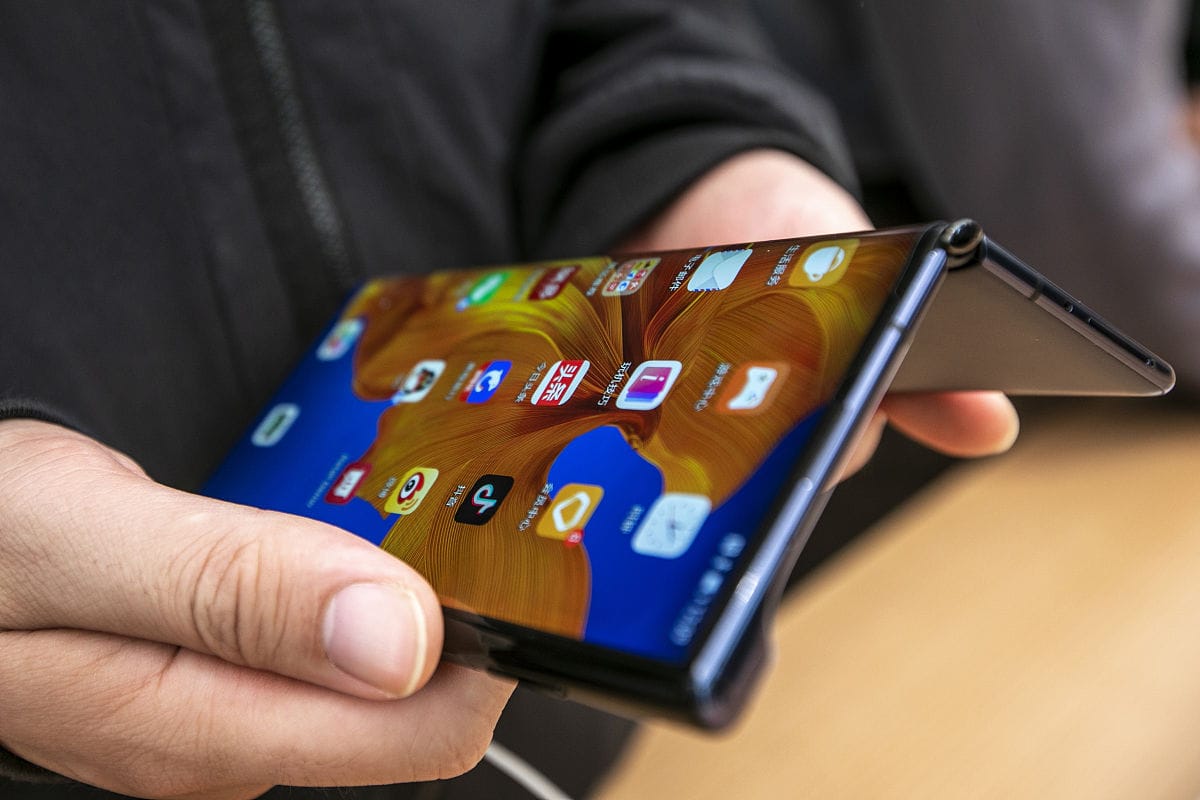
Huawei captured 71.8% of China's foldable smartphone market in 2025 by betting on premium pricing that competitors refused to match — a dominance that is now reshaping the entire segment's economics ahead of Apple's widely anticipated foldable debut.
The competitive landscape has inverted sharply. While Honor, OPPO, vivo, Xiaomi, and Samsung Electronics have quietly wound down their clamshell product lines and reduced large-format foldable investment in 2025 and into 2026, Huawei has moved in the opposite direction — expanding form factors, raising price points, and accelerating sell-through. The divergence signals that the foldable category is consolidating around brand equity rather than hardware specifications, a structural shift with significant implications for component suppliers and the broader premium handset market.
Market data underscore the asymmetry. Huawei's wide-format Pura X, launched in 2025 at RMB 7,499 (approximately US$1,041), shipped over 1.5 million units in its first year, according to IDC figures. Its successor, the Pura X Max, priced at RMB 10,999 (approximately US$1,527) — a 47% premium — surpassed 500,000 units in early sales in the first half of 2026 alone, third-party data cited by ITHome show. Higher price, faster velocity: the conventional consumer electronics playbook does not apply here.
Retreating Rivals Expose a Fatal Value-Proposition Gap
The mass exodus from the clamshell sub-segment is effectively complete. OPPO, vivo, and Xiaomi have all technically suspended updates to their flip-phone lines. Samsung's Galaxy Z Flip 8 is widely regarded within the industry as the potential final entry in that series. On the large-format side, Xiaomi has exited entirely; remaining players — Honor's Magic V6, OPPO's Find N6 (launched March 2026), and vivo's X Fold6 (launched late June 2026) — represent incremental, low-conviction iterations rather than strategic pushes.
The commercial logic is straightforward and unforgiving. Consumer electronics R&D costs require high unit volumes for amortization. When volumes fail to materialize, carrying a product line becomes a cash drain with no strategic upside. The decision to cut is rational; the more telling question is why volumes never scaled in the first place.
The answer lies in an inherent spec-parity problem. Across all major manufacturers, a foldable's processor mirrors that of the concurrent flagship slab — Xiaomi's MIX Fold 3 and the Xiaomi 13 Pro both ran Qualcomm's Snapdragon 8 Gen 2, for instance. Camera modules and battery capacity, meanwhile, are constrained by the hinge mechanism and stacked motherboard architecture that consume internal volume. Honor's Magic 8 Pro carries a 7,200 mAh cell; its large-format sibling, the Magic V6, ships with 7,150 mAh or 6,850 mAh depending on configuration. The delta is marginal, but it illustrates the engineering ceiling.
The net result: a foldable offers a larger display at a RMB 2,000-plus (US$278-plus) premium over a comparable slab flagship, without delivering a categorically different use-case. For value-oriented buyers — historically the volume engine of China's smartphone market — the calculus consistently favors the slab. This structural mismatch has effectively bifurcated the foldable category into a luxury tier and an unviable middle ground.
Huawei's Premium Moat Widens as ASP Data Confirm User-Base Advantage
Huawei identified this dynamic earlier than its peers and repositioned accordingly. Since 2025, the company has extended beyond conventional book-fold and clamshell formats into tri-fold and wide-fold configurations — the Pura X series — generating differentiated productivity use cases and a more distinctive visual identity that reinforces brand premium.
The financial architecture supporting this strategy is visible in average selling price (ASP) data. According to Counterpoint Research's Q1 2026 global smartphone revenue report, Apple's ASP stands at US$908, commanding a substantial lead. Samsung's ASP registers at US$340. Counterpoint's market outlook tracker indicates that Huawei's 2025 ASP surpassed Samsung's — placing it above US$340 — a remarkable position for a company operating under sustained U.S. export restrictions.
In the premium segment (devices priced above US$600), Counterpoint's first-half 2025 data show Huawei holding approximately 8% global market share, ranking third behind Apple and Samsung. Xiaomi has grown rapidly in this tier, but the gap with Huawei in terms of established high-income user concentration remains significant.
This user-base composition is the core competitive asset. In the Chinese foldable market specifically, with Samsung's presence marginal and Apple yet to ship a foldable device, Huawei faces no credible domestic challenger above the RMB 10,000 threshold. Competitors have implicitly acknowledged this by clustering their large-format pricing below that level — a tacit concession of the ultra-premium tier. Huawei's Mate X5, priced at RMB 11,999 (approximately US$1,666) in 2024, captured nearly one-quarter of that year's entire domestic foldable market, per Counterpoint data showing China foldable sales grew 27% year-on-year in 2024.
Apple Entry Sets Up a High-Stakes Two-Tier Endgame
The competitive equilibrium is about to be stress-tested. Nikkei Asia has reported that Apple is targeting production of 10 million units for its forthcoming foldable iPhone — against a global foldable market of approximately 20 million units in 2025. If that production target translates to sell-through, Apple would absorb roughly one-third of global foldable demand in its launch year.
The strategic logic mirrors Huawei's own playbook: Apple's installed base skews toward high-income, brand-loyal consumers willing to pay a substantial premium for ecosystem continuity. Apple's global ASP of US$908 — compared to Huawei's estimated figure above US$340 — illustrates the pricing ceiling Apple can credibly target.
For Huawei, the Apple entry represents the first genuine high-end competitive threat in the domestic foldable space. The two companies are converging on the same narrow consumer cohort: buyers for whom a foldable is a status and productivity statement rather than a value calculation. The resulting duopoly dynamic — Huawei defending its existing premium base, Apple mobilizing its waiting list of upgrade-ready iPhone loyalists — leaves virtually no oxygen for the mid-tier players currently retreating.
The foldable market's consolidation trajectory is now clear: two viable premium players, a shrinking field of followers managing orderly exits, and a component supply chain that will increasingly optimize for the specifications those two players demand. For investors tracking the broader smartphone ecosystem, the margin and volume data flowing from this duopoly over the next 12 to 18 months will serve as a leading indicator of where premium mobile hardware pricing — and brand leverage — is ultimately headed.
Related Coverage:
Huawei's 2026 Smartphone Sales Surge Driven by Nova 15 and Premium Foldables