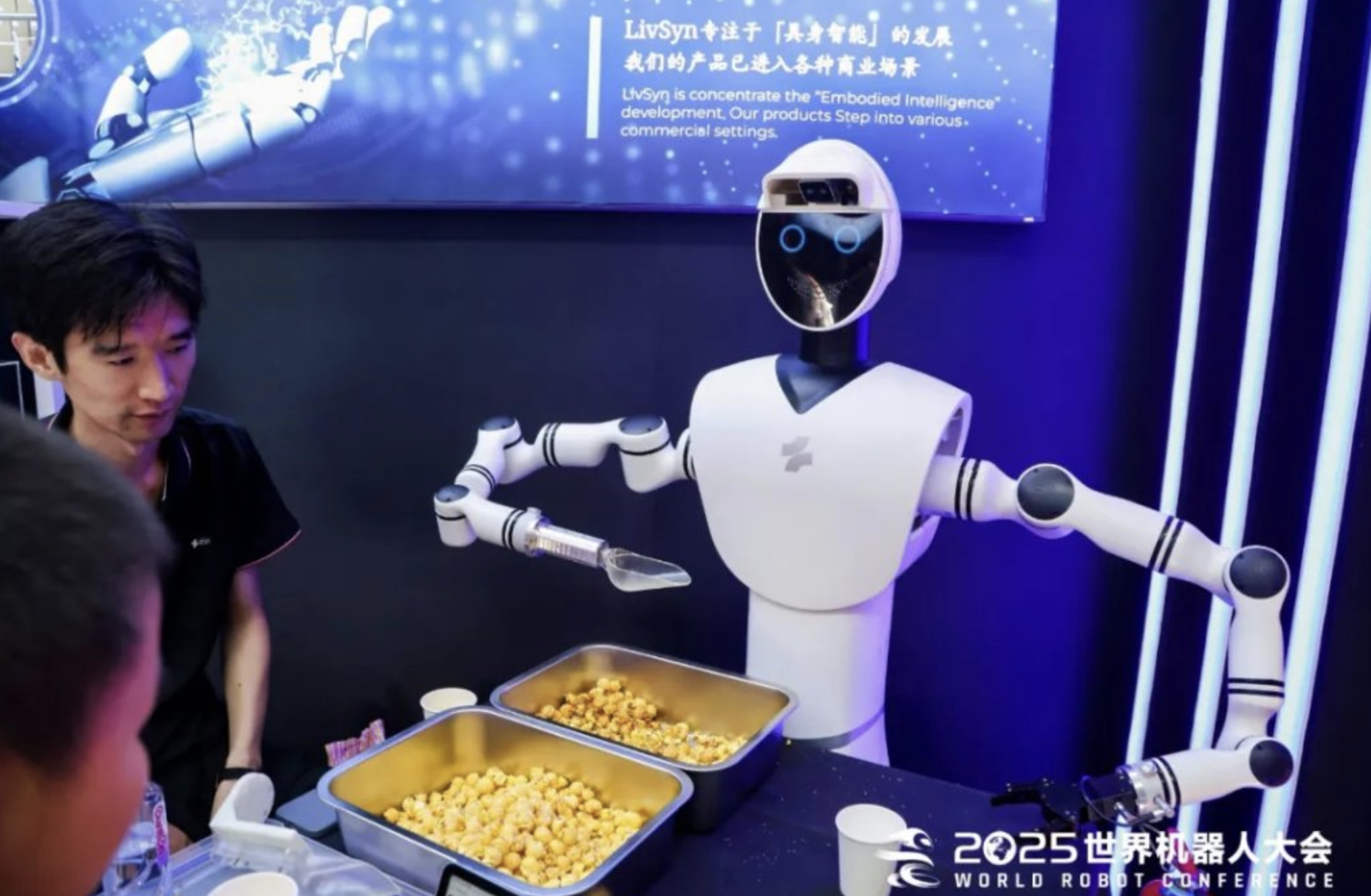
Humanoid Robots Pivot From Novelty to Utility as Big Tech Enters the Fray
Humanoid robots, long a staple of science-fiction showcases, are rapidly shifting their focus from acrobatic displays to practical labor, a strategic pivot driven by intense pressure to achieve commercial viability. This transition is attracting a wave of investment from major technology and automotive companies, signaling a new, more pragmatic era for the industry.
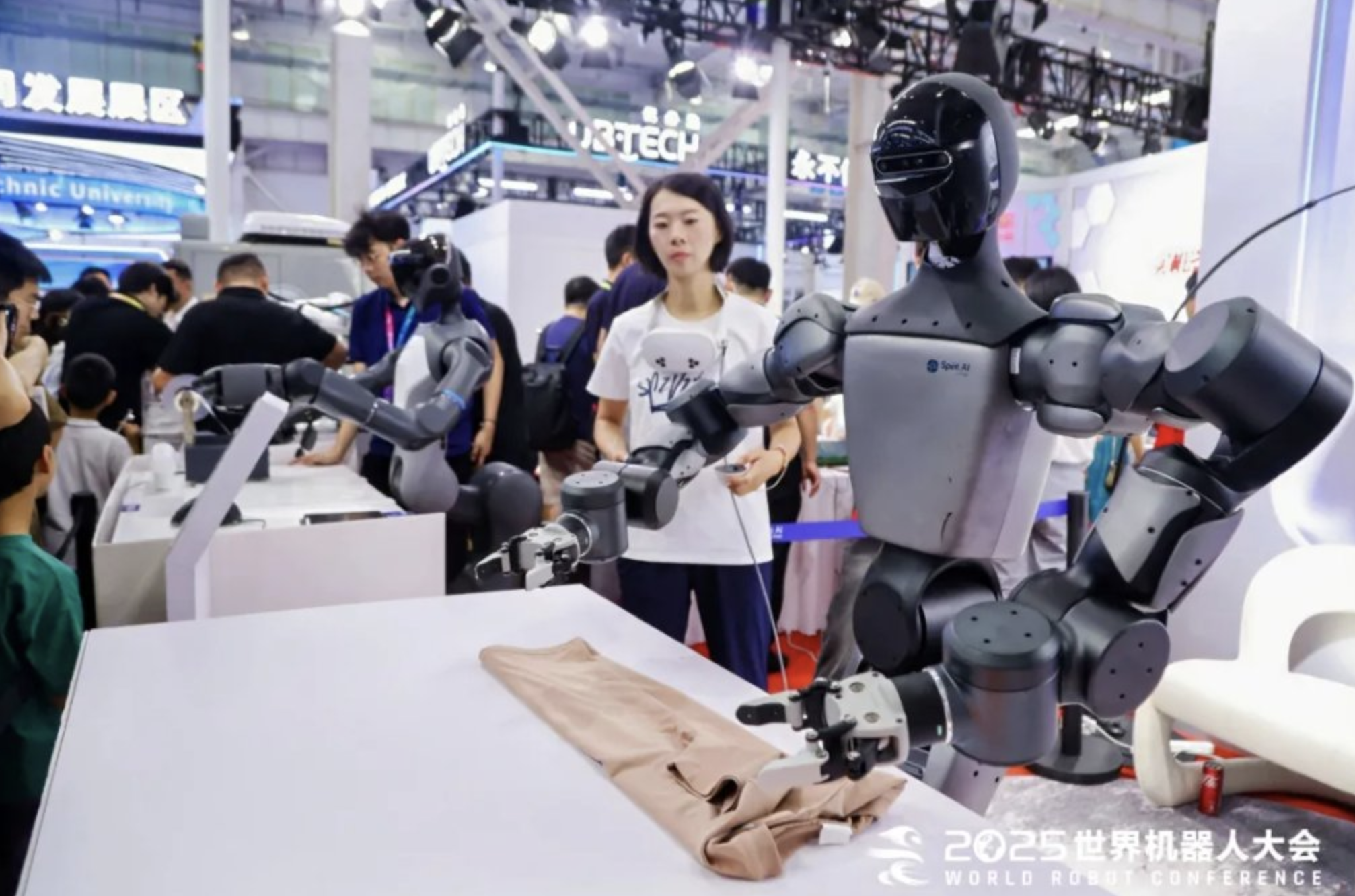
At the recent World Robot Conference (WRC) 2025, the change was palpable. Robots were observed performing tasks like folding clothes and sorting items, a stark contrast to previous years where they were often presented as static models or tethered performers. This move from "demonstration" to "duty" reflects a sector-wide push to prove real-world value to potential customers and investors.
The shift has not gone unnoticed by corporate giants. E-commerce leader JD.com Inc. and on-demand service platform Meituan have emerged as aggressive investors, while automakers including BYD Co. and Xpeng Inc. are developing their own models. This influx of established players marks the end of what industry insiders call the "grassroots" phase, previously dominated by startups and academic institutions.
This rush for application is fueling a boom in the robotics supply chain, particularly for critical components like dexterous hands, which remain a key technological bottleneck. Yet, even as companies like Zhipin Robot pursue public listings, some industry leaders are urging caution, warning that market valuations may be outpacing the current pace of technological advancement.
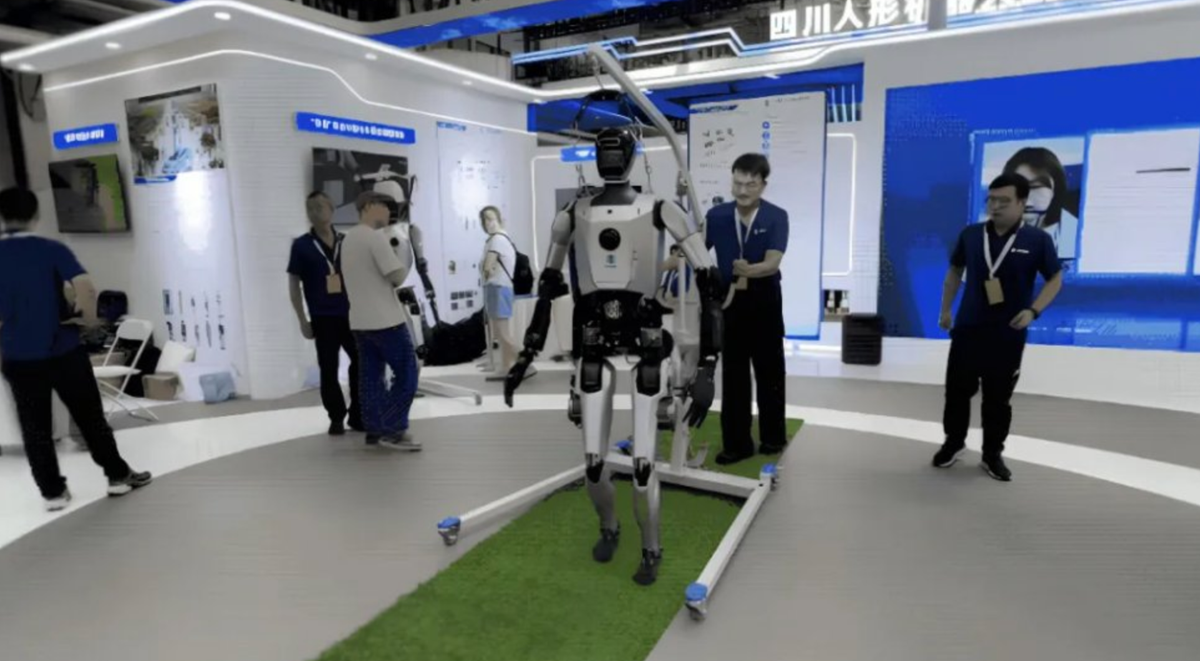
Big Tech and Automakers Crowd the Field
The composition of players in the embodied AI space has fundamentally changed, with 2025 marking a clear dividing line. Before this year, the field was led by innovative startups like Figure AI and Unitree Robotics, alongside university-affiliated teams. Now, large corporations from nearly every sector are establishing dedicated robotics divisions or subsidiaries.
"This year, companies from automotive, mobile phones, internet, logistics, and industrial automation are all getting into humanoid robots,” a staff member from Bridge Bionics, an algorithm solutions provider, told Tencent News at the conference.
This corporate entry signals that the technology has passed an initial viability threshold. "The humanoid robot has moved past its early, chaotic grassroots stage," one investor noted. As a technology matures from speculative potential to proven utility, large firms begin to systematically integrate it into their core operations. This aligns with a prediction made earlier in the year by Kun Zhong Capital's founding partner, Yao Haibo, who stated that the "grassroots era" would soon end, describing 2025 as a critical year where companies must "show their work" to survive.
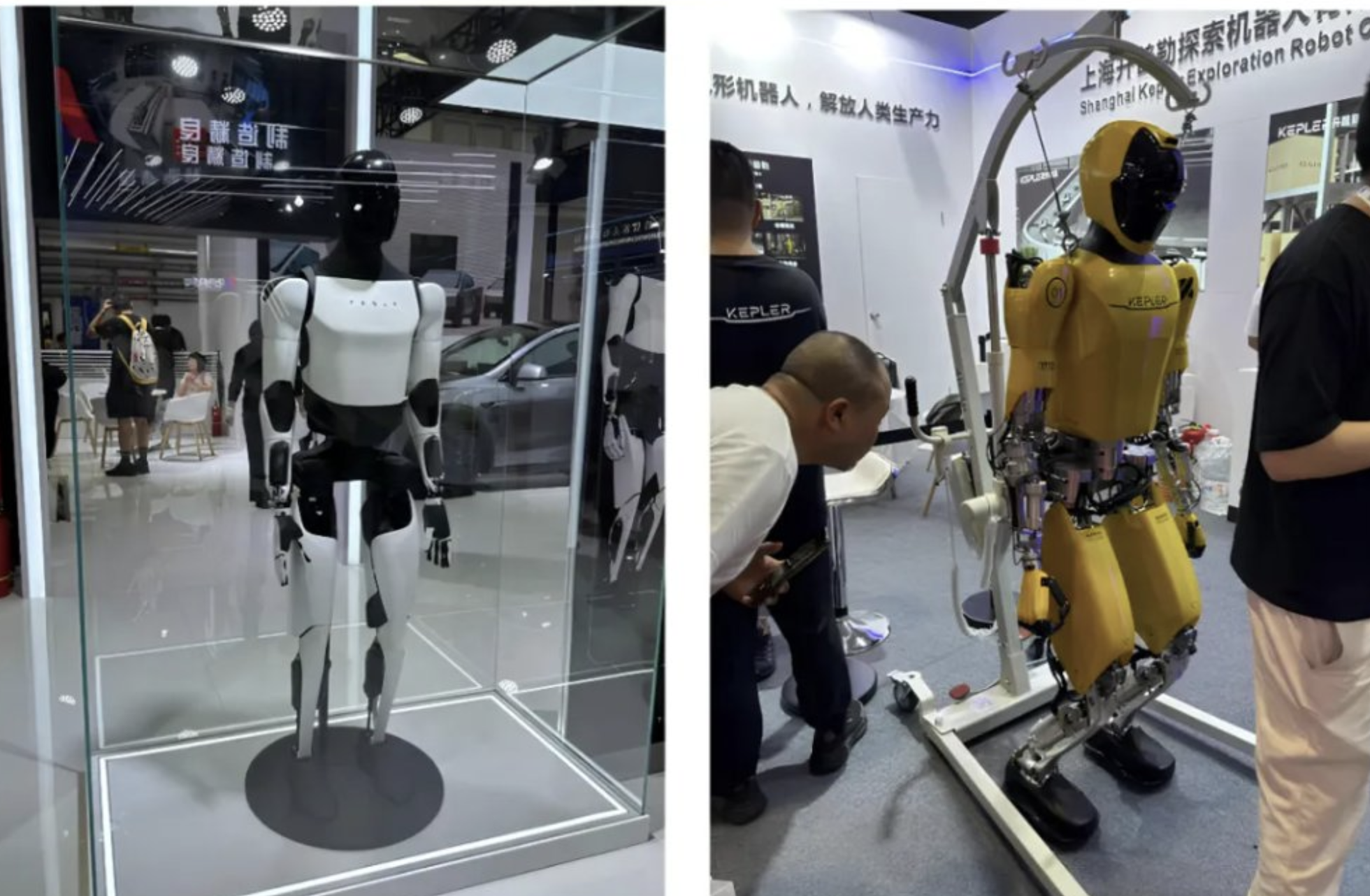
A Tale of Two Strategies: Investment vs. In-House Development
Large corporations are pursuing a dual-track strategy of in-house development and strategic investment. Internet giants, in particular, have leaned heavily on investments to gain a low-cost foothold and technical expertise.
According to data from IT Juzi, humanoid robotics firms completed 22 financing rounds totaling approximately 7.61 billion yuan ($1.05 billion) between January 1 and August 5, 2025. This represents a significant increase from the 2.8 billion yuan raised across eight rounds by seven companies in all of 2024.
JD.com has been one of the most active investors, deploying 2.23 billion yuan across six deals. Meituan followed with four investments totaling 1.94 billion yuan. Their approaches differ: Meituan focuses on solving its own operational challenges in delivery and services, while JD.com aims to build a broader ecosystem integrating its e-commerce, supply chain, and AI model resources.
In contrast, automakers like BYD, GAC Group, and Xpeng prefer in-house development. They can leverage established supply chains for core components like motors and use their own factories as testing grounds, providing valuable data and a built-in market for initial production.
The Dexterity Bottleneck: Race to Build a Better Hand
For robots to become truly useful in logistics and sorting—key use cases for companies like JD.com and Meituan—they need more than just mobility. "A robot needs to be able to pick things up and put them down," said Wang Qibin, a former JD executive and founder of Lingchu Intelligence. "This requires manipulation capabilities."
This focus was evident at WRC 2025, where dexterous hands were a major attraction. Companies like BrainCo, Star N Era, and Inspire-Robots showcased advanced designs. However, creating a truly "dexterous" hand is a complex systems problem, balancing perception, mechanical design, force control, and response speed.
"Precision, payload, reaction speed, size, and degrees of freedom are all challenges," an employee from Inspire-Robots explained. Currently, there is no single dominant technical solution. Most of the hands on display were still in the demonstration phase, and the robots performing functional tasks typically used simpler two-finger grippers. The industry remains divided on whether to pursue human-like flexibility or prioritize the cost and reliability of simpler, task-specific end-effectors.
Hype, IPOs, and the Surprising Rise of Entertainment
Despite the progress, the industry acknowledges that widespread, generalized application remains a distant goal. Most robots are still limited to performing single, repetitive tasks. Interestingly, entertainment functions—such as robots playing soccer, boxing, or performing calligraphy—are advancing more quickly than household or service applications.
Unitree Robotics founder Wang Xingxing compared the current state of robotics to early personal computers. "They first provided a platform for developers, and only years later, with a software ecosystem, did they become truly useful for the average user," he said. He believes entertainment is an easier near-term market, noting, "Even with a phone, most people spend more time on entertainment than on work."
The industry is currently near the peak of the Gartner Hype Cycle, creating a window for fundraising and public offerings, according to Lingchu's Wang Qibin. Zhipin Robot has already gone public, and Unitree is reportedly exploring an IPO.
However, this enthusiasm is tempered with caution. Lian Wenzhao, founder of Yuanluo Tech and formerly of Figure, warned of a potential bubble. "The singularity point for market valuation seems to have arrived much earlier than the singularity point for technology," he said. "I hope everyone can adjust their expectations to be more reasonable."