
Unitree Founder Talks Free Robots, Global Expansion, and IPO Plans
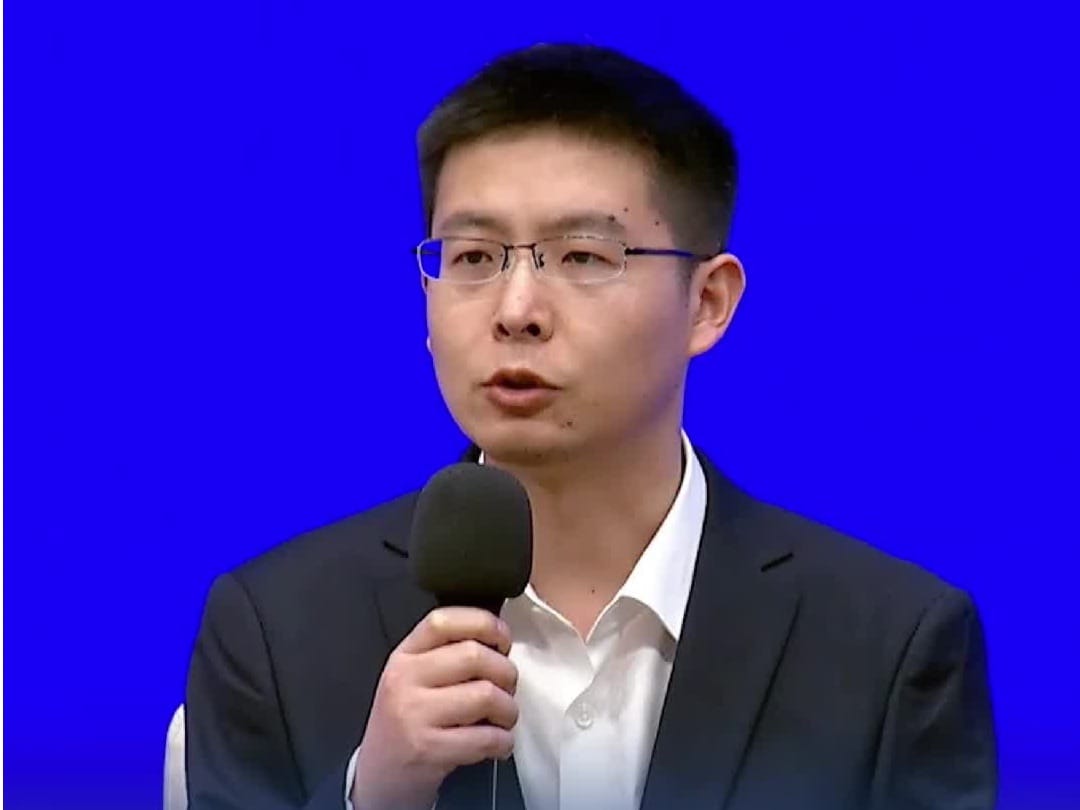
Wang Xingxing, the founder of Chinese robotics firm Unitree Robotics, shared his vision for the future of the industry in a group media interview at the recent World Robot Conference. He addressed several pivotal topics, including the potential for robots to become free, the strategy for Chinese intelligent manufacturing to succeed globally, and the impact of a potential initial public offering (IPO) on the sector's competitive landscape.
The discussion comes at a critical time for the robotics industry, which is experiencing a surge in interest and investment, particularly in humanoid robots driven by breakthroughs in artificial intelligence. Unitree, a significant player with a dominant global market share in quadruped robots, has been aggressively lowering the price of its humanoid models, fueling speculation about the pace of commercial adoption. Wang's insights offer a valuable perspective on the technological hurdles, business models, and strategic planning of one of China's leading robotics companies as it navigates this rapidly evolving market.
Below is the transcript of the interview, translated from Chinese and edited for clarity.
Q: What is Unitree's next major focus? And how do you view the development of Chinese robotics within the global industry?
Wang Xingxing: Undoubtedly, the intelligent robotics industry, especially the humanoid robot sector represented by AI, is receiving an extremely high level of attention right now. This has its pros and cons. High visibility means more access to resources for everyone, but it also intensifies competition. For any company, including ours, the most fundamental imperative is to make excellent products. This is the core issue—having better products, better pricing, and more complete functionality, which in turn leads to a better after-sales experience. I believe this is foundational to every company's reputation.
A company must spend enough time polishing its products. This is what I see as the cornerstone. With that in place, whether you're facing domestic or international competition, your company can secure a piece of the massive global pie. This is essential for survival.
Additionally, it's crucial to have a clear strategic direction. Based on my past experience in product and technology development, the most important lesson is that you have to anticipate the future. In fields like AI, technology, hardware, manufacturing, and global deployment, you must think years ahead about likely developments and position yourself accordingly. I believe this is critical for every company to achieve a strong competitive advantage with its products.
Q: Unitree's G1 humanoid robot was priced at 99,000 yuan last year, and the new R1 model has dropped to a starting price of 39,900 yuan. This price is decreasing very rapidly. You have previously said that robots could be free in the future. Is that truly achievable?
Wang Xingxing: As you know, our pricing varies. We have different models; smaller robots are naturally cheaper, while larger ones are more expensive. This relates to our different product lines, so we will certainly have both affordable and premium options.
However, our fundamental goal is to offer better prices to encourage more customers to purchase and use our robots.
You might have noticed some interesting trends. Last year and this year, we have seen a very high volume of customer purchases of our humanoid and other robots. This has helped establish new ecosystems, including leasing markets and even secondary developer communities. The main prerequisite for building such an ecosystem is achieving sufficient shipment volumes and widespread user adoption.
Therefore, regarding price, I believe there are valuable things to do at every level. As for the idea of "free" robots, I think once robots can genuinely perform work, society's entire concept of them will undergo a major shift. I can even imagine a future where, when robots are performing a vast amount of labor, the state could simply impose a tax on every robot that leaves the factory.
For example, a portion of the value generated by a robot performing a task could be directly remitted to the state as tax—I think that's entirely feasible. A robot could even work autonomously; for instance, a company could be permitted to deploy robots to cultivate a piece of wasteland, and a part of the robots' output would be given directly to the state. I believe this is a possible direction to consider. But the prerequisite, as I said, is that robots must have more technological breakthroughs and can truly perform tasks like humans.
Q: How long will it take to achieve that?
Wang Xingxing: That's hard to say. If things move quickly, we could see significant technological progress within two to three years. If it's slower, perhaps three to five years. But I don't think this wave of development will take more than ten years.
Q: The integration of large AI models with robots is very close, with some claims of success rates exceeding 90%. In your view, what other technologies need breakthroughs in robot R&D? What are Unitree's plans for overcoming these challenges?
Wang Xingxing: Yes, you may have noticed—I just saw something from Elon Musk today—that he believes eventually no one will need to write code, as AI will generate it all. It's true that progress in AI for code generation is moving very fast, and it's a major focus for large companies. For simple programs or snippets of code, the success rate is indeed very high.
But for highly complex code, the success rate will certainly drop significantly. So, I believe the biggest technological priority, for the entire world right now, is to develop embodied AI models.
Q: It's expected that the application of humanoid robots will accelerate in the next three to five years. What are the current technical difficulties in deploying robots, and how will Unitree address the challenges of generalization and insufficient autonomous decision-making?
Wang Xingxing: These questions can really be summarized as one. In a sense, on a global scale, the fundamental hardware is sufficient for now—though it's not perfect and needs to be produced at a larger scale, lower cost, and with higher reliability.
The biggest area needing improvement is the underlying AI, or the embodied AI model. It has not yet reached a critical tipping point for a breakthrough. I would draw an analogy: we haven't had a "ChatGPT moment" yet in the field of embodied intelligence. As you know, progress in AI often happens in leaps. One day, the progress might seem incremental, and then suddenly, a major breakthrough occurs. This is a very plausible scenario.
I believe the most important thing is to build a robust AI model for robotics, one that has sufficient generalization capabilities. There's another point: in the field of language models, everything is purely data-driven. If you have enough high-quality data, your model's performance improves very quickly. This is less true in robotics. Why? Because no matter how you collect data, when you transfer it to a physical robot, the gap between simulation and reality is still very large. In other words, even if you collect vast amounts of data to train a robot, when you deploy that model onto a physical machine, you find they don't align well.
In the physical world, the requirements for the AI model's capabilities are on a higher level. To put it simply, we hope to achieve a state where a model can train itself with very little data and still achieve a high success rate. We want to develop such models first and then use data to drive their training, rather than trying to train a nonexistent model with a massive amount of data, which yields less-than-ideal results.
Q: So is Unitree maintaining a cautious investment approach in model development?
Wang Xingxing: We are cautious. Our team is now quite large, but we certainly can't compare with the major AI companies in terms of scale. So, in that sense, our investment is relatively small compared to the big AI labs. But I see this as an opportunity.
I've always believed that in the AI field, having more resources, more money, or more people doesn't guarantee you will produce the world's best results. I think past events have already proven this. Therefore, I believe there's still a significant probability that a small or medium-sized team within a company can achieve better outcomes.
Q: What are Unitree's next steps in terms of development? For example, what kind of athletic feats, expressions, or performances are you working on, and what is the ultimate goal for the humanoid robot?
Wang Xingxing: In terms of athletics, I personally have been exercising a bit less lately. But as you saw from last year to this year, our company has focused more on performances like dancing or simulated combat, as well as running. These are areas where we are currently doing quite well. There is a robot sports competition in Beijing next week that you can follow; we have registered to participate.
The main point is that many technological advancements require time. It's unrealistic to expect that a robot can immediately be deployed in homes or factories to perform tasks of significant practical value today. Doing a demonstration is okay. We collaborated with an auto factory last year and deployed a robot to do some work, but getting it to generate substantial value is simply not realistic at this point in time. At this stage, using AI for athletics or performances is a more feasible application.
So, I don't think it has to be an all-or-nothing leap. Think about early computers. Were they useful to ordinary people? An early computer might not have even had a graphical user interface or a word processor. In many cases, you need the hardware to come out first, so that developers can create more software for it. After a few years, as the software becomes more functional, the general public can start to use it. This takes time.
Q: In your view, what is the most difficult step to achieve?
Wang Xingxing: Currently, in some sense, our robots can perform all sorts of movements. But if we talk about pushing the limits—for instance, making a robot run extremely fast or jump exceptionally high—the main bottleneck is hardware. It's not an algorithmic problem; the algorithms are largely fine. The biggest challenge lies with the hardware. Reaching a certain performance threshold or improving it further often runs into physical limitations, which is very challenging.
Q: Unitree's robots, including its quadrupeds, have achieved strong sales, with the quadruped models capturing 60-70% of the global market share. What are your future plans for commercialization?
Wang Xingxing: As you know, our quadruped robots are quite familiar to people. For our humanoid robots, sales growth has also been very fast from last year to this year. And in the humanoid segment, the vast majority of robots you see in use—whether on the streets or by customers—are our robots. So our global market share in humanoids is also relatively large.
The key difference really comes down to size. For a larger robot, say around 1.7 meters tall, we hope it can serve more industrial purposes or perform genuinely practical work. For smaller robots, we see more potential for developers and for entertainment. That's the reasoning behind the price difference, like the 39,900 yuan model. That robot is lighter, more agile, and smaller, making it friendlier for entertainment or development projects.
Expecting it to do heavy labor would be asking too much. We've lowered the price threshold for this reason. But it might still be able to do some simple tasks—don't ask it to do anything complex, but perhaps passing a bottle of water is feasible. So it's not that it can't do any work at all. We want to have a range of products—small robots and large robots—for entertainment, research, and work.
Q: How can Chinese robotics companies develop overseas application markets and build a relatively complete business chain?
Wang Xingxing: Regarding going global, if you look at our performance over the years, on average, 50% of our annual revenue has come from overseas. So, by that measure, our company began expanding into international markets back in 2018. At that time, the concept of "going global" wasn't as popular as it is now; I think it really took off around 2022. Our company has always placed great importance on the global market. I believe global collaboration and targeting the global market are extremely important for every company today.
Q: Unitree has a very diverse product line, from complete humanoid and quadruped robots to modular components. It seems difficult to manage the development pace across such a wide range. How do you coordinate so many product lines simultaneously?
Wang Xingxing: You're absolutely right. Our headcount increases significantly every year, which places higher and higher demands on management. Otherwise, there's a high probability that more people could lead to lower efficiency.
While we have several products, the number isn't overwhelming. We primarily have small, medium, and large models of quadruped and humanoid robots. The overall structure is relatively unified, and they share many similar technologies, such as joint motor modules, electronic control systems, and algorithms. There is a lot of common ground. However, this is an area where our company certainly needs to improve. For any company that wants to develop well, I believe management is crucial. You need to make the company's workforce more efficient and enable them to create value, and you need to better manage and recruit more top talent. Improving management is a critical task for any rapidly growing enterprise.
Q: How do you envision the application scenarios for humanoid robots?
Wang Xingxing: I often mention that our company's goal, and indeed the goal of the entire industry, is for robots to genuinely perform work, to liberate productivity, and to improve efficiency. This is the top priority for everyone right now.
So why do you see our company doing more performances and demonstrations? It's quite simple. First, if you go to an exhibition, you'll find that the general public is more drawn to performances. We are, in part, meeting that demand. Even when we showcase both work and performance, we find that people prefer watching the latter. So there are objective factors at play.
The other major point is that it's still unrealistic to have intelligent robots performing meaningful work at this moment. You can use them for automated tasks or fixed processes in factories, which is being done today, but that's not fundamentally related to the concept of embodied intelligence we're discussing. Therefore, my primary goal is definitely work. But while the technology for work is not yet mature, we will start with things like performances, simulated combat, or other businesses to get things moving.
To give a simple example, think about your smartphone. Do you use it mostly for work? For most people, entertainment accounts for the majority of their time. So I think both entertainment and work are very important. It's also a matter of which technologies mature first and which industries are created first.
Q: Can you predict the development trend for the global humanoid robot market?
Wang Xingxing: The growth rate is currently very fast. From a shipment volume perspective, I believe the global industry can guarantee doubling every year.
For last year, this year, and the next few years, I think we can be certain that the total shipment volume of humanoid robots for the entire industry will double annually. If there's a major technological breakthrough, it's even possible that within two to three years, we could suddenly see shipments of hundreds of thousands or even millions of units per year. But I can't be sure.
Q: Unitree is preparing for an IPO. What impact will this have on the company's development?
Wang Xingxing: Our company is proceeding with a standard IPO process. As you may be aware, our company has been established for nine years. In a way, I see the listing process as an opportunity for learning and growth. It's a milestone, like a rite of passage, that pushes a company toward more mature management and more sophisticated operations. It's a necessary stage.
This event is also an account of our past nine years of effort, and a fulfillment of our responsibility to our shareholders.