
Inside Alibaba’s $52 Billion Gambit to Rebuild Itself as an AI Superpower
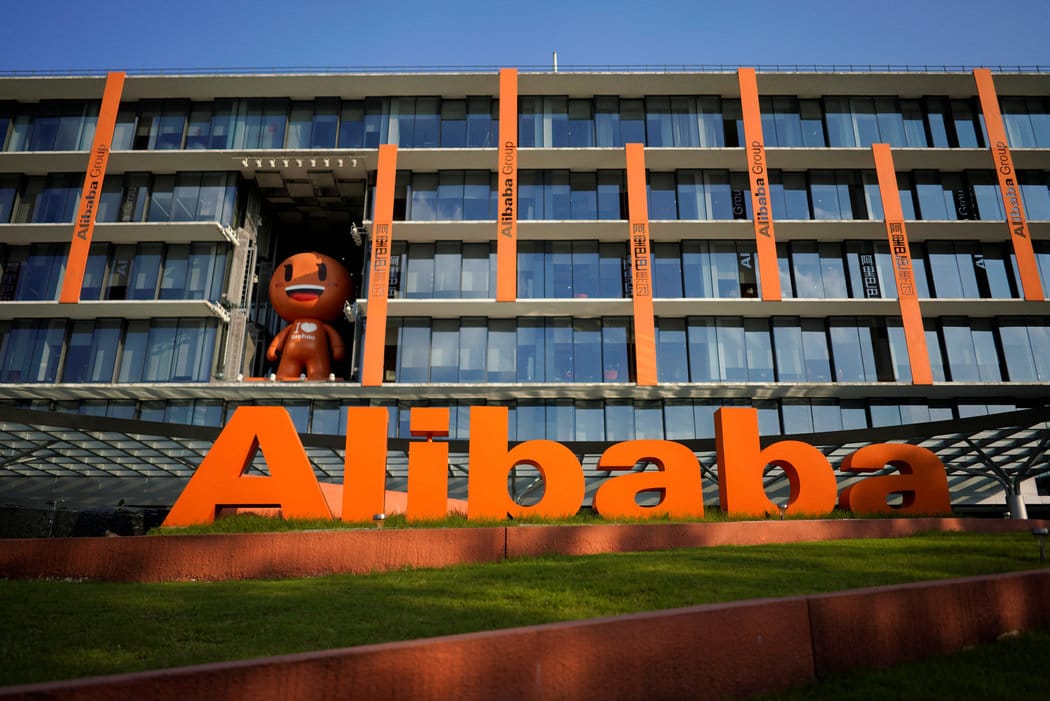
After four years in the wilderness, the Chinese tech titan is betting its future on a massive AI overhaul, forcing Wall Street to fundamentally re-evaluate a company it had all but written off. The comeback, however, is far from guaranteed.
For a time, the digital corridors of Alibaba Group felt fractured. Following a sweeping 2023 plan to break the empire into six distinct units, the company’s internal intranet—its bustling virtual town square—was partitioned. Employees could only see the forums of their own business group. A sense of confusion and frustration set in. The sprawling, unified force that had dominated Chinese tech for two decades felt like it was drifting apart.
Then, earlier this year, the walls came down. The intranet was merged back into a single platform. A memo announcing the change sparked a wave of celebration. “The familiar Alibaba is back,” one employee wrote, a sentiment echoed by thousands. It was more than a technical fix; it was a signal. The grand breakup was on hold. In its place was a new, singular mission: a total reinvention around artificial intelligence.
This is the story of how Alibaba, after a long and painful winter, is attempting one of the most ambitious corporate transformations in recent history. Stung by regulatory crackdowns and fierce e-commerce competition that saw its stock price collapse from a 2020 peak of over 300 to a low of around 80, the company is staging a comeback. Its weapon of choice is an enormous, all-in wager on AI, backed by a planned investment of 380 billion yuan (about $52 billion) over the next three years.
The move is forcing a radical reassessment on Wall Street, where analysts who once saw a fading e-commerce giant are now modeling a potential AI juggernaut. But it’s a high-stakes gamble, testing the execution of a nearly trillion-yuan-a-year behemoth. Like IBM in the 1990s and Microsoft after 2014, Alibaba is asking if an elephant can not only dance but learn to think in a completely new way.
The Wager Is Placed
The first signs of a thaw came not from pronouncements, but from numbers. In 2025, a year many investors had entered with skepticism, Alibaba's New York-listed shares have already climbed 60% as of late August, closing at $135.
The catalyst was a February announcement that rocked investors: a commitment to pour ¥380 billion into cloud and AI infrastructure over three years, a sum exceeding its total capital expenditure of the past decade. Suddenly, "re-evaluating Alibaba" became the consensus call from the likes of Goldman Sachs, J.P. Morgan, and Citigroup.
“We must have the mindset of a startup, to think and act from scratch,” Chairman Joe Tsai and CEO Eddie Wu wrote in a June letter to shareholders, outlining a strategy focused on three pillars: AI infrastructure, foundational models, and AI-native applications.
The latest earnings report in August provided the first concrete evidence that the plan was more than just rhetoric. While overall group revenue grew a modest 2%, or 10% after excluding disposed assets, the AI-centric Alibaba Cloud division posted a stunning 26% year-over-year revenue increase. Capital expenditures in the quarter soared 220% to ¥38.6 billion ($5.3 billion), proof that the spending had begun in earnest.
“Over-investing is a far smaller risk today than under-investing,” an Alibaba executive remarked, speaking on the condition of anonymity to discuss internal strategy. “If we don’t invest, growth is impossible.”
A Two-Pronged Assault
To understand Alibaba’s AI transformation is to understand a deliberate, two-speed approach. A senior figure inside the company, who spoke in April, breaks it down into two categories: AI-driven businesses and AI-infused ones.
The first group—the vanguard—consists of Alibaba Cloud, the workplace collaboration tool DingTalk, and the youth-focused search app Quark. For them, AI is not an add-on; it is a complete overhaul of their core identity.
Alibaba Cloud is the engine of this new strategy. Once seen as a secondary business, it now accounts for 12% of revenue and is viewed by management as a key "fulcrum" for the company's stock price. Its mission has shifted from simply selling server space to offering a "full-stack AI capability," from proprietary chips and computing power to foundational models and applications.
And in a major piece of news from the market that underscores this hardware ambition, Alibaba has reportedly developed a new AI chip. This strategic move is aimed at filling the crucial gap left by Nvidia in the Chinese market, potentially setting the stage for Alibaba’s “China’s Nvidia” narrative to slowly unfold.
“AI and the cloud are merging into one,” said Liu Weiguang, President of Alibaba Cloud’s Public Cloud business, in a May interview. This pivot is already paying dividends. The cloud unit’s reinvigorated growth now rivals that of Microsoft's Intelligent Cloud, a feat that seemed unimaginable just a year ago. Goldman Sachs projects this AI infrastructure could add ¥30 billion in new annualized revenue, forecasting cloud revenue growth to accelerate to 24% and 26% in fiscal years 2026 and 2027, respectively.
Management is keen to escape the low-margin price wars that have plagued China’s cloud market. "I'd rather talk about ROI than low prices," Liu insists, invoking the history of giants like Oracle and AWS. "No enterprise tech company has ever won purely on price."
Flanking the cloud are DingTalk and Quark, two platforms serving as critical gateways for Alibaba’s AI. DingTalk, with over 100 million daily active users, is being reforged from an office suite into an "AI Agent" platform. Its founder, Chen Hang, recently returned as CEO with a mandate to "empty the past" and build a new, AI-native version from the ground up. Quark, a search tool with 200 million monthly users, primarily Gen Z, is evolving into a "super AI app," integrating everything from document writing to health assistants.
These businesses, while small in revenue, are strategically vital. They are the conduits through which Alibaba's proprietary Qwen family of large language models can reach hundreds of millions of users and millions of businesses, testing and refining the technology in real-world scenarios.
The Bedrock, Infused
If the vanguard is about radical change, the second part of the strategy—AI infusion—is about subtle, powerful enhancements to Alibaba's massive cash cow: e-commerce.
This segment, which includes platforms like Taobao, Tmall, and B2B marketplace 1688.com, accounts for nearly 60% of group revenue and over 95% of its profit. Given its scale, with a billion consumers and over 10 million merchants, any change must be executed with surgical precision.
Here, AI operates "like rain, nourishing things silently," as the Chinese idiom goes. For consumers, it materializes as smarter search functions like "Taobao Ask." For merchants, it comes to life in tools like "Wannxiang Lab," which uses generative AI to create product images and marketing copy, drastically reducing costs.
The secret behind this is a new "AIGX technical system" and a dedicated research team called the "Future Life Lab." Their work is at the bleeding edge, exploring everything from automated ad bidding to dynamic coupon distribution.
"Many of the business problems we face touch upon the academic frontier," said a leader from the lab's model team. Success isn't measured in research papers alone, but through relentless A/B testing. For users, a new algorithm is a success if it increases browsing time and conversion rates. For merchants, it's about a higher return on ad spend.
This infusion is already helping to reverse a two-year revenue slide in the core retail business. On the B2B side, 1688 is using its own "business-oriented large model," trained on two decades of transactional data, to make complex industrial procurement as simple as shopping on Taobao.
The relationship is symbiotic. While the e-commerce platforms benefit from AI, their vast, complex scenarios provide an invaluable "testbed" for the Qwen model team, feeding back real-world data that helps them compete on the global stage. Stanford's 2025 AI Index Report ranked Alibaba third globally in the number of significant AI models, behind only Google and OpenAI.
The Street’s New Equation
This multi-faceted transformation has sent Wall Street analysts scrambling to update their models. The consensus is to use a sum-of-the-parts (SOTP) valuation, treating Alibaba as a portfolio of distinct assets.
According to Citigroup, the mature e-commerce business is best valued using a price-to-earnings (P/E) multiple of 9-10x, while the high-growth cloud business warrants a price-to-sales (P/S) multiple around 5x. This yields a valuation of roughly 270 billion for the e-commerce arm and between 57 billion and 106 billion for the cloud, depending on the analyst. A "holding company discount" of around 15% is then typically applied to account for the complexity of managing the conglomerate.
But the math only tells part of the story. “Alibaba’s valuation can be seen as a formula: (E-commerce Value + Cloud Value + Other Value) × Market Sentiment Multiplier,” explained Zhuang Minghao, a veteran tech researcher and venture capitalist.
For years, that multiplier has been a punishing discount, reflecting pessimism about China's regulatory environment and Alibaba's competitive position. Now, with global capital seeking value outside the frothy U.S. "Magnificent Seven," Alibaba’s depressed valuation and compelling AI narrative have made it an attractive alternative.
The key, Zhuang notes, will be execution. "This is a tactical game repeated every quarter," he said. "When a company tells a hopeful prophecy, it must deliver the results. If not, market sentiment cools instantly, and the stock will fall."
Unity Over Division
Perhaps the most crucial, and least quantifiable, factor in this revival is the renewed sense of unity. The reversal of the "1+6+N" breakup strategy is a tacit admission that in the face of a generational technological shift, strength lies in cohesion.
History offers parallels. In the early 1990s, Lou Gerstner resisted immense pressure to break up IBM, arguing that its integrated strength was its greatest asset. In 2014, Satya Nadella faced similar calls to spin off parts of Microsoft. Both leaders chose integration, and both engineered historic turnarounds.
By keeping its empire together, Alibaba can channel the immense cash flow from its e-commerce engine into its capital-intensive AI ambitions. It can leverage talent and data across business units, creating a flywheel effect that a collection of separate companies could never achieve. The recent surge of its food delivery service, Ele.me, which leveraged subsidies and deep integration with Taobao to challenge rival Meituan, is a potent example of this rediscovered synergy.
The return of the unified intranet was more than symbolic. It represented the return of a collective identity, a shared purpose, and the entrepreneurial spirit that first made Alibaba a titan. The old Alibaba is back, but it’s looking at a very different future.
The prophecy has been spoken. Now, the giant must deliver.