
Insta360 Pays the Price for Taking on DJI: Profit Collapses 94% as Drone War Turns Attrition
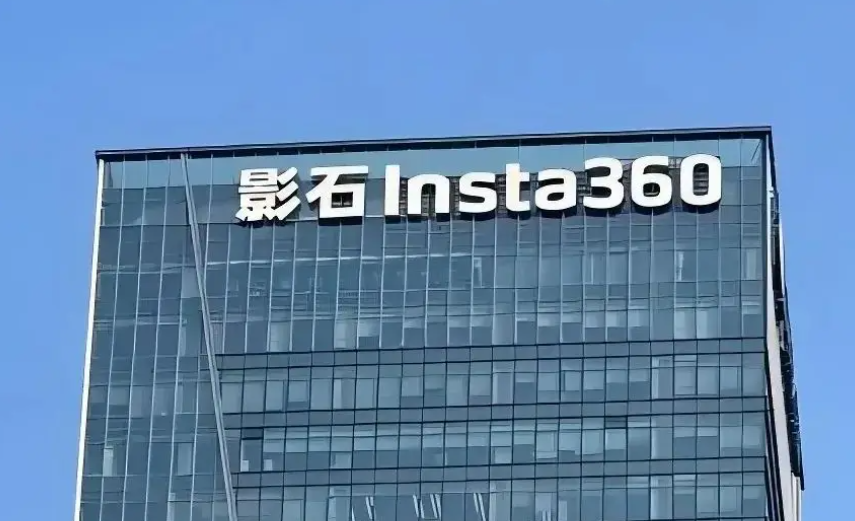
A blitzkrieg against the world's dominant drone maker has left Insta360 with a hollowed-out balance sheet, a stock down 71% in twelve months, and a strategic crossroads that will define the next era of China's action-camera industry.
Insta360 Innovation, the Shenzhen-based maker of 360-degree cameras that controls more than 65% of the global panoramic camera market by unit shipments, reported first-half 2026 results on August 27 that laid bare the cost of its war of attrition against DJI: revenue surged 50.3% year-on-year to RMB 5.516 billion (US$766 million), yet net profit attributable to shareholders cratered 94.15% to RMB 30.41 million (US$4.2 million). Strip out RMB 47.24 million (US$6.6 million) in financial investment income and the core operating business posted its first loss since the company's 2021 A-share listing — a deficit of RMB 15.34 million (US$2.1 million).
The numbers crystallize a strategic paradox that investors had been pricing in for months: Insta360's share price peaked at RMB 377.77 in September 2025, implying a market capitalization above RMB 150 billion (US$20.8 billion). By September 4, 2026, the stock had retreated to RMB 108.68, wiping out more than RMB 100 billion (US$13.9 billion) in market value — more than twice the company's entire remaining capitalization of approximately RMB 43.5 billion (US$6 billion). The selloff accelerated after a June 11 lock-up expiry released 227 million previously restricted shares, nearly sextupling the freely tradable float overnight and triggering a wave of early-investor liquidation.
Three Cost Mountains Crush Margins Despite Record Revenue
The profit implosion was not the result of a single shock but the simultaneous detonation of three structural cost pressures, each expanding faster than top-line growth.
Raw-material inflation hit first. Rising NAND flash memory prices prompted Insta360 to front-load nearly RMB 20 billion (US$2.78 billion) in component procurement during the first half, pushing total cost of goods sold up 80.46% — a full 30 percentage points faster than revenue growth. Gross margin consequently fell from 51.22% in the first half of 2025 to 41.42%, an almost ten-percentage-point compression in a single year. The strategic logic is defensible — locking in chip costs ahead of further inflation — but the risk is symmetrical: if memory prices correct, a RMB 62.12 billion (US$8.6 billion) inventory pile, up 112.82% from year-end 2025, could require significant write-downs.
R&D and selling expenses then compounded the squeeze. Research and development spending reached RMB 1.007 billion (US$140 million), up 79% year-on-year, as Insta360 simultaneously engineered a panoramic drone line, a gimbal camera, a wireless microphone, and several smartphone accessories — seven to eight new product series planned for full-year 2026 launch. Selling, general and administrative costs ran even higher at RMB 1.017 billion (US$141 million), up 62%, fueled by a global retail expansion that includes a planned flagship store at New York's Times Square in Q3 2026, with Tokyo and Munich locations in the pipeline. Physical retail carries an inherent structural drag: Insta360's own disclosures indicate offline channel gross margins run approximately 8.51 percentage points below online, meaning incremental brick-and-mortar revenue actively dilutes blended profitability.
New-business losses then delivered the final blow. The Antigravity drone subsidiary network — four entities in total — recorded combined losses in the first half, with Shenzhen Antigravity alone reporting a deficit of RMB 290 million (US$40.3 million). The Luna Ultra gimbal camera, launched globally in June 2026, generated an initial sales spike before retreating to a level well below DJI's Pocket series. Second-quarter 2026 standalone net profit came in at negative RMB 54.21 million (US$7.5 million), compared with a profit of RMB 340 million (US$47.2 million) in Q2 2025 — a swing of nearly RMB 400 million in a single quarter, confirming that the deterioration is accelerating rather than stabilizing.
DJI Converts Defense Into Price-War Offense
The competitive mechanics driving Insta360's cost spiral trace directly to DJI's calculated counter-offensive. When Insta360 launched the Antigravity drone brand in July 2025, DJI responded not by defending its drone franchise but by invading Insta360's home territory in panoramic cameras. DJI released the Osmo 360 at RMB 2,999 — RMB 800 below Insta360's flagship X5 — with near-identical sensor specifications, 8K panoramic video, HDR, NFC connectivity, and AI editing. The message was unambiguous: DJI's balance sheet, buoyed by years of drone-market dominance, could sustain margin-compressing price aggression indefinitely.
The pattern repeated with mechanical precision. On June 10, 2026, Insta360 unveiled the Luna Ultra gimbal camera at RMB 3,999, targeting DJI's Pocket line. Five days later, DJI launched the Pocket 4P at RMB 3,799. On August 12, Insta360 released the X6 panoramic flagship at RMB 3,999. Within 24 hours, DJI countered with the Osmo 360 II at RMB 3,299 — matching sensor specs, supporting 120-megapixel panoramic stills, and undercutting by RMB 700. Each response arrived faster than the market could absorb Insta360's new launches, systematically eroding the pricing power that had underpinned the company's historically strong margins.
DJI's founder Wang Tao — who had given only two media interviews in the preceding decade — broke his public silence in 2026 to reference Insta360 founder Liu Jingkang by name, a signal that even the notoriously reclusive engineer-entrepreneur had elevated the rivalry to strategic priority. DJI has since moved to recruit senior public-relations talent, an organizational shift that underscores how seriously it has taken Insta360's challenge — and how thoroughly it intends to neutralize it.
Diverging Technology DNA Determines Long-Term Trajectories
Beneath the quarterly profit-and-loss drama lies a more consequential divergence in technology philosophy that will shape both companies' competitive positioning through the remainder of the decade.
DJI's institutional DNA is rooted in flight-control hardware and mechanical reliability. Its founding team — predominantly automation, mechatronics, and flight-control engineers — embeds a cultural bias toward zero hardware failure tolerance. The Avata 360, DJI's most representative panoramic drone, prioritizes real-time image transmission, obstacle avoidance, and on-site subject tracking. Panoramic capture is an additive mode layered onto a platform engineered first and foremost to fly safely in complex environments. The output is optimized for professionals and serious enthusiasts who demand in-field compositional precision.
Insta360's architecture inverts that hierarchy. Liu Jingkang trained as a software engineer; panoramic stitching algorithms are the company's foundational intellectual property. The Antigravity A1 drone achieves complete 360-degree capture and eliminates body-shadow occlusion — a persistent hardware challenge — but trades away some flight autonomy and obstacle-avoidance sophistication in favor of post-production AI cinematography. A novice pilot who captures raw panoramic footage can, in theory, produce broadcast-quality output through automated re-framing, stabilization, and editing tools. In Insta360's model, the camera captures everything; the algorithm decides what the viewer sees.
This distinction carries direct market-sizing implications. As drone hardware specifications converge — sensor size, dynamic range, and 8K video capability are approaching commodity status across price tiers — software-driven differentiation becomes the primary battleground. Insta360's lower operator-skill threshold addresses a larger addressable population of casual creators, travel vloggers, and short-video content producers who lack the technical fluency to compose shots in real time. Whether that demographic preference translates into durable market-share gains in the drone segment, against an incumbent with vastly deeper supply-chain leverage and financial reserves, remains the central unanswered question for Insta360 shareholders.
Patent Litigation and Lock-Up Overhangs Cloud the Recovery Path
Two non-operational factors add further uncertainty to any near-term re-rating thesis. Cross-border patent litigation between DJI and Insta360 — covering filings in both Chinese courts and the United States — was temporarily withdrawn but remains structurally unresolved. Either party retains the right to reinitiate proceedings, and an adverse ruling in the U.S. International Trade Commission, where import bans are a potential remedy, would be materially disruptive to Insta360's North American revenue, which contributed meaningfully to the 50%-plus top-line growth reported in the first half.
The lock-up expiry, meanwhile, has permanently altered the supply-demand dynamics of Insta360's equity. With 227 million shares — 56.5% of total share capital — now freely tradable, early institutional and strategic investors who accumulated positions at a fraction of the 2025 peak price face minimal barriers to exit. Until earnings visibility improves, the structural overhang is likely to cap any sustained recovery in the share price.
Impact Assessment: What Investors and Supply-Chain Partners Should Watch
For investors, the critical inflection point is whether Insta360's gross margin can stabilize above 40% in the second half of 2026 as inventory is drawn down and the initial procurement surge is absorbed into cost of goods sold. A further compression toward 35% would signal that DJI's pricing pressure has become structurally permanent rather than cyclically aggressive.
For the broader imaging and drone supply chain — including fisheye lens manufacturers, large-format CMOS sensor suppliers, and high-speed ISP chipmakers — the DJI-Insta360 rivalry is accelerating technology cross-pollination that benefits component vendors serving both platforms. The convergence of flight-control stabilization algorithms with multi-lens stitching creates demand for sensors and processors that must perform across both use cases, expanding the addressable market for specialized imaging silicon.
The global panoramic camera market remains small relative to the broader action-camera and drone segments, but Insta360's cumulative shipment milestone of 10 million units — reached within a decade — demonstrates that the category can scale. The question is whether Insta360 can finance the next phase of that scaling while simultaneously absorbing the cost of a war it chose to start.
Related Coverage:
Insta360’s Panoramic Drone Gambit Challenges DJI’s Aerial Supremacy