
IP as the Last Certainty: How China's Gaming Industry Is Betting on Franchises to Navigate the AI Era
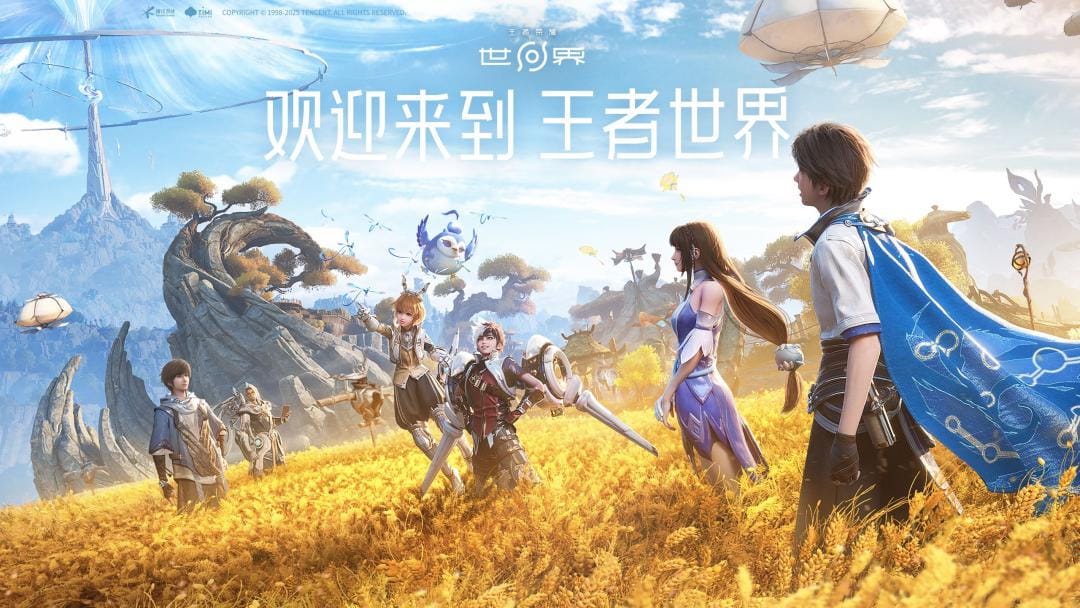
China's gaming industry is entering 2026 with a sharpened conviction: as artificial intelligence disrupts content creation and new entertainment formats compete aggressively for user attention, intellectual property has evolved from a marketing asset into the sector's primary hedge against structural uncertainty.
The shift is more than semantic. Across China's listed gaming companies, IP is being repositioned as a core balance-sheet asset — one capable of generating predictable cash flows, anchoring cross-media monetization strategies, and attracting valuation premiums in an era when the traditional growth logic of gameplay iteration and traffic arbitrage is losing its edge.
For investors, the implications are direct. Companies with deep, proven IP ecosystems are increasingly being priced differently from those relying on hit-driven development cycles, as the industry consensus solidifies around IP as a long-term risk management tool rather than a short-term revenue catalyst.
Classic IP Portfolios Become Cash Flow Anchors
The declining marginal returns of gameplay innovation have elevated the strategic value of legacy franchises. For China's publicly listed gaming companies, building product matrices around verified IP assets has become one of the most reliable mechanisms for earnings predictability.
Tencent and NetEase have constructed formidable competitive moats through cross-platform IP operations and diversified gameplay formats. A key inflection point arrives in April 2026, when Tencent launches Honor of Kings: World — a pivot from the MOBA format into open-world gameplay that systematically expands the "Honor of Kings" universe through richer narrative and audio-visual immersion. The title represents a critical stress test for the IP's ecosystem capacity: whether a competitive gaming franchise can sustain engagement depth beyond its core mechanics.
Beyond the marquee titles, the model extends across the listed landscape. Shengqu Games and Kaiyou Network continue to generate steady revenue streams through licensing arrangements built around the "Legend" franchise. Yoozoo Games is leveraging its "Young" series IP to expand into the mini-game segment, opening a new growth vector. These cases collectively illustrate a maturing, relatively predictable commercial model — one in which IP-driven matrix operations provide financial buffers during industry downturns and reduce earnings volatility that would otherwise accompany pure gameplay-cycle dependency.
Cross-Media Development Targets Independent Revenue Models
The scope of IP monetization in 2026 is expanding well beyond merchandise and brand collaborations. The industry is entering what analysts describe as a medium-to-heavy cross-media competition phase, where immersive experience and independent commercial viability — not merely IP lifecycle extension — define success.
Offline IP events, including concerts and themed carnivals, are becoming normalized and increasingly integrated with narrative design. Arknights' immersive offline exhibition last year, which incorporated lightweight story performance elements, signaled an early-stage shift in this direction.
The trajectory is accelerating. An immersive music show adapted from League of Legends: Arcane breaks further from conventional exhibition formats, constructing a standalone offline entertainment product with multiple character storylines, complete stage design, and interactive architecture. Combined with the previously announced Honor of Kings family animation film project, these initiatives confirm that leading gaming IPs have entered a high-investment, narrative-immersion product phase — one pushing toward mainstream pan-entertainment formats at pace.
The strategic logic is significant. Cross-media development is no longer positioned as a tool to reinforce core game engagement. The target is the creation of new product forms with independent aesthetic value, self-contained experience loops, and autonomous revenue models — a "second revenue curve" that operates alongside, rather than merely in support of, the underlying game.
Female-Oriented IP Seeks New Emotional and Aesthetic Frontiers
Female-oriented gaming, particularly otome games, operates with an IP dependency that exceeds most other genres. The emotional bonding between players and in-game characters translates directly into derivative merchandise and collaboration spending, producing an IP consumption pattern that mirrors fan culture in the broader entertainment industry.
Yet the growth opportunity in 2026 extends beyond deepening existing otome mechanics. The more significant breakthrough lies in transcending established emotional feedback frameworks and incorporating pan-entertainment IP content elements — delivered in gamified form — to activate new emotional investment and consumption drivers.
Le Yue Su recently revealed a 3D idol game, V Project, whose format — combining Korean aesthetic sensibilities, virtual idol characters, real-time interaction, and character cultivation — draws direct comparisons to South Korea's Plave, the 2.5D K-POP virtual idol group that has achieved significant cultural traction. Crucially, this combination remains largely absent from China's domestic female-oriented gaming market, representing a structural gap.
The competitive frontier for female-oriented IP, in this framing, is not confined to emotional narrative. It encompasses new visual languages, interaction models, technological delivery mechanisms, and operational rhythms — all oriented toward building next-generation IP relationships with high emotional stickiness, modeled on the "companionship" and "growth" logic of real idol industries.
Domestic IP Positioned to Capture Share as Japanese Franchises Recede
Macroeconomic conditions in 2026 have accelerated a structural retreat of Japanese IP from the Chinese market — a shift that is generating identifiable demand gaps across derivative merchandise, brand partnerships, offline themed spaces, and live entertainment. For domestic gaming IPs with coherent world-building, distinctive visual identities, and cultural resonance, the displacement represents a concrete market opportunity.
The opportunity extends beyond established gacha and otome titles. High-quality single-player game IPs are increasingly positioned to enter IP cross-sector derivative markets. Black Myth: Wukong demonstrated that a domestic single-player title can become a mainstream cultural symbol capable of meeting broad emotional and consumer needs. The Sultan's Game validated similar dynamics within a narrower but intensely engaged community.
In 2026, titles such as Blade of Shadows: Zero carry expectations that go beyond "domestic 3A" ambitions. They are positioned to absorb demand generated by the Japanese IP retreat and expand from game products into pan-entertainment consumer symbols — accelerating market penetration in the derivative consumption space and cultivating user habits that could sustain long-term franchise value.
AI Integration Reshapes IP Valuation Logic
Artificial intelligence is no longer a novelty in gaming, but its intersection with IP strategy is undergoing a qualitative shift in 2026 — moving from a cost-reduction instrument to a revenue-generating engine, and emerging as a key variable in how the market differentiates IP-rich companies from peers.
Multiple listed gaming companies and major studios have embedded "AI + IP" into their core strategic frameworks. The emerging consensus holds that deep AI-IP integration enhances not just operational efficiency but also user value and commercial scalability — a conviction that is beginning to register in company valuations.
The valuation premium associated with this combination derives from a specific logic: applying new technology to already-verified IP assets to increase user engagement and extend lifetime value, within the context of long-cycle game ecosystems. This "certainty" is increasingly viewed as more investable than the traditional bet on developing the next breakout title.
Practical applications are already in motion. MiHoYo's Genshin Impact (原神) and NetEase's Justice Online are integrating AI-assisted tools into user-generated content ecosystems, amplifying IP asset value and deepening user retention. Separately, select gaming IPs are exploring distribution through AI-generated comic drama formats, opening new channels for IP derivative monetization.
IP as Structural Defense, Not Just Growth Driver
The strategic reorientation around IP reflects a deeper shift in how China's gaming industry thinks about risk. For years, the dominant growth model relied on technology iteration, traffic acquisition, channel distribution, and replicable gameplay service formats — a framework in which IP was supplementary rather than essential.
That logic is being revised under pressure. Rising user acquisition costs, accelerating gameplay commoditization, and the emergence of AI-driven entertainment alternatives are collectively eroding the predictability of the hit-driven model.
IP, in the current formulation, functions as a long-term risk hedge. Its contribution is not the sudden revenue spike of a successful new launch, but the construction of a durable "certainty" — a structural buffer against gameplay obsolescence, traffic cost inflation, and the broader volatility of an industry in transition.
For market participants, the practical question IP performance answers is not simply about near-term monetization. It is whether a company has built the internal architecture and asset depth to sustain relevance across cycles — a capability that is becoming central to how the sector's most durable businesses are identified and valued.