
J.P. Morgan Downgrades China Auto Sector Outlook, Cuts Li Auto to Underweight on Earnings Risk
J.P. Morgan's Asia-Pacific auto research team has issued a cautious outlook for China's automotive sector in 2026, warning of a repeat of 2018's downturn combined with 2025's volatility, while downgrading Li Auto to Underweight amid mounting competitive pressures.
In a comprehensive sector report released February 8, 2026, Nick Lai, J.P. Morgan's Head of APAC Auto Research, painted a challenging picture for Chinese automakers this year, projecting domestic passenger vehicle (PV) demand to contract 4% year-over-year—worse than the firm's previous -2% forecast.
History Repeating: 2018 Meets 2025
The investment bank draws parallels to 2018, when China's auto market experienced its first-ever annual decline following subsidy-driven demand pull-forward. "We believe China auto's performance this year will exhibit the combined pattern seen in 2018 and 2025," Lai wrote, noting that while the sector should underperform overall, high volatility driven by new model launches and earnings surprises will create selective opportunities.
The firm now expects total PV wholesales (including exports) to remain roughly flat in 2026, with robust overseas shipments offsetting domestic weakness. New energy vehicle (NEV) growth is projected at just 6-8%, down from previous estimates of 8-13%.
Cost Inflation Threatens Margins
Adding to revenue pressures, J.P. Morgan warns of rising input costs that will squeeze profitability across the sector. Spot prices for lithium, copper, and storage chips have surged 30-50% recently, with contract price impacts expected to materialize in the second quarter.
"We cut key OEMs' 2026 earnings estimates," Lai stated, trimming forecasts for BYD, Great Wall Motor Company, NIO, XPeng, Leapmotor, and Li Auto—with the latter now projected to post a loss.
Li Auto Faces Perfect Storm
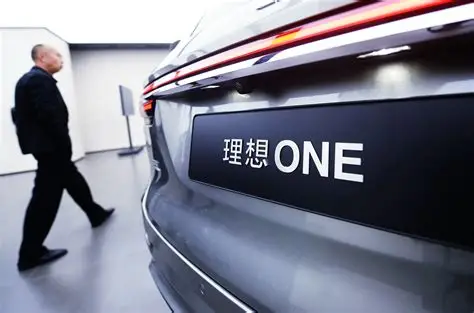
The most dramatic call comes on Li Auto, which J.P. Morgan downgraded from Neutral to Underweight with a December 2026 price target of US14 (HK56) for H-shares)—representing potential downside from current levels.
"Our primary reservation on Li Auto is a lack of major new models this year when competitors are launching EREVs and BEVs that overlap with Li's existing offerings," the report states. The firm identified five competing models that could pressure Li's sales: NIO's ONVO L80, Xiaomi's third SUV, Leapmotor's D19 large SUV, Zeekr's 8X SUV, and Huawei Aito's new M7 and M8 models.
J.P. Morgan now forecasts Li Auto's sales will decline approximately 10% to 366,000 units in 2026—36% below Bloomberg consensus of around 500,000 units. The firm projects the company will turn unprofitable on both GAAP and non-GAAP bases, contrasting sharply with consensus estimates of RMB 4.4 billion (US$0.6 billion) in GAAP profit.
Selective Opportunities Remain
Despite the cautious sector view, J.P. Morgan maintains Overweight ratings on several names where it sees earnings upside potential. The firm's top picks are Geely and China National Heavy Duty Truck Group, where J.P. Morgan estimates exceed consensus.
For Geely, the firm maintained its RMB 20.5 billion earnings projection for 2026, citing improved profitability at Zeekr, better product mix, cost savings from integration, and higher overseas sales mix. J.P. Morgan raised its price target on Sinotruk by 73% to HK$45, expecting the heavy-duty truck maker to benefit from infrastructure investment and overseas expansion.
The firm also sees buying opportunities emerging in the second quarter for BYD, Leapmotor, XPeng, and NIO, as seasonal demand improves and new model launches from the Beijing Auto Show (April 24-May 3) drive order flow.
Overseas Expansion: A Critical Lifeline
With domestic demand under pressure, international markets have become increasingly vital. Chinese automakers exported 7.1 million vehicles in 2025—meaning one in five vehicles produced domestically was shipped overseas.
"Overseas markets should account for ~20-50% of key OEMs' earnings this year," according to J.P. Morgan estimates. The firm notes that per-unit profits in overseas markets are often 2-3 times higher than domestic sales, even after accounting for tariffs and shipping costs.
BYD, Great Wall, Leapmotor, XPeng, and Geely are all building or have built production capacity outside China in markets including Hungary, Turkey, Brazil, Indonesia, Malaysia, Thailand, Spain, and Austria to mitigate tariff headwinds and the EU's minimum import price policy.
Timing the Entry Point
For investors, J.P. Morgan suggests March or early second-quarter 2026 may offer attractive entry points, driven by several catalysts: sequentially stronger second-quarter demand above seasonal trends, rising anticipation ahead of the Beijing Auto Show, potential policy clarity following China's Two Sessions meetings in March, and conclusion of supplier negotiations that should price in margin impacts.
The investment bank's message is clear: while 2026 will test Chinese automakers' resilience, differentiation between winners and losers will be stark—making stock selection more critical than ever in navigating what promises to be another turbulent year for the world's largest auto market.