
Li Auto's "L9" Flagship SUV: Deutsche Bank Sees Volume Play Over Profitability as EV Maker Races Toward Autonomous Future
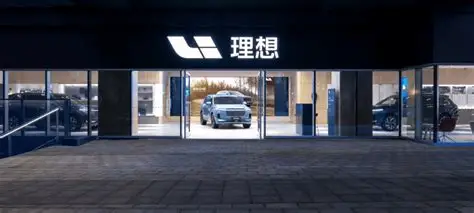
Deutsche Bank has issued a comprehensive analysis of Li Auto's upcoming next-generation flagship SUV, maintaining its Buy rating while slashing the price target to HKD 100 from previous levels—a move that underscores both the promise and peril facing China's premium electric vehicle manufacturers as they pivot aggressively toward autonomous driving and artificial intelligence.
The German investment bank's February 2026 report, authored by analysts Bin Wang and Wei Huang, arrives at a critical juncture for Li Auto, whose shares have tumbled from a 52-week high of HKD 128.70 to HKD 69.20, reflecting broader skepticism about profitability in China's increasingly cutthroat EV market.
Positioning the "L9" as an AI Robot, Not Just a Vehicle
Li Auto's strategic gambit centers on rebranding its Q2 2026 launch as an "Embodied Artificial Intelligence (EAI) robot" capable of Level 4 autonomous driving—a designation that implies the vehicle can handle driving tasks without human intervention under most conditions. The company claims the "Li L9" will autonomously charge, maintain, and even clean itself, though Deutsche Bank's analysts notably refrain from endorsing these ambitious claims outright.
The hardware specifications read like a Silicon Valley fever dream: a 70 kWh battery pack, Qualcomm's 8797 intelligent cockpit platform, an 800V high-voltage fully active suspension system, complete control-by-wire architecture, multiple "zero-gravity" seats, and switchable transparent glass. Yet the most revealing detail may be the pricing strategy.
Volume Over Margin: A Calculated Retreat
Deutsche Bank anticipates entry-level pricing around RMB 320,000 (US$44,000)—matching the current "Li L8" SUV—for both five- and six-seat configurations. This represents a significant strategic shift. "In our view, this suggests Li Auto is prioritizing volume and scale over near-term profitability," the analysts write, cutting to the heart of the company's dilemma.
The rationale is straightforward if daunting: Li Auto needs a massive fleet generating enormous quantities of real-world driving data to train its Vision-Language-Action (VLA) models for autonomous driving. This data-hungry approach mirrors Tesla's playbook but arrives years later into a market where Chinese competitors including NIO, XPeng, and legacy manufacturers are pursuing identical strategies.
Proprietary "M100" Chip: Competitive Moat or Expensive Distraction?
The premium "L9 Livis" variant will feature 2,560 TOPS of computing power delivered by dual in-house "M100" autonomous driving chips built on 5nm process technology. Deutsche Bank cites a LatePost report claiming a single "M100" chip matches the Large Language Model performance of two Nvidia Thor-U chips, and equals three Thor-U chips for traditional convolutional neural network vision tasks.
If accurate, this represents a genuine technological achievement and potential competitive advantage through "co-design" of AI models and silicon—the holy grail of autonomous driving development. However, the report offers no independent verification of these performance claims, and history suggests such comparisons rarely survive real-world deployment intact.
The "L9 Livis" will deploy a 360-degree LiDAR system with four to five individual units, providing the comprehensive environmental perception necessary for processing massive video streams through 3D vision transformers.
Democratizing Ultra-Luxury Features
Perhaps the "L9's" most tangible competitive advantage lies in bringing previously exclusive technologies to sub-RMB 600,000 (US$83,000) price points. The 800V Fully Active Suspension System represents a significant departure from mainstream semi-active systems that rely on air springs and cannot provide instantaneous active force.
By utilizing brushless DC motors and active actuators including electro-hydraulic pumps and linear motors, the FASS enables millisecond-level precision control over individual wheel damping and support. Deutsche Bank notes this technology previously appeared only in ultra-luxury models like the NIO ET9, priced at RMB 768,000-818,000 (US$106,000-113,000) with its 900V system.
The "L9 Livis" will also debut as the first vehicle with comprehensive full control-by-wire (X-by-Wire) architecture, replacing mechanical linkages with electronic sensors and actuators across steering, braking, and propulsion. This integrated approach—combining steer-by-wire, four-wheel steering, and brake-by-wire including electro-mechanical braking—creates multiple layers of hardware redundancy critical for autonomous operation.
The Data Race and Profitability Question
Deutsche Bank's analysis implicitly raises the central question facing Li Auto and its competitors: can they achieve autonomous driving breakthroughs before burning through capital in a margin-crushing volume war? By pricing the "L9" aggressively to maximize fleet size and data collection, Li Auto is making a leveraged bet on its ability to translate that data into a sustainable competitive advantage.
The HKD 100 price target—representing 45% upside from current levels but down substantially from previous targets—suggests Deutsche Bank sees long-term potential while acknowledging near-term headwinds. The firm has received compensation from Li Auto for non-investment banking services over the past year, according to regulatory disclosures.
For investors, the "L9" launch represents a critical test of whether premium Chinese EV manufacturers can successfully transition from selling vehicles to deploying AI-powered mobility platforms—or whether they'll simply commoditize themselves pursuing an autonomous future that remains perpetually just beyond reach.