
J&T Express Faces Reality Check as Global Expansion Hits Crossroads
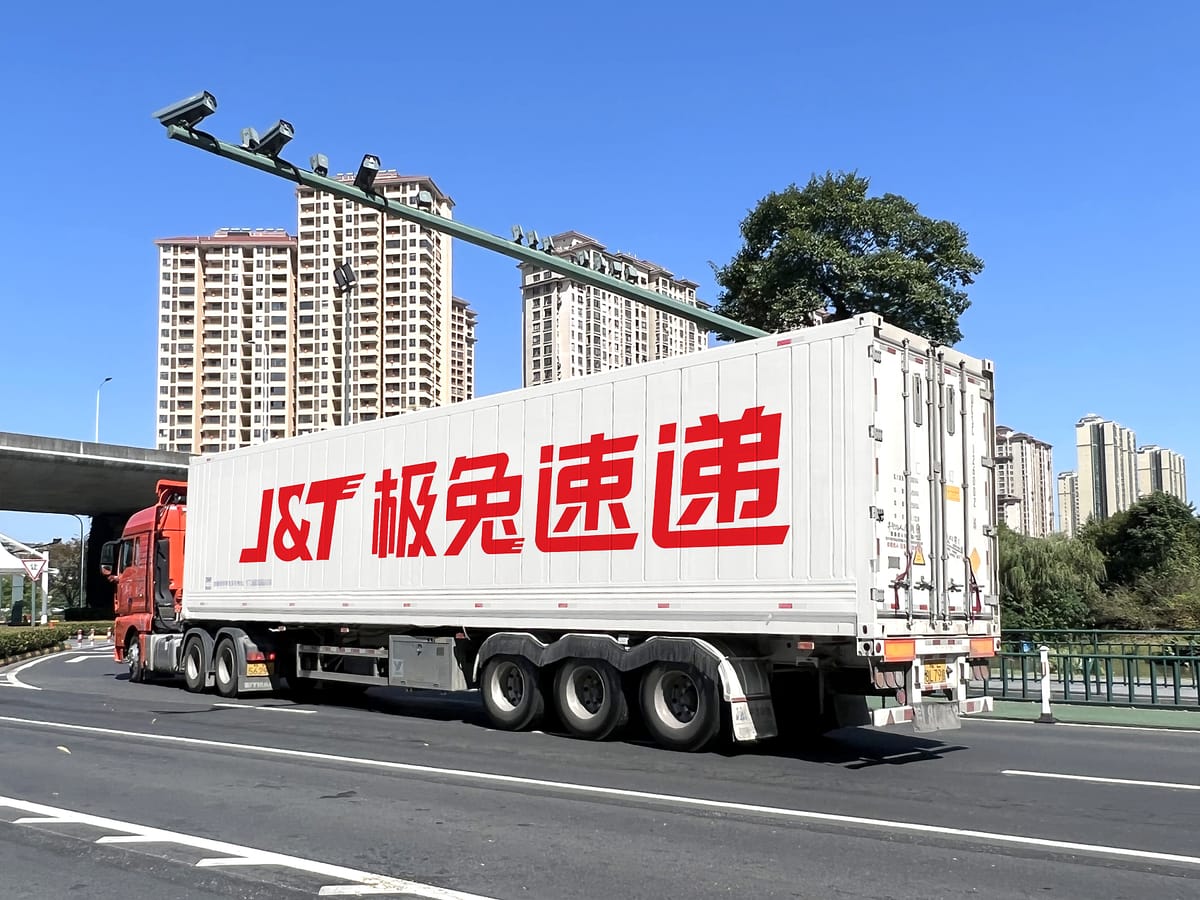
J&T Express's dominance in Southeast Asia and rapid growth in Latin America have fueled ambitious plans to enter the US market in 2026, but the logistics giant faces mounting challenges as it confronts entrenched competitors, soaring costs, and a rapidly narrowing window of opportunity in one of the world's most complex delivery markets.
The move comes after J&T Express and SF Express completed an 8.3 billion Hong Kong dollar cross-shareholding deal, positioning J&T to directly challenge existing players including GOFO and UniUni. Industry observers warn that J&T's entry could trigger an extended price war in a market where Chinese-backed delivery companies still account for less than 10% of e-commerce logistics volume, despite handling peak daily volumes exceeding 3 million packages during the recent Black Friday period.
The expansion underscores both the opportunities and risks facing Chinese logistics companies as they venture beyond Asia. While J&T delivered over 30 billion parcels globally in 2025 and achieved net profit of $88.93 million (approximately 634 million yuan) in the first half, its success in replicating its Southeast Asian playbook in higher-cost Western markets remains uncertain.
The US market presents fundamentally different dynamics than the developing economies where J&T has thrived, with longer ramp-up periods, heavier capital requirements, and significantly higher labor and compliance costs than Southeast Asia or Latin America.
Southeast Asia Stronghold Provides Cash Flow Foundation
J&T's confidence in pursuing the US market stems primarily from its commanding position in Southeast Asia, where the company has transitioned from rapid expansion to market consolidation. In 2025, J&T's parcel volume surpassed 30 billion pieces for the first time, with Southeast Asian volume growing 67.8% year-over-year. Fourth-quarter daily average volume in the region jumped 80% to reach 27 million packages.
The company now controls 38% of Southeast Asia's express delivery market, ahead of Shopee's self-operated logistics arm SPX at approximately 30% and Lazada's LGS at around 5%. Combined, these three players command nearly 73% market share, with J&T's nearest independent competitor, Flash, holding just 4%.
Industry analyst Fang Lei told Leiphone that the Southeast Asian express market has entered a clear consolidation phase, with second-tier players gradually being squeezed out. He predicts the market will eventually be dominated by J&T and Shopee's self-operated logistics, together capturing approximately 90% of total volume.
J&T's competitive moat is reinforced by its pricing structure. The company's average delivery price in Southeast Asia stands at approximately 0.60perparcel,generatingprofitofroughly0.60perparcel,generatingprofitofroughly0.07 per piece. While these figures represent rock-bottom industry pricing, J&T's massive scale allows it to effectively amortize costs, transforming low prices into a sustainable barrier to entry that competitors lacking similar volume cannot match.
The company's growth structure provides additional momentum. Currently, approximately 70% of J&T's Southeast Asian volume comes from TikTok, while TikTok entrusts 70-80% of its regional parcels to J&T. This deep operational integration creates a powerful feedback loop: as long as TikTok does not build its own logistics infrastructure, its growth in Southeast Asia translates almost proportionally to J&T's expansion.
Fang Lei estimates TikTok could grow 30-40% in Southeast Asia this year, potentially driving J&T's profit to $700-800 million. Beyond platform-driven growth, market penetration rates suggest significant long-term runway. J&T's express delivery penetration rate in China stands at approximately 15%, while China's overall market reaches 35-40%. Using China as a benchmark, Southeast Asia's long-term ceiling suggests at least double the current market size.
This stable profitability and growth trajectory provides J&T with crucial cash flow and strategic cushioning for expansion into higher-cost, higher-uncertainty overseas markets.
Latin America Scales Rapidly, Middle East Stabilizes
Beyond Southeast Asia, J&T is building important growth pillars in Latin America and the Middle East. In 2025, parcel volume in these regions grew 43.6% year-over-year, with fourth-quarter daily average volume doubling from 800,000 to 1.5 million pieces. More significantly, both markets achieved profitability for the first time in the first half of last year, generating adjusted EBITDA of $1.569 million.
Latin America may represent "the next Southeast Asia" for J&T based on current investment pace and business progress. The region shares striking similarities with Southeast Asia: relatively high per capita GDP, concentrated core country volumes, and high market completeness within individual nations. J&T faces a relatively clear competitive landscape without the hyper-intense price wars characterizing more mature markets.
Crucially, per-parcel profit margins in Latin America significantly exceed those in Southeast Asia. While China's most efficient operator, ZTO Express, earns approximately 0.2 yuan per parcel, and J&T generates around 0.5 yuan in Southeast Asia, core Latin American markets like Mexico deliver approximately 1.5 yuan per piece.
This profitability cushion has allowed J&T to avoid aggressive tactics. Industry source Yuan Yuan revealed that J&T's pricing in Brazil sits at roughly 80% of market average, with potential price war discounts estimated at just 10% rather than the one-third cuts seen in other markets. No logistics company in Latin America has demonstrated ability to operate sustainably at one-third market pricing while maintaining healthy cash flow.
J&T's primary regional competitors are Anjun and iMile. Anjun concentrates on Brazil, leveraging deep integration with Brazil's postal system and strong pickup capabilities to handle approximately 1 million daily parcels. iMile expanded from the Middle East into Mexico, where it competes intensely with J&T.
According to sources familiar with the matter, Brazil represents J&T's primary Latin American growth driver, with core volume coming from concentrated inflows of major e-commerce platform orders. TikTok Brazil has transferred all volume to J&T, while Mercado Libre has assigned parcels from its lower-tier brands to J&T fulfillment. Combined with Temu's climbing Latin American order volume, J&T's Brazil scale now exceeds Anjun's, while its Mexico volume similarly surpasses iMile's.
Simultaneously, J&T's Middle East operations have stabilized. Although the company's early "burn cash for growth" strategy failed to produce dramatic results, support from TikTok, Temu and other platforms maintains a solid baseline. Sources indicate J&T's delivery success rates in major Middle Eastern countries have reached approximately 85%, demonstrating relatively high operational efficiency in last-mile networks.
Formidable US Market Challenges Loom
With foundations solidifying in Latin America and the Middle East, J&T has set sights on the far more challenging US market. As previously noted, the company faces a highly complex and intensely competitive landscape.
In the US last-mile market, domestic carriers USPS, FedEx and UPS collectively command over 85% market share. While international players including DHL and SF Express maintain US operations, most last-mile delivery orders are still outsourced to these three giants.
Simultaneously, a cohort of upstart logistics providers is actively capturing market share, including GOFO, UniUni, Yanwen and SpeedX. This year, SwiftX, founded by Zhang Chuan, former head of Meituan's local services division, has also aggressively entered the US logistics market.
Sources told Leiphone that Zhang began researching and planning US last-mile market entry in 2022, before GOFO and UniUni had entered. His early calculations identified approximately 70 million parcels of incremental market space, with per-piece costs around 7thatcouldpotentiallycompresstojustover7thatcouldpotentiallycompresstojustover2 through scaled operations. Capturing even 2-3 million daily parcels would represent a substantial market.
However, GOFO and UniUni's forceful entry over the past two years has intensified North American logistics competition. Both companies' low-price strategies have achieved tangible results. GOFO currently handles 1.5-2 million daily parcels, while UniUni processes over 1 million, with both establishing clear advantages in order scale and fulfillment stability.
As a new entrant, SwiftX's delivery network remains nascent, covering only approximately 4,500 zip codes across 12 states with limited overall delivery radius, requiring many orders to be outsourced to other service providers. Insufficient local resources and relationship accumulation make it difficult to substantially penetrate the higher-margin local order market.
Currently, SwiftX focuses primarily on cross-border business, serving platforms including Temu, TikTok and AliExpress. Cross-border orders carry obvious disadvantages: US domestic orders typically price around 3perpiece,whileChinesecross−borderorderspricejustover3perpiece,whileChinesecross−borderorderspricejustover2, offering thinner profit margins.
For J&T, the US market presents established domestic giants and star newcomers ahead, with continuous new player influx behind—a substantial challenge.
"This resembles China's instant retail sector. Initially everyone believed the market was large enough, but after entering discovered all players targeted the same core users, eventually evolving into brutal warfare. Therefore, the window for new players to establish footholds in the US last-mile market is rapidly narrowing," one industry insider commented.
From a business model perspective, J&T's historical asset-light approach may not apply in the US. Yuan Yuan told Leiphone that J&T's upfront investments concentrate primarily on equipment and rent. The company currently uses sorting equipment entirely developed, designed, produced, transported and maintained by its wholly-owned subsidiary Aususortech, then uniformly deployed across over a dozen overseas countries.
On this foundation, J&T does not need to frequently add transfer centers. Overall transfer center count remains stable, with processing capacity enhanced by continuously adding sorting equipment, enabling rapid network expansion at relatively low cost. Beyond equipment investment, major operating costs concentrate on warehouse rent and warehouse renovation and decoration, with related investments per country ranging roughly from 1millionto1millionto10 million.
According to J&T internal sources, as business scale expands, the company may gradually transition toward heavier asset models, such as purchasing commercial vehicles and building fleets. This approach somewhat resembles ZTO's early strategy of exchanging equity for franchisee participation, though specific paths differ.
Differences stem primarily from Western market industrial structures. In countries like Germany and France, beyond national postal systems like La Poste and Deutsche Post, mature third-party supplier systems exist for airports, transfers, vehicles and personnel, with local express companies commonly adopting outsourced models for last-mile fulfillment.
This approach helps reduce fixed costs while avoiding complications in markets like Europe where companies employing over 30 local staff must establish labor unions, significantly raising labor costs and management complexity.
Many logistics enterprises therefore prefer distributing capital across small operators who complete actual delivery. By estimation, launching operations in a European country typically requires only tens of millions of dollars, while the US—given larger land area and higher network deployment difficulty—may require over $100 million in startup costs.
In other words, J&T faces both higher upfront investment pressure and the imperative to design operational models balancing flexibility and efficiency to steadily expand in high-cost, high-complexity environments.
Uncertain Path Forward
Looking back, J&T's strategy of trading low prices for scale in Southeast Asia successfully generated cost advantages, but the same playbook encountered reality constraints in the Middle East, forcing the company to slow its pace and recalculate the balance between cost and pricing.
Facing the even more intensely competitive US market, whether low-price strategies remain effective represents an increasingly critical question. Industry expert Gao Dong noted that GOFO and UniUni have already validated basic models in the US, making J&T's strategy likely to involve direct replication. If J&T offers pricing below GOFO's, orders could shift, inevitably triggering price-cut responses. This means that with existing players yet to establish clear dominance, J&T's potential entry could push the US last-mile market into an even longer, higher-intensity competitive phase.
The stakes are substantial. During this year's Black Friday period, UniUni's peak daily delivery volume reached approximately 1.5-1.8 million parcels, while GOFO exceeded 3 million. Yet total US daily e-commerce orders during Black Friday surpassed 100 million, with GOFO, UniUni, SwiftX and other Chinese-backed delivery companies combined accounting for less than 10% of the total.
The massive growth opportunity comes paired with extraordinary difficulty, raising fundamental questions about whether J&T's battle-tested playbook can translate to fundamentally different market conditions—and whether the company's Southeast Asian cash engine can sustain what may become a prolonged and capital-intensive American campaign.