
JP Morgan Lifts Unitree to Overweight, Eyes 173% Revenue Surge as Physical AI Timeline Collapses
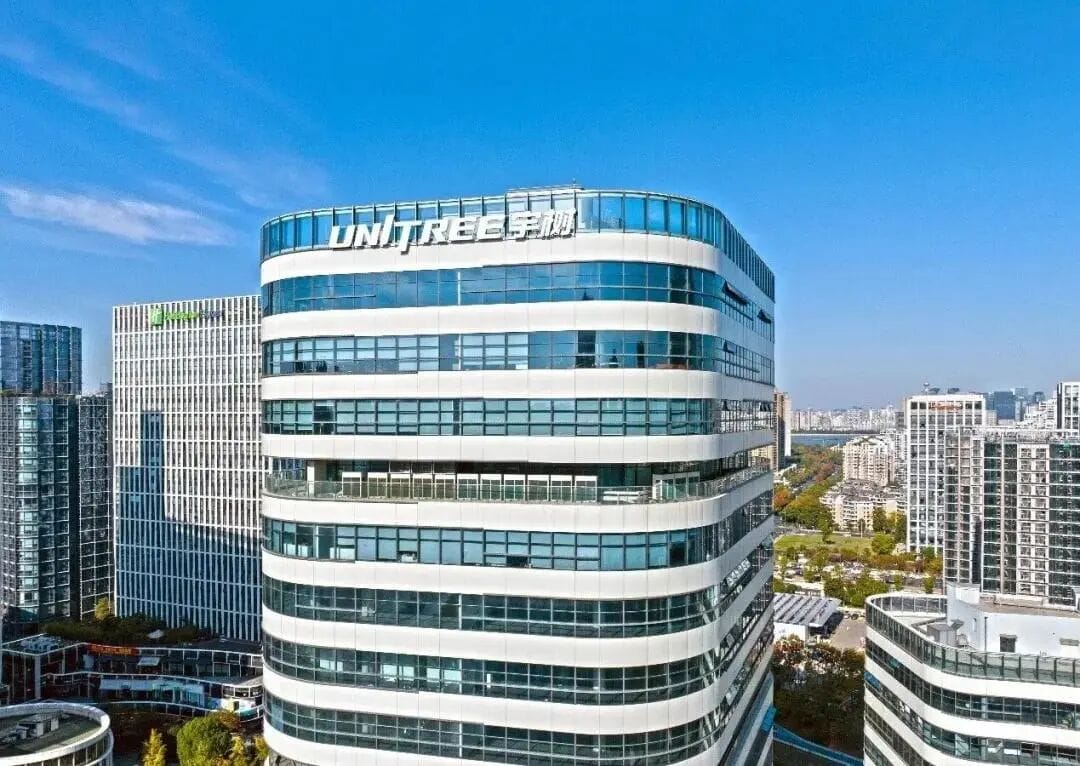
Target price jumps 232% to RMB 995, as Wall Street's most prominent China robotics bull bet hinges on a founder's compressed breakthrough forecast shifting the industry's S-curve forward by years.
JP Morgan Chase has executed one of its sharpest single-note rating reversals in the China robotics sector, upgrading Unitree Roboticstwo full notches from Underweight to Overweight while more than tripling its December 2027 price target to RMB 995 (US$138) from RMB 300 — a 232% target revision anchored to a shrinking physical AI breakthrough window that analysts now believe could arrive within two to three years, not a decade.
The upgrade, published October 25, came days after the 2026 World Physical AI Conference in Hangzhou, where Unitree founder and CEO Wang Xingxing publicly revised his own timeline for meaningful physical AI capability breakthroughs from "up to ten years" to "one to two, or two to three years." That single statement — and its implications for the industry's commercial adoption S-curve — appears to have been the decisive catalyst for JPMorgan's pivot. At Unitree's October 23 closing price of RMB 624, the new target implies approximately 59% upside.
Founder's Timeline Revision Forces JPMorgan to Reprice the Entire Adoption Curve
JP Morgan's prior caution on Unitree — and Chinese humanoid robotics broadly — was grounded in a structural concern: hardware leadership had not reliably converted into repeatable commercial demand. Following its due diligence at the China International Industry Fair, the bank characterized the order book as dominated by R&D procurement, developer platform sales, and small-batch pilot programs — a revenue profile too episodic to sustain premium valuation multiples.
Wang's remarks at the Hangzhou conference altered that calculus. The bank's analysts now argue that if the physical AI capability threshold — the point at which robots can execute reliably enough to justify enterprise-scale procurement — compresses to a "years, not decade" horizon, then the strategic value of already-deployed robots, real-world operational data, and developer ecosystems must be repriced upward. In JPMorgan's framing, the bottleneck is migrating from high-level reasoning — where large language model progress has been rapid — toward "real-world execution, data generation, and deployment iteration," a domain where Unitree's installed base confers a durable first-mover advantage.
The bank's analysts make the execution gap explicit: as foundation models become more capable planners and supervisors, the competitive question for robotics firms shifts from software intelligence to the reliability of physical systems — sensors, actuators, battery management, thermal control, calibration, safety certification, durability, and field service infrastructure. These hardware and systems-integration capabilities are not easily or quickly replicated, lending Unitree's existing platform a defensibility the prior Underweight rating had underweighted.
2028 Sales Forecast Jumps Nearly Threefold, Market Share Targeted at 21%
JPMorgan left its 2026 humanoid robot shipment estimate for Unitree unchanged at 14,163 units, a signal that the bank is not extrapolating near-term commercial inflection. The revisions concentrate in the outer years, where S-curve dynamics are most sensitive to the timing of capability breakthroughs.
For 2027, the bank raised its shipment forecast modestly from 26,226 to 31,701 units. The step-change occurs in 2028: the forecast nearly triples, from 41,552 to 111,554 units — a revision the bank attributes directly to its updated S-curve timing assumption.
The corresponding global market share projections are equally striking. JPMorgan now models Unitree capturing 21% of the global humanoid robotics market in 2028, up from a prior estimate of 8%, and 12% by 2030, versus a prior 4%. These are not incremental adjustments — they represent a structural reassessment of where Unitree sits in the competitive hierarchy as the market scales.
On the revenue side, JPMorgan projects Unitree will generate RMB 2.819 billion (US$391 million) in 2026, RMB 4.888 billion (US$679 million) in 2027, and RMB 13.383 billion (US$1.86 billion) in 2028 — the latter implying year-on-year revenue growth of 173.8%. Adjusted net profit is forecast at RMB 616 million (US$85.6 million), RMB 1.125 billion (US$156 million), and RMB 3.202 billion (US$444 million) for the same three years respectively. These are JPMorgan analyst estimates, not figures disclosed by the company.
Scarcity Premium Embedded in Valuation as Robotics IPO Pipeline Faces Higher Scrutiny
The bank's valuation methodology warrants close attention, as it introduces a supply-side argument rarely made explicit in Chinese equity research. JPMorgan applied a 30x price-to-sales multiple on its 2028 revenue estimate to derive the RMB 995 target, referencing global high-quality comparable companies and recent private market transactions — including a financing round involving Agility Robotics — as benchmarks.
Critically, the bank argues that tightening IPO and spin-off scrutiny for robotics firms — specifically around commercial sustainability, recurring order revenue, and business model durability — will slow the pipeline of new public market entrants in embodied AI. If that supply constraint persists, the scarcity value of already-listed pure-play exposure could become a durable component of Unitree's valuation premium, independent of near-term earnings delivery.
JPMorgan describes Unitree as "one of the few direct embodied AI investment proxies on the A-share market," with its listed status, hardware platform, and installed base forming what it calls a "scarcity premium" foundation. For institutional investors seeking public-market access to the physical AI theme, the logic is straightforward: there are few alternatives, and that structural thinness in supply commands a price.
Pilot-to-Order Conversion Remains the Critical Unverified Variable
JPMorgan's upgrade is architecturally dependent on Wang's compressed breakthrough timeline proving accurate — and on that technical progress translating into enterprise procurement decisions. The bank is candid about the conditions that must hold. Its risk disclosures identify three primary failure modes: enterprise adoption rates disappointing relative to the revised timeline; pilot programs failing to convert to recurring orders; and competitive margin pressure from accelerating new entrants.
The bank's own language sets the verification threshold clearly: Unitree must demonstrate "repeat orders, dexterous manipulation reliability, safety performance, and ecosystem monetization capability." Until those metrics surface in disclosed financials — Unitree has not publicly released detailed revenue breakdowns — the investment case rests on a forward extrapolation of a founder's revised technical intuition, mediated through a Wall Street bank's S-curve model.
That is not a criticism unique to this report. It is the nature of early-stage deep-tech equity analysis. But it does mean that the next inflection point for Unitree's stock will likely not be another conference speech — it will be an order book that shows pilot customers becoming platform customers. Whether China's humanoid robotics sector can produce that evidence within the two-to-three year window Wang has now publicly staked is the question JPMorgan has, implicitly, asked the market to price.
Related Coverage:
Unitree Bets on Scale to Win Embodied AI Race, Accelerates “ChatGPT Moment
Unitree's Vertical Integration Gamble: Robotics Faces Its "Battery Moment"