
JPMorgan Sees China’s AI Race Narrowing as Zhipu AI and MiniMax Emerge From Industry Shakeout
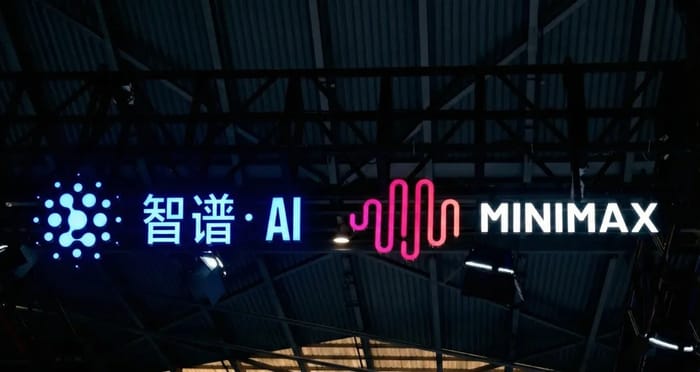
A new sector report published by JPMorgan on February 9, 2026 argues that China’s artificial intelligence industry is entering a decisive new phase—one defined less by model proliferation and more by commercialization, global expansion, and sustainable economics. The note, which initiates coverage on Zhipu AI and MiniMax with “Overweight” ratings, is notable not only for its bullish stance on two independent model developers, but also for what it implies about the consolidation of China’s AI ecosystem after the initial frenzy of large-model launches.
For investors tracking the global AI cycle, the report’s significance lies in its central claim: the competitive landscape is rapidly narrowing, and long-term winners will be determined by deployment scale and monetization efficiency rather than headline model releases.
From “Hundred-Model War” to Commercial Reality
JPMorgan frames the Chinese AI market as transitioning from what it calls a “hundred-model battle” toward structural consolidation. According to the bank, the number of viable model developers has shrunk from more than 200 to fewer than ten, reflecting the capital intensity and technical barriers associated with maintaining frontier models.
The emerging structure, the report argues, is bifurcated. On one side sit large integrated technology platforms with distribution and infrastructure advantages. On the other are independent developers such as Zhipu AI and MiniMax, which the bank describes as “innovation-driven and agile pioneers” capable of competing on model performance while pursuing differentiated commercialization strategies.
Both companies’ flagship models—GLM-4.7 for Zhipu AI and M2.1 for MiniMax—are described as ranking among leading global systems in coding and agent-based tasks, a category increasingly viewed as commercially critical as enterprise adoption accelerates.
A Trillion-Dollar Market — With Optionality
JPMorgan’s broader industry thesis rests on a bottom-up estimate that the global AI market could reach US$1.4 trillion by 2030, with approximately US$1.1 trillion coming from B2B applications and US$300 billion from consumer-facing use cases. The report emphasizes that enterprise adoption is likely to scale earlier, driven by labor substitution and productivity gains across knowledge industries.
More interestingly, the bank highlights what it calls the “option value” of AI adoption. Drawing parallels with the evolution of the video industry, analysts argue that improvements in model capability could expand the addressable user base far beyond professional developers, potentially extending AI-powered programming tools from roughly 47 million developers to as many as one billion knowledge workers globally.
In this framing, current revenue models—subscriptions, SaaS pricing, and API usage—may represent only early-stage monetization structures rather than the full economic potential of AI-native platforms.
API Monetization and Global Expansion Converge
Despite different strategic starting points, JPMorgan argues that both companies are converging toward the same economic core: API-driven monetization and global developer ecosystems.
MiniMax stands out for its international exposure, with more than 70% of revenue already generated overseas. The bank sees this global orientation as a structural advantage, allowing diversification of pricing environments and customer bases while supporting margin expansion. Its business model spans consumer applications, generative media, and enterprise APIs, which JPMorgan says reduces reliance on any single revenue stream.
Zhipu AI, by contrast, has built a strong domestic foundation through private deployments in regulated industries, creating what analysts describe as a stable recurring demand base. The company’s recent GLM-4.x model iterations signal a shift toward agent-oriented and production-grade applications, particularly in coding and multi-step reasoning tasks, which JPMorgan believes could accelerate developer adoption.
Both firms are projected to achieve rapid growth, with JPMorgan forecasting revenue compound annual growth rates of 127% for Zhipu AI and 138% for MiniMax between 2026 and 2030, with profitability expected around 2029.
Risks: Regulation, Litigation, and Economics of Scale
The bullish outlook is accompanied by substantial caveats. Zhipu AI’s inclusion on the U.S. Commerce Department’s Entity List introduces ongoing geopolitical uncertainty, even as the report notes limited immediate operational impact due to reliance on domestic cloud infrastructure. MiniMax, meanwhile, faces copyright litigation in the United States related to generative video training data, a risk that could potentially affect specific product deployments.
More broadly, JPMorgan stresses that the sector remains capital-intensive. Large-model development requires sustained investment in talent and computing resources, with research and development expenses expected to remain multiple times revenue through the late 2020s. Valuations, based on a projected 30x 2030 earnings multiple, also imply high sensitivity to execution risks and growth assumptions.
The Narrowing Field
Taken together, the report suggests that China’s AI industry is moving past experimentation toward economic selection. Model capability remains the foundation, but commercial scalability—especially through APIs and international markets—is becoming the decisive factor.
For investors, JPMorgan’s conclusion is straightforward: as the global AI cycle shifts from technological novelty to industrial deployment, independent developers capable of sustaining model leadership while building monetizable ecosystems may capture a disproportionate share of the next wave of value creation.