
Kling AI Gains Traction in Asian Film Production as Studios Test AI Workflows
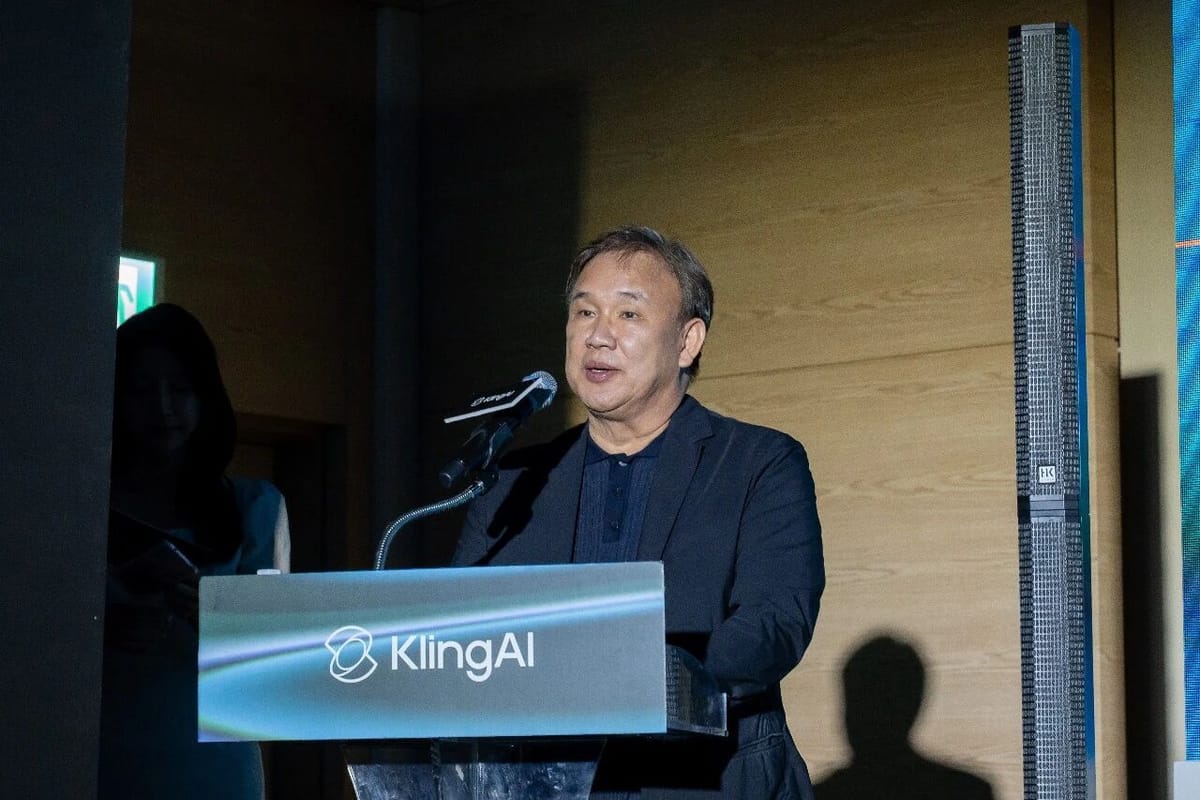
China's Kling AI is gaining traction in professional filmmaking across Asia, with directors and production teams at the 2026 Busan International Film Festival's Asian Contents & Film Market (ACFM) citing the video-generation platform as a tool for feature films, animation and short-form drama. The adoption points to a shift from AI-generated visual experiments toward repeatable production workflows, with Kling 4.0 targeting some of the technical constraints that have limited AI's use in long-form content.
Developed by Kuaishou Technology, Kling AI was highlighted by Korean and Chinese filmmakers during the market's industry sessions. One notable endorsement came from the team behind Rey Team, a Korean AI superhero film, which identified Kling as its primary generation tool during the InnoAsia Work-in-Progress pitch session. The team said it had followed the platform's development from Kling 2.0 through Kling 4.0.
The significance lies less in individual product endorsements than in the range of productions now exploring the technology. Filmmakers are increasingly discussing how AI can fit into established production pipelines, rather than simply demonstrating what a model can generate.
Kling 4.0 Targets Three Production Bottlenecks
Presented at an October 11 InnoAsia forum co-hosted by Kling AI and ACFM, Kling 4.0's capabilities address three challenges for professional video production: motion consistency, shot duration and visual continuity.
First, improved motion stability is designed to handle high-speed movement and complex camera work more consistently. This matters for action sequences, where unnatural movement or visual discontinuities can undermine an otherwise convincing shot.
Second, native generation of clips up to 30 seconds provides more room for continuous action and narrative development within a single generation. Longer sequences can help directors coordinate character movement, camera positioning and the passage of time without stitching together as many short clips.
Third, multi-reference generation supports up to 15 reference assets and 10 keyframe inputs simultaneously, according to the capabilities presented at the forum. This gives production teams more control over character appearance, composition and visual continuity, reducing the need to reconstruct a scene repeatedly through trial-and-error prompting.
Together, these features address a central challenge in generative filmmaking: producing not just an impressive individual shot, but footage that can be incorporated into a coherent film.
For professional productions, the distinction is important. A model's value depends not only on the quality of its best output, but also on whether a team can reproduce the intended visual style and maintain consistency across scenes.
Korean Director Compresses Pre-Visualization From Months to Days
Korean director Kim Sung-su, known for 12.12: The Day, demonstrated how AI generation can change the early stages of filmmaking.
For his Kafka-inspired AI short Worm Train, Kim used Kling 3.0 in late February 2026 to generate opening sequences. He said that within two days of beginning the process, he was reviewing footage that approximated the images he had envisioned.
Under conventional production workflows, achieving comparable visual confirmation could take one to two years, he said.
The comparison concerns pre-visualization rather than the completion of an entire film. Traditionally, directors may need to coordinate actors, locations, camera crews, visual-effects teams and post-production resources before they can evaluate complex sequences in detail. AI generation allows them to test visual ideas earlier, before committing to substantial production expenditure.
Kim's team still includes specialists in visual effects, animation art direction, editing, music, color grading and sound. Rather than eliminating these roles, AI changes how quickly they can assess and refine creative decisions.
Kim also described selecting AI-generated characters through a casting-like process. His team reviewed approximately nine character iterations before choosing the lead for Worm Train, evaluating appearance, personality and behavioral range.
The example illustrates how AI can support creative development while leaving directorial judgment and team collaboration central to the process.
Chinese Animation Tests Kling Against a 2,300-Shot Feature
Chinese animation director Li Wei offered another test of Kling's potential in long-form production.
His 105-minute animated feature Born of the Tide contains more than 2,300 shots and 152 individual characters, with much of the story set on water. Li, who has more than 20 years of industry experience and previously directed Jiang Ziya, described the project as an exceptionally large undertaking under a traditional production pipeline.
With Kling AI 4.0 integrated into the workflow, Li said, the time required to iterate on scene performances had fallen from weeks to days.
Faster iteration can affect more than production schedules. When directors can review alternative performances and compositions quickly, they can make creative adjustments before those choices become expensive to change downstream.
Li identified cross-shot consistency as the central challenge for AI-generated features. Maintaining the same characters, spatial relationships and narrative continuity across thousands of shots is substantially harder than producing a single visually striking sequence.
Kling 4.0's reference and keyframe functions are intended to help address that problem by giving creators more explicit control over the visual material used to guide generation. Li's experience provides a practical example of how those capabilities can be tested against the demands of feature-length storytelling.
Korean Broadcasters Develop a Repeatable AI Drama Pipeline
Kling AI is also being used to explore more standardized content production.
MBC C&I's AI Contents Lab and Barunson E&A, the production company behind Parasite and Mother, jointly developed Rendering Love, a 40-episode K-pop romantic comedy series featuring two-minute episodes. The team presented its workflow at ACFM as a model for producing AI-assisted short-form content at scale.
The process combines several stages. Reference images establish character appearances; live-action performances provide motion data; Kling AI's motion-control capabilities transfer movement to the virtual K-pop idol group LEVRIT; and editing integrates the generated material with live-action footage.
The workflow addresses a practical weakness of AI-generated series: character drift. Changes in facial features, hairstyles or costumes across episodes can disrupt continuity and make a production difficult to schedule reliably.
By combining reference-based generation, motion control and conventional post-production, the team can decide which scenes are best generated and which should be filmed practically.
For broadcasters, the commercial question is whether AI can deliver consistent results within recurring production deadlines. A documented workflow may therefore be as important as the underlying model's image quality.
HDR Output Supports Theatrical Ambitions
Korean AI-native production company MooAm is applying a similar hybrid approach to Natasha, a forthcoming 100-minute period thriller and romance set in 1944 under Japanese occupation.
The film, adapted from Baek Seok's poem Me and Natasha and the White Donkey, combines live-action performances with AI-generated sequences. MooAm plans to use human actors for emotionally nuanced scenes while generating large crowd sequences that would otherwise require substantial production resources.
Director Hyun Hae-ri emphasized that generating images and delivering a finished film are different tasks. Theatrical and streaming distribution also require color grading, sound finishing and quality control.
Hyun highlighted Kling 4.0's 10-bit HDR output as relevant to post-production. Greater tonal precision can help preserve detail in difficult lighting conditions, including shadows and high-contrast scenes, giving colorists more flexibility when finishing footage.
The hybrid approach reflects a more selective use of AI: allocating generation to scenes where it can improve production economics while retaining human performance where emotional nuance is essential.
Commercial Adoption Still Depends on Industry Standards
Despite these advances, AI filmmaking faces obstacles beyond model performance.
Distributors and broadcasters have yet to establish universally accepted delivery standards for AI-generated footage, including requirements for resolution, frame rates and compression artifacts. Unclear specifications can complicate delivery and increase the burden on smaller producers.
Intellectual property is another concern. MBC C&I and MooAm have registered design copyrights for AI-generated characters, reflecting efforts to protect assets that could support future projects and franchises. Broader commercial adoption will depend on clearer rights frameworks and workable licensing arrangements.
Costs also vary significantly by project. AI can reduce spending on certain scenes and accelerate iteration, but theatrical-quality production may require substantial computing resources, specialized workflows and dedicated visual-effects teams. Savings are therefore not automatic.
For Kuaishou, Kling's appearance in Korean productions offers a potential route into markets beyond China. Korean entertainment companies operate in an export-oriented industry whose production practices can influence content development across Asia and international streaming platforms. Adoption by local production teams could help Kling establish credibility beyond its domestic user base.
The broader test for Kling 4.0 is whether its longer clips, motion stability, reference controls and HDR output can translate into reliable results across entire productions. Busan's industry discussions suggest that filmmakers are increasingly evaluating AI on those terms.
As Kim put it, AI may eventually become so integrated into filmmaking that the label "AI film" is no longer necessary. For Kling, reaching that point will depend not on generating a handful of impressive images, but on helping professional teams deliver complete films consistently and economically.
Related Coverage:
Kling AI Revenue Surges 200% as Kuaishou Pays the Price for AI Leadership
Kling AI's Rise: How Kuaishou Built China's First Commercially Viable Video Generation Model