
LandSpace Wins Multi-Satellite Contract as China's Constellation Timeline Forces Reusable Rocket Economics
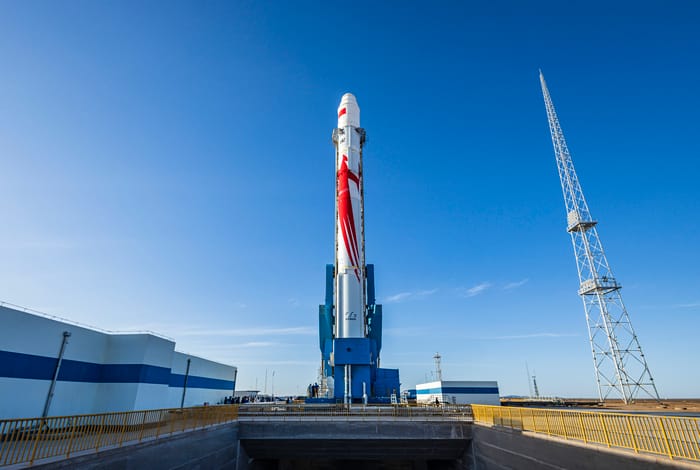
Chinese private launch provider LandSpace has secured a commercial contract with Yuan Xin Satellite to deploy 18 satellites aboard its Zhuque-3 reusable methane-fueled rocket, marking a structural shift in how China's satellite internet ambitions will materialize over the next 36 months. The deal exposes a widening gap between deployment targets and execution capacity that can only be bridged through fundamental changes in launch economics and cadence.
Yuan Xin's "Qianfan Constellation" faces arithmetic constraints that clarify why reusability has moved from aspiration to operational necessity. With only 108 satellites on-orbit after six launches, the program must place 1,296 units by late 2027 and scale to 15,000 by 2030. This translates to an average requirement of several dozen successful launches annually—a pace that vaporizes traditional manufacturing-limited approaches where rockets are discarded after single use.
Launch Cadence as Bottleneck: Why Manufacturing Speed No Longer Matters
The constraint is no longer whether China can build rockets, but whether it can maintain high-density launch rhythms without exhausting production lines. One-time-use vehicles remain bound to fabrication cycles that create inherent tempo ceilings. LandSpace's Zhuque-3 first stage is engineered for 20 flights, transforming the rocket from consumable hardware into rotational transport infrastructure. Recovery and rapid turnaround—potentially within weeks rather than months—decouples launch frequency from manufacturing throughput. This operational model mirrors what enabled SpaceX to dominate Western commercial launch markets, though China's execution timeline is compressed by regulatory mandates rather than market competition alone.
Payload capacity amplifies the cadence advantage. Zhuque-3's 21.3-ton low Earth orbit capacity theoretically supports over 50 satellites at 400 kilograms each per mission, compressing what previously required multiple launches into single flights. For constellations operating under strict regulatory filing deadlines—where failure to meet deployment milestones can trigger spectrum rights forfeiture—this capability directly determines strategic viability.
Cost Structure Inversion Through Propellant Chemistry and Materials
First-stage hardware accounts for over 70% of total rocket manufacturing costs, making reuse economics hinge on how many reflights can be extracted before retirement. At design-limit utilization of 20 cycles, per-launch costs collapse toward marginal expenses: second-stage production and first-stage refurbishment. LandSpace's methane-oxygen engines avoid carbon buildup inherent to kerosene fuels, reducing maintenance costs by 60-80% compared to legacy systems. Propellant expenses reportedly sit below US$200,000 per flight — substantially under Falcon 9's approximately US$900,000 fill cost — while stainless steel airframes eliminate expensive thermal protection systems required by carbon composite structures, cutting material costs to one-third.
The methane choice carries second-order advantages beyond combustion cleanliness. Sourcing flexibility—methane can be derived from natural gas, biogas, or future Sabatier processes—insulates operators from supply chain volatility that has historically plagued specialized aerospace fuels. This positions Zhuque-3 within emerging cost curves where propellant becomes operationally negligible, and the economic question shifts entirely to hardware amortization rates.
Execution Risk in Compressed Timelines and Unproven Recovery Systems
The contract's strategic importance coexists with substantial execution uncertainty. LandSpace has yet to demonstrate successful first-stage recovery and reflight—capabilities that SpaceX required years and multiple failures to operationalize. China's launch providers are compressing this learning curve into a timeline that offers limited margin for iterative failure. Recovery involves precision propulsive landing, structural integrity validation post-flight, and engine refurbishment protocols that remain unproven at scale in the Chinese commercial sector.
Regulatory dynamics add non-technical risk. Yuan Xin operates under state-directed timelines tied to China's broader space infrastructure goals, where schedule pressure may conflict with the methodical testing cycles reusability demands. If recovery systems underperform or reflight certification takes longer than modeled, the program could revert to expendable operations—negating cost advantages while still facing the same aggressive deployment schedule. The contract essentially bets on LandSpace achieving technical maturity within the narrow window that Qianfan's 2027 milestone allows.
The deal reflects China's recognition that satellite internet leadership requires not just manufacturing scale but operational systems that treat launch as utility infrastructure rather than bespoke projects. Whether LandSpace can deliver on that vision within the mandated timeline will determine if China's constellation ambitions remain credible or become another case study in overestimating deployment execution speeds.
By ChinaBiz Insider Analysis Desk