
Huawei-Backed HarmonyOS Intelligent Driving Alliance Bets on 17 Models in 2026 Amid Rising Internal Competition
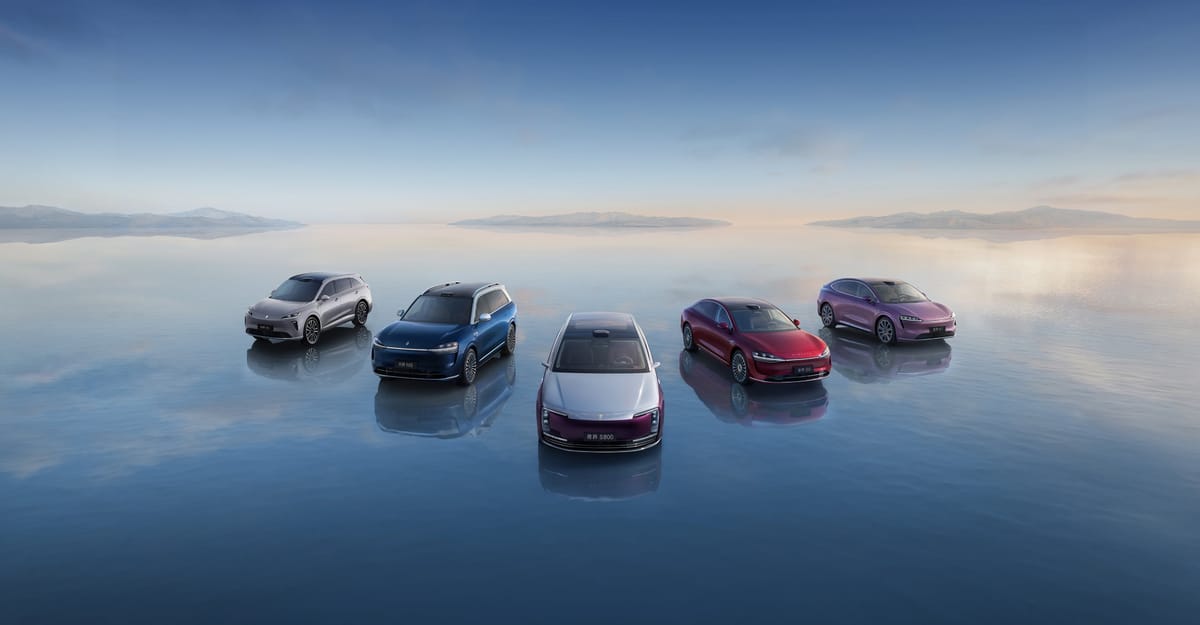
HarmonyOS Intelligent Driving, Huawei's automotive technology ecosystem, is preparing to launch over 17 vehicle models this year, including the Shangji Z7 sedan and Zhijie V9 MPV, as it aggressively expands its product portfolio. The strategy raises questions about whether the alliance's growing lineup will drive market dominance or trigger internal cannibalization as affiliated brands increasingly compete for the same customers.
The latest batch of filings from China's Ministry of Industry and Information Technology reveals Zhijie V9, a full-size MPV measuring over 5.3 meters in length with a 3.2-meter wheelbase. Powered by Chery's 1.5T range extender, the vehicle targets the premium MPV segment, promising up to 1,250 kilometers of CLTC range with its 53kWh battery configuration. Former Denza sales chief Zhao Changjiang predicted the model would face "no competitors for three years."
Meanwhile, Shangji Z7, a performance sedan set for first-quarter launch, appears positioned to directly challenge Xiaomi's updated SU7. The brand's promotional materials pointedly reference "next generation" vehicles, timing its announcement to coincide with Xiaomi's pre-order opening. The vehicle is expected to feature Huawei's Qiankun intelligent driving system and HarmonyOS cockpit as standard.
Five Sub-Brands Face Differentiation Challenge
HarmonyOS Intelligent Driving's expansion encompasses five distinct brands—Aito, Zhijie, Stelato, Luxeed, and Maextro—each targeting different market segments. Aito, the sales leader, plans to launch the M6 to fill a gap in the 250,000 yuan ($34,500) family SUV segment, competing directly with Li Auto's L6. The brand is also developing an extended-wheelbase M9 variant to strengthen its ultra-premium positioning.
Stelato recently added the S9 range-extender version and S9T to its lineup. Beijing Automotive Group Chairman Zhang Jianyu indicated the brand would introduce SUV and MPV models this year, with speculation suggesting entry into the boxy SUV segment. Maextro, which delivered 11,300 units of its S800 sedan priced from 708,000 yuan ($97,700) in six months, plans to expand into premium MPV and SUV categories.
The alliance's 2025 performance showed 589,107 total deliveries, up 32% year-over-year, but relied heavily on Aito's M7, M8, and M9 models. Shangji's H5, despite initial pre-orders exceeding 150,000 units, saw December sales drop to under 7,000 units from November's 10,000-plus, indicating challenges in the sub-200,000 yuan segment where established competitors dominate.
Huawei's Expanding Partner Network Complicates Picture
Adding complexity, Huawei is simultaneously working with traditional automakers through separate partnerships. Three new joint ventures—Yijing, Qijing, and Huajing—will debut vehicles this year equipped with Huawei technology but outside the HarmonyOS Intelligent Driving branding. These models will compete directly with the five-brand alliance in overlapping market segments.
Huawei's Qiankun automotive solution partnered with brands including Avatr, Voyah, Trumpchi, Deepal, and Audi, collectively delivering over 900,000 vehicles in 2025. Excluding HarmonyOS Intelligent Driving sales, partner brands accounted for 34% of Qiankun-equipped vehicle deliveries, indicating Huawei's "friends circle" is catching up to its core alliance partners.
Market Saturation Tests Differentiation Strategy
The automotive alliance faces pressure to clearly differentiate pricing, scenarios, and target demographics across its expanding portfolio to avoid internal competition. While Huawei's technology provides a competitive edge, consumers in the premium segment increasingly evaluate reliability, value proposition, and after-sales service—areas where traditional automakers maintain advantages.
The critical test for HarmonyOS Intelligent Driving will be converting its 17-model offensive into sustainable user loyalty and brand premium rather than mere volume expansion. With China's new energy vehicle penetration continuing to rise, the alliance must balance breadth of offerings with depth of product execution to maintain market share against increasingly capable competitors.