
Lawnmower Trade Frictions and the Commercial Reality Check for Humanoid Robots
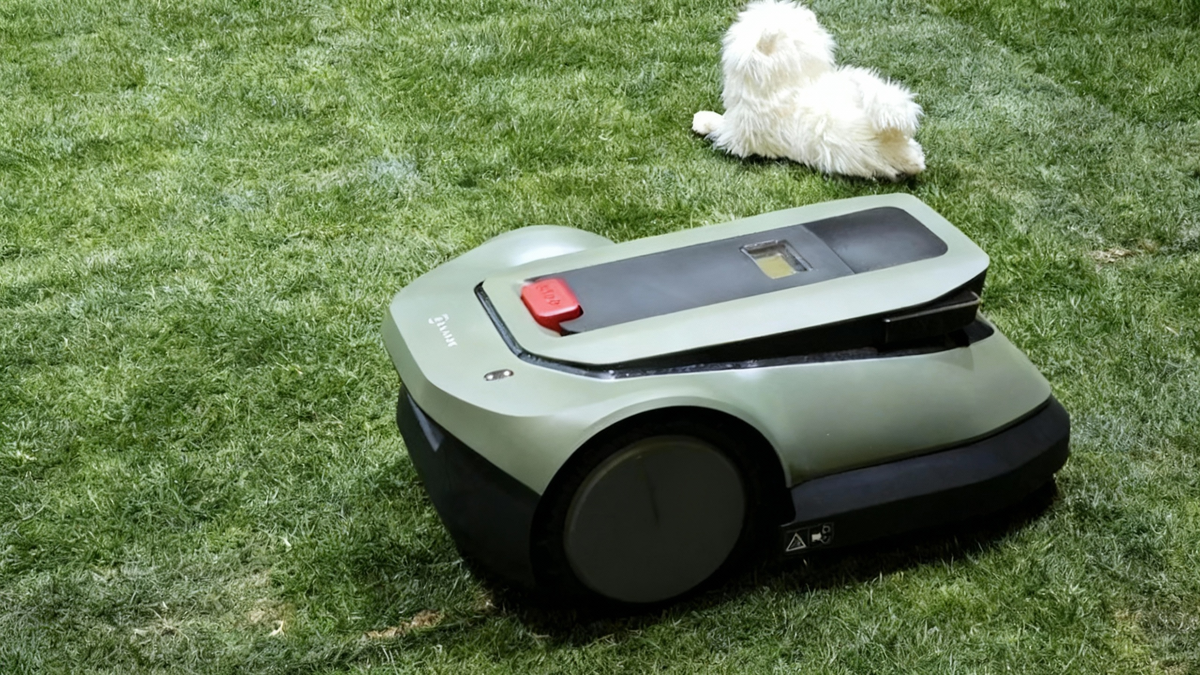
In 2025, the global robotics industry is splitting along two very different trajectories. Chinese-made smart lawnmowers are roiling European trade politics even as they restructure a niche consumer market, while humanoid robots generate attention and capital but struggle to find viable business models. Together, these stories expose the tension between industrial upgrading, protectionism and technology hype.
The European Union has opened an anti-dumping probe into Chinese robotic lawnmowers, invoking familiar claims of “state intervention” and “cost distortions” just as Chinese exporters gain share with cheaper, more capable products. At the same time, China’s own lawnmower makers are locked in intense domestic price wars that are accelerating consolidation and pushing weaker players out.
In humanoid robotics, multiple Chinese companies are touting “product launches” and eyeing capital markets, especially in Hong Kong. Yet a gap is widening between engineering progress and commercial reality: deployment scenarios, safety standards and repeatable revenue models remain elusive, and balance sheets show mounting receivables rather than breakthrough profits.
For investors, these two segments offer a common lesson. Competitive advantage in robotics will depend less on headline-grabbing form factors and more on unit economics, supply-chain efficiency, regulatory clarity and the ability to embed robots in real-world workflows at scale.
Chinese Smart Lawnmowers Trigger EU Anti-Dumping Action
In the second half of 2025, the EU launched an anti-dumping investigation into smart lawnmowers made in China, arguing that state support and distorted costs undermine European producers. The move comes as legacy outdoor power equipment makers such as Husqvarna struggle to keep pace with rapid shifts toward intelligent, autonomous devices.
Chinese manufacturers have moved beyond traditional boundary-wire designs. Their models use wire-free navigation and visual obstacle-avoidance algorithms, and are customized for regional conditions across Europe: enhanced climbing ability for steep Nordic lawns and UV-resistant shells for Mediterranean gardens. Despite this feature set, average prices are still in the low hundreds of dollars, well below the annual cost of manual lawn care.
Exports reflect that advantage. In the first nine months of 2025, China’s smart-lawnmower exports to Europe rose 80.6% year on year, with more than 40% of volumes destined for EU markets.
Market Structure Undercuts EU “Industry Shock” Claims
EU claims of a systemic “Chinese shock” are difficult to square with the current structure of the regional lawnmower market. Petrol and traditional battery models still dominate overall sales, while robotic lawnmowers remain a nascent category. The leading brands in this segment are largely American, Japanese and European. Chinese companies are only beginning to establish a presence in the smart niche.
The trade case instead highlights the structural weaknesses of many European incumbents. Their legacy distribution and branding systems are expensive to maintain, they lack dense pools of software and AI engineering talent, and their supply chains are less agile than those of Chinese rivals. Trade defenses offer time, but not necessarily a path to technological catch-up.
Internal “Involution” Reshapes China’s Lawnmower Sector
The external pressure from Brussels coincides with severe internal competition in China. Leading producers and solution providers are driving down prices through early-bird discounts and aggressive “encirclement” pricing strategies. This intensifies the risk for start-ups, but is also compressing costs and forcing rapid iteration.
Ninebot has developed its own RTK positioning system and slashed the cost of a full visual-navigation stack to around RMB 300 (US$41), while Ecovacs Robotics and Roborock Technology are leveraging their established cleaning-appliance channels to plug into European offline retail networks.
As volumes concentrate, scale and channel control are becoming decisive. Companies with strong manufacturing, cost discipline and distribution are emerging as likely long-term winners, while players such as Senhe Innovation have exited amid poor yield rates and funding stress. Industry concentration is rising, with implications for future pricing power and margins.
Humanoid Robots: Engineering Progress, Commercial Stalemate
The humanoid robot segment presents the opposite problem: abundant publicity and R&D efforts, but limited commercial traction. In late 2025, several Chinese robotics firms announced “product launches” that some observers interpreted as steps toward IPOs. Yet the core difficulty is not listing, but monetization.
The key unresolved question is the role humanoids should play in real-world production and services. Replacing a human worker is not a straightforward cost swap. Beyond bill-of-materials and maintenance, operators must invest in charging bases, parts supply, service networks, safety insurance and communications infrastructure. The complexity of social and industrial division of labor makes payback periods hard to model.
UBTECH Robotics, often viewed as an early mover on business models, illustrates the challenge. Its humanoid-robot business is not the main revenue driver and lags behind its consumer segment. More than half of its accounts receivable carry payment terms longer than six months, and receivables with maturities over one year total RMB 600 million (US$82 million). Industry participants say this pattern is common.
Technical Routes, Missing Standards
A tentative consensus is emerging that “wheeled bases plus dual arms” is the most practical form factor for near-term deployment, while showpiece applications such as performing, greeting and guiding are transitional uses rather than sustainable profit pools.
Even these narrow scenarios face regulatory uncertainty. According to the former head of safety at Figure AI, many humanoid robots cannot yet meet household-use thresholds, and there is no unified testing framework. Low usage keeps these issues largely theoretical. But if volumes scale, safety and compliance risks could crystallize quickly, potentially triggering recalls or tighter regulation.
Capital Markets, Branding and the “Mindshare” Race
On the capital side, Hong Kong has become a preferred venue for humanoid-robotics listings. Its lower thresholds and access to offshore funding suit early-stage portfolios, and “A+H” dual listings are increasingly common for robotics and AI companies seeking a bridge between domestic assets and global investors.
However, capital access has not resolved the question of value creation. Companies must persuade investors, limited partners and regulators that they possess defensible capabilities. Some industry insiders refer to “mindshare productivity”: building a public perception that a company is genuinely cutting-edge. That often borrows from consumer-electronics playbooks.
Xpeng Robotics has gained attention with its “elegant gait,” but most peers struggle to extract clear product narratives or design effective communication strategies. Heavy marketing outlays frequently fail to translate into brand recall or sales, leaving firms with rising costs and limited traction.
Diverging National Paths and Structural Frictions
Differences in national paths deepen these tensions. US firms are investing heavily in AI and robotics partly because outbound investment options are constrained, both by limited access to markets such as China and by compliance and exit risks at home. That encourages a form of domestic “internal circulation” in advanced technology.
Chinese companies benefit from comprehensive supply chains and large home markets but must balance basic research with real-world deployment. Homogeneous competition, academic “paper-chasing” for project funding and the fact that robotic arms and core components often earn better margins than complete humanoid systems all reflect an underlying lack of clear commercial pathways.
From Trade Battles to Sustainable Robotics
Both the lawnmower dispute and the humanoid-robot stalemate point to a broader inflection in global robotics. Protectionism can slow market disruption but cannot halt technological convergence. Hype can inflate valuations but cannot substitute for robust business models.
In smart lawnmowers, China and the EU share interests in digital and green transitions. Chinese products can help lower emissions and boost garden-maintenance efficiency, while European consumer feedback can sharpen Chinese firms’ product design and service models. Persistent trade barriers risk delaying EU industrial upgrading without significantly weakening Chinese players, who are anchored by an extensive manufacturing base and supply-chain depth.
For humanoid robots, the path forward lies in moving beyond both “technology worship” and capital-driven exuberance. The critical question is not how human-like robots appear, but whether they can safely and reliably substitute for humans in hazardous or highly repetitive tasks. That will require faster progress on standards for safety, testing and service, alongside more disciplined capital allocation toward teams that combine technical breakthroughs with credible deployment track records.
As 2025 unfolds, robotics remains a field of both stress and opportunity. Smart lawnmower competition is pushing Chinese firms up the value chain and into global markets. Humanoid-robot setbacks are forcing earlier, and arguably healthier, scrutiny of commercialization. For investors and policymakers, the next phase will hinge on whether industry participants can pivot from short-term defensive tactics and speculative narratives to cooperation, disciplined innovation and grounded business models capable of scaling beyond the hype cycle.