
Leapmotor Swings To First-Ever Profit On Soaring Margins, Sets 1 Million Unit Target For 2026
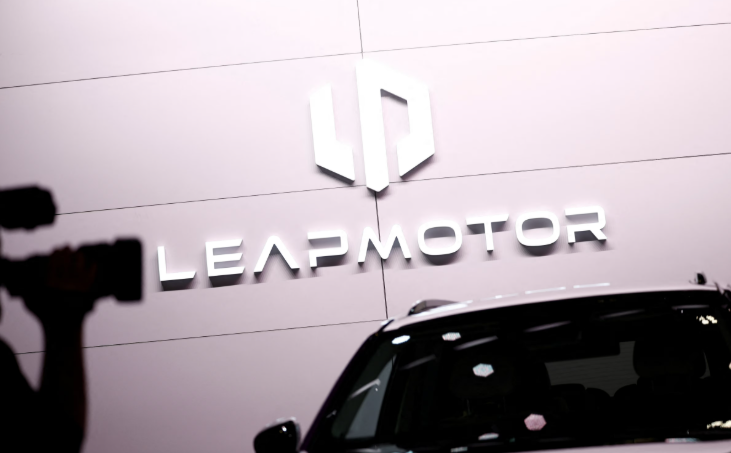
- Surprise Profitability: Zhejiang Leapmotor Technology Co., Ltd. (浙江零跑科技股份有限公司) reported its first-ever semi-annual net profit of ¥30 million (US$418 million)for H1 2025, a significant milestone demonstrating a sharp operational turnaround.
- Explosive Growth: Revenue surged 174.0% YoY to ¥24.25 billion, driven by a 155.7% increase in vehicle deliveries to 221,700 units.
- Margin Miracle: Gross margin expanded dramatically to 14.1% from just 1.1% in H1 2024, credited to economies of scale and aggressive cost management. Vehicle-specific gross margin was noted to be around 12%.
- Raised Guidance & Extreme Ambition: The company raised its full-year 2025 delivery guidance to 580,000-650,000 units. More startlingly, management is targeting 1 million vehicle sales in 2026, a near-doubling in a single year.
- Strategic Pipeline: A new flagship "D-series" line (SUV and MPV) will be unveiled in October 2025 and launched in Q1 2026, marking a push into a higher-end market. European local production is planned for 2026.
Chinese EV maker Leapmotor has not only posted blowout growth figures but has also achieved a feat many of its peers are still chasing: profitability. The company reported its H1 2025 results, revealing a swing from previous losses to a net profit, albeit a slim one at ¥30 million. The results, however, were delivered by a trio of executives in the notable absence of CEO Zhu Jiangming on the earnings call, where they laid out an almost impossibly aggressive roadmap for the coming year.
A Stunning Turnaround in Profitability and Margins
Leapmotor's H1 2025 performance marks a critical inflection point. The company's revenue skyrocketed by 174.0% year-over-year to ¥24.25 billion. This growth was built on the back of a 155.7% jump in deliveries, totaling 221,700 vehicles, which the company claims puts it at the top of China's new energy startup sales charts.
The real story for investors, however, lies in the margins. Gross margin leaped from a razor-thin 1.1% in H1 2024 to a respectable 14.1% in H1 2025. This 13-percentage-point improvement is a testament to the benefits of scale and what the company calls "continuous cost management." The growth in Cost of Sales (137.9%) lagged significantly behind revenue growth (174.0%), confirming that operational leverage is finally kicking in. This makes Leapmotor the second Chinese EV startup, after Li Auto, to report a semi-annual profit, a key validation of its business model.
The company's finances have also stabilized. Cash reserves stood at a healthy ¥29.58 billion, and free cash flow turned positive at ¥860 million, a stark improvement from a negative ¥480 million a year prior.
Aggressive Targets and A Push Upmarket
Buoyed by its strong first half, Leapmotor's management raised its full-year 2025 delivery guidance from 500k-600k to 580k-650k units. It is also targeting a full-year 2025 net profit in the range of ¥0.5 to ¥1.0 billion, implying an even stronger performance in the second half of the year.
The most audacious announcement was the target to challenge 1 million vehicle sales in 2026. This implies nearly doubling sales from the high end of its 2025 guidance in just twelve months, a monumental task in an increasingly saturated and competitive global EV market.
Central to achieving this goal is the company's planned move into the premium segment with its new "D-series" models. With an SUV and an MPV slated for a Q1 2026 launch, Leapmotor is betting it can replicate its cost-effective success in a higher-margin category where it will face off against entrenched domestic and international players. Management concedes that this segment will present "more intense competition."
Global Ambitions Leaning on The Stellantis Partnership
Leapmotor's global expansion is gathering pace, with Europe as the primary battleground. The company plans to establish local production in Europe by 2026, with the B-series models being the first to roll off the line.
Critically, management stated that its overseas capacity will be supported by its partner, Stellantis, calming investor fears about capital-intensive factory buildouts. This partnership is a key pillar of its international strategy, allowing Leapmotor to scale quickly. However, the company also noted that it is not pursuing high margins in overseas markets in the short term, instead focusing on "rapidly increasing volume" to build brand recognition—a classic, cash-burning market-entry strategy.
Playing The Tech Catch-Up Game
While its manufacturing and cost control have been impressive, Leapmotor is still playing catch-up in the crucial arena of autonomous driving. The company aims to roll out its City NOA (Navigate on Autopilot) function by the end of 2025 and reach a "first-tier" ADAS capability by early 2026. To achieve this, R&D spending rose 54.9% to ¥1.89 billion, with investments in its smart driving team and computing resources doubling year-over-year. This is a necessary but expensive race to stay relevant against rivals like Xpeng and Huawei-backed AITO, who have already established a strong lead in intelligent driving features.
For investors, Leapmotor's H1 2025 results are a clear signal that its focus on vertical integration and cost efficiency can translate into profit. The challenge now shifts from survival to execution on a massive scale. The path from a ¥30 million profit to a 1 million-vehicle-a-year global player is incredibly steep, and its success will depend on flawlessly launching its premium D-series, navigating the European market with Stellantis, and closing the technology gap with its competitors.