
Decoding China's AI Glasses Market: A Look at the Key Players Shaping the Industry
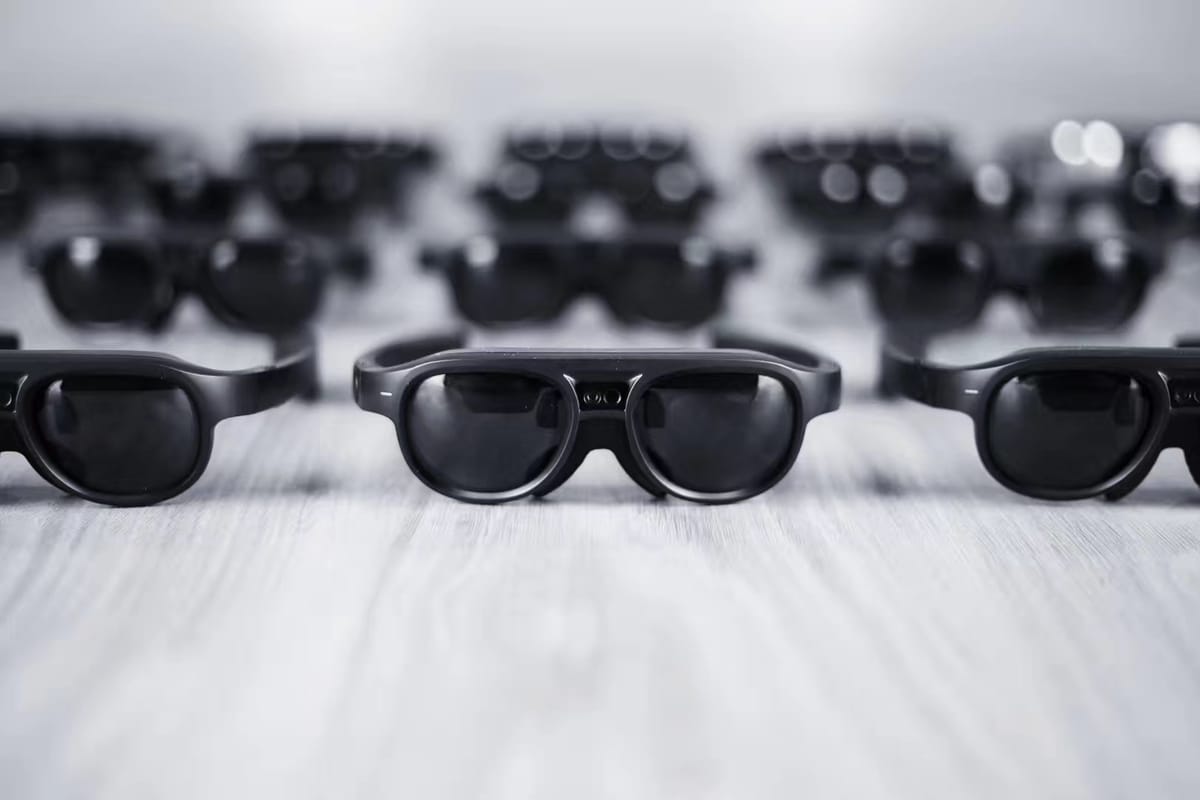
A new report from iResearch Consulting Group (艾瑞咨询), a leading Chinese market research firm, offers a comprehensive analysis of the country's rapidly evolving AI glasses industry. The report, titled "2025 China AI Glasses Industry Research Report—How Far to the Next 'iPhone Moment'?" and published on August 18, 2025, provides a deep dive into the technology, market dynamics, and consumer trends driving this burgeoning sector.
The report highlights a competitive landscape contested by a diverse array of players—from established tech giants and mobile device manufacturers to specialized XR firms and innovative startups. As these companies vie for market share, they are accelerating the integration of AI large models and AR technology, pushing the development of lightweight, multi-scenario products. The following is a translated excerpt from the report's "Key Players Overview" section, detailing the major companies and representative products shaping the future of AI wearables in China.
AI Glasses Market Player Breakdown
The market is segmented into three main product categories: AI Audio Glasses, AI Camera Glasses, and AI Display Glasses (AI+AR).
In the AI Audio Glasses segment, notable brands include Bose with its Frames Tempo, Huawei Technologies Co., Ltd. (华为技术有限公司) with its FreeBuds Studio, and Superhexa (界环) with its AI Audio Glasses. Other players are Rapoo Technology (雷柏科技) with its Smart Audio Glasses series, Netac Technology Co., Ltd. (朗科科技股份有限公司) with its Smart Audio Glasses, and Lawaken (李未可) with its LAWK City & City Air models. Xiaomi Corporation (小米集团) also offers the Mi AI Audio Glasses, while Sony presents the WM–1ZM2.
The AI Camera Glasses category features entrants such as DPVR with its DPVR AI Glasses, Entertech (回车科技) with the Looktech AI Glasses, and Kanaan (加南科技) with its KANAAN-K1 AI Glasses. RayNeo Innovation Technology Ltd. (雷鸟创新科技有限公司) offers the RayNeo V3, and Lawaken has the LAWK View series. The most prominent products in this space are collaborations, such as the Ray-Ban Meta AI smart glasses (a partnership between Meta and Ray-Ban) and the Oakley Meta HSTN (a partnership between Meta and Oakley). Other competitors include Sharge (闪极科技) with its Paipaijing A1, Emdoor (亿境虚拟) with its AI Camera Glasses, and BLEEQUE with its BleeqUp Ranger AI Sports Glasses.
Finally, the AI Display Glasses (AI+AR) category is populated by innovators advancing the fusion of artificial intelligence and augmented reality. Key products include the RayNeo X2 and X3 Pro from RayNeo; the Meta Lens S1 and S3 from Lawaken; and Rokid Glasses from Rokid Corporation Ltd. DreamSmart Group (星纪魅族集团) offers the StarV Air1 and Air2, while INMO (影目科技) has its INMO GO2.
Key Player Profile: RayNeo Innovation Technology Ltd. (雷鸟创新)
RayNeo focuses on consumer-grade AI+AR glasses, emphasizing in-house technology development, ecosystem integration, and mass-market adoption. The company possesses full-chain, self-developed capabilities in core optical solutions.
Company History RayNeo's journey began in 2017 as the TCL Communication Innovation Lab. By 2018, the team had achieved the fifth-largest global sales volume in VR and started its strategic focus on core AR technologies. In 2021, RayNeo was officially established, creating a full-stack layout from R&D to production. That year, its self-developed and produced "full-color Micro-LED optical engine," the world's smallest of its kind, and Birdbath optical engines reached mass production capability. In 2022, the company launched its consumer-grade XR glasses, RayNeo Air, and partnered with iQIYI Inc. (爱奇艺) to launch a dedicated XR video app. In 2023, RayNeo released the full-color MicroLED waveguide AR glasses, RayNeo X2, and its self-developed large language model assistant, RayNeo AI. In 2024, the company launched the RayNeo X2 Lite and the world's first AI+AR developer platform, "RayNeo AI Studio." By 2025, RayNeo has become a leader in the AI glasses market, launching the RayNeo X3 Pro, RayNeo Air 3s, and RayNeo V3 series, and has established a joint venture with Dr. Glasses (博士眼镜) to integrate prescription services and retail networks.
Product Portfolio RayNeo’s product lineup includes all-in-one and split-unit devices.
- All-in-One Products: RayNeo X2, RayNeo X3 Pro. These devices support applications like voice/image translation, spatial navigation, and AI-driven visual exploration.
- Split-Unit Products: RayNeo V3 / V3 Slim, RayNeo Air series (2/2s/3/3s/Pro). These are used for first-person perspective imaging, immersive movie viewing, gaming, and smart office tasks.
- Other Products: RayNeo Magic Box.
Core Advantages RayNeo’s strengths are built on technology, scene focus, product layout, and ecosystem. The company has self-developed the world's smallest full-color Micro-LED optical engine and Birdbath optical engines, along with its Falcon imaging and audio systems. It focuses on deep cultivation of core scenarios to drive market expansion, with a product lineup that covers AI computing and portable viewing, all featuring rapid iteration. Its ecosystem includes collaborations with content providers like iQIYI and Mango TV, and technology alliances with Qualcomm, Google, and Alibaba Group Holding Ltd. Its channel strategy is primarily online via platforms like JD.com and Tmall, supplemented by its offline joint venture with Dr. Glasses.
RayNeo AI Studio Launched in 2024, the RayNeo AI Studio is the world's first AI+AR development engine, designed to empower multimodal interaction and ecosystem creation. It offers a no-code development environment that allows any user to easily create their own AI agents for glasses. Its features include a simple and intuitive interface, support for a rich library of plugins, a professional knowledge base, and a flexible workflow using drag-and-drop nodes. This platform facilitates an entire AI agent ecosystem, from creation and submission on the AI Studio platform to review and distribution through the AI Store, and finally, deployment via the AI assistant on the glasses. For instance, the RayNeo X3 Pro, powered by Rayneo AI, enables seamless "AI+AR" interaction, supporting features like an English language tutor, medication information retrieval, AI-assisted translation, and 3D spatial navigation.
Key Player Profile: Lawaken (李未可)
Lawaken is dedicated to the AI+Glasses track, operating under the core philosophy "Let AI awaken." The company aims to establish itself as "China's first AI+AR tech fashion brand."
Company History Founded in 2021, Lawaken quickly launched its virtual persona and story-driven content. In 2022, it became an official partner for Douyin's "Cloud-Tour China" and released its first all-in-one AR glasses, the LAWK S1. In 2023, the company launched its proprietary lightweight rendering engine, AR navigation based on a 6DoF solution, and its first-generation distribution large model. In 2024, Lawaken unveiled its WAKE-AI multimodal large model platform and the LAWK Chat product, while also initiating a collaboration with Dr. Glasses. By 2025, the company has launched its City and View series of AI smart glasses, obtained filing for its WAKE-AI model, received Huawei Ascend certification, and released the Zero Agent AI glasses interaction system.
Usage Scenarios and Target Customers Lawaken focuses on the premium business and travel market segment. Its products are designed for scenarios such as business meetings, travel experiences, daily life, and outdoor sports. Target users include business travelers, tourists, white-collar professionals, and international students, aiming for leadership in the high-end market and broad adoption in the mass market. Key features include an AR virtual personal trainer, real-time translation, voice memos, and AR navigation.
Product Matrix: LAWK's Three Product Lines Lawaken has a comprehensive layout covering AI audio, AI camera, and AI display glasses.
- C Series (AI Audio): Represented by the LAWK City Air, it weighs 27.6g (without lenses) and features a 14-hour battery life, immersive directional audio with ENC, and real-time translation for 128 languages. It is designed for being lightweight, stylish, and having a strong battery life.
- V Series (AI Camera): The LAWK View weighs 38g, is powered by Qualcomm's first-gen Snapdragon AR1 platform and a Sony IMX681 camera, and features a 45-minute fast charge for 8 hours of use. It excels in 4K ultra-clear recording, making it an ideal travel companion. It offers features like night scene optimization, anti-shake, and live photos.
- S Series (AI Display): The LAWK S3 weighs 85.5g and is designed for outdoor use and sports. It features a binocular AR display system, an 8-hour battery life, and a futuristic wrap-around design. It is ideal for displaying real-time sports data in the user's field of view.
Proprietary AI and Partnerships The company's core technology is the WAKE-AI multimodal large model, which possesses text generation, language understanding, image recognition, and video generation capabilities. It achieves a voice response speed of under 500ms and a wake-word accuracy of over 90%. Lawaken has also forged deep industry partnerships, including placing its products in 100 Dr. Glasses offline stores, co-building an AI ecosystem with partners like iFLYTEK and China Mobile Communications Group Co., Ltd. , and collaborating with MIEGROUP for exhibitions to empower foreign trade scenarios.
Key Player Profile: Rokid
Rokid specializes in human-computer interaction technology, with a strong focus on AI+AR glasses. It leverages its proprietary operating system to build an integrated platform of "hardware + software + ecosystem."
Company History Founded in July 2014, Rokid released its first product, Rokid Alien, in 2016. The company entered the AR space in 2018 with the all-in-one monocular AR glasses, Rokid Glass. Over the following years, it launched a series of enterprise- and consumer-focused products, including the industrial AR headset Rokid X-Craft (2020), the consumer AR smart glasses Rokid Air (2021), and the metaverse entry-level terminal Rokid Station (2022). In 2023, Rokid released its new consumer-grade AR glasses, Rokid Max, and the spatial computing suite, Rokid AR Studio. In 2024, the company launched its new-generation AI+AR glasses, Rokid Glasses, announced a strategic partnership with Lens Technology, and released its self-developed operating system, YodaOS-Master. By 2025, its industrial-grade, explosion-proof X-Craft AR glasses have been deployed in enterprises like PetroChina.
Product Matrix and Application Areas Rokid's product portfolio covers spatial computing, consumer terminals, and industrial applications.
- Products: The Rokid AR Studio serves as the operating system and platform. Consumer products include the AI+AR fusion Rokid Glasses, the gaming and entertainment-focused Rokid AR Lite series, and the Rokid AR Entertainment Suit. The company also offers the Rokid Station (powered by Android TV™) and the industrial AR smart headset, X-Craft.
- Applications: In the B2B sector, Rokid provides solutions for digital tourism, spatial exhibitions, and new educational models. In the C-end, applications include giant-screen viewing, personal audio-visual entertainment for travel, and spatial office tasks.
Core Capabilities and Product Highlights Rokid’s competitive strengths lie in its AI, hardware, and OS capabilities.
- AI Capability: Rokid employs a three-tiered "glasses + phone + cloud" architecture for intent recognition, balancing speed, accuracy, and cost. Its large model architecture is modular, supporting hot-swappable AI Agents.
- Hardware Capability: The company has world-leading AR optical design technology and innovations in acoustics, including advanced physical design and multi-mic noise reduction.
- OS Capability: Its proprietary YodaOS-Master supports a full stack of real-time spatial computing technologies (positioning, interaction, audio, rendering, display) and multimodal interaction, creating a high-performance and open AR operating system.
Product highlights are summarized as: "Good Glasses" (stylish, lightweight, simple operation, high resolution), "Good Headphones" (stereo directional speakers, low sound leakage), "Good Assistant" (multiple AI models for foundation, vision, and search), and "Good Display" (ultra-large screen, HD quality, cross-device transfer).
Key Player Profile: DreamSmart Group (星纪魅族)
With genes in cross-industry integration, DreamSmart has clearly defined "AI mobile phones and smart glasses" as its two core tracks, building a multi-terminal, all-scenario ecosystem around three business lines.
Company History Originating as an innovative project group within Meizu Technology in 2014, the team focused on AR/VR pre-research. The entity was spun off as Stellar Meizu in 2018. In 2021, Xingji Shidai (星纪时代) was established, entering the XR and high-end mobile phone sectors. In July 2022, Xingji Shidai strategically invested in Meizu Technology. In March 2023, DreamSmart Group was officially formed from the merger of Xingji Shidai and Meizu Technology, marking a strategic shift toward a multi-terminal, immersive fusion experience. In 2024, the company announced its "All in AI" strategy and launched new glasses products like the StarV Air2. By 2025, DreamSmart has launched the Mantianxing XR open platform and partnered with Polestar on the Polestar AR Glasses.
Ecosystem Layout and Application Scenarios DreamSmart is building a comprehensive ecosystem where glasses, rings, phones, and in-car systems are seamlessly interconnected. It has partnered with automotive companies to integrate AR glasses with smart cockpit systems. Its AI large model ecosystem connects to Alibaba Cloud and DeepSeek, allowing users to leverage advanced AI assistants. Application scenarios span business office work, remote medical consultation, smart vehicles, equipment maintenance, gaming, and real-time navigation.
Smart Glasses Matrix The company’s smart glasses portfolio includes:
- StarV Air2: An AI+AR model designed for lightweight, all-day wear.
- StarV View: Focused on audio-visual entertainment and office work.
- MYVU: An all-day wearable AR glasses model.
"All in AI" Strategy The strategy is centered on using AI to reconstruct the user experience. This is achieved through a "dual-wheel drive" approach of vertical integration and horizontal expansion. At its core is Flyme AIOS, where the operating system is rebuilt with deep AI integration to provide proactive intelligent services like an AI meeting assistant and real-time translation. The company promotes an open ecosystem through its Mantianxing XR Open Platform, which aims to popularize hardware, empower developers with SDKs, and pioneer applications in vertical sectors like education and tourism. The Flyme AR system enhances the experience by integrating virtual content into the real world for navigation, information overlays, and remote collaboration, all powered by the self-developed StarVision waveguide display system. This approach aims to build a "phone + AR + wearable + home" ecosystem.