
Leapmotor's Dual Gambit: Vertical Integration Meets Premium Pivot After Million-Unit Milestone
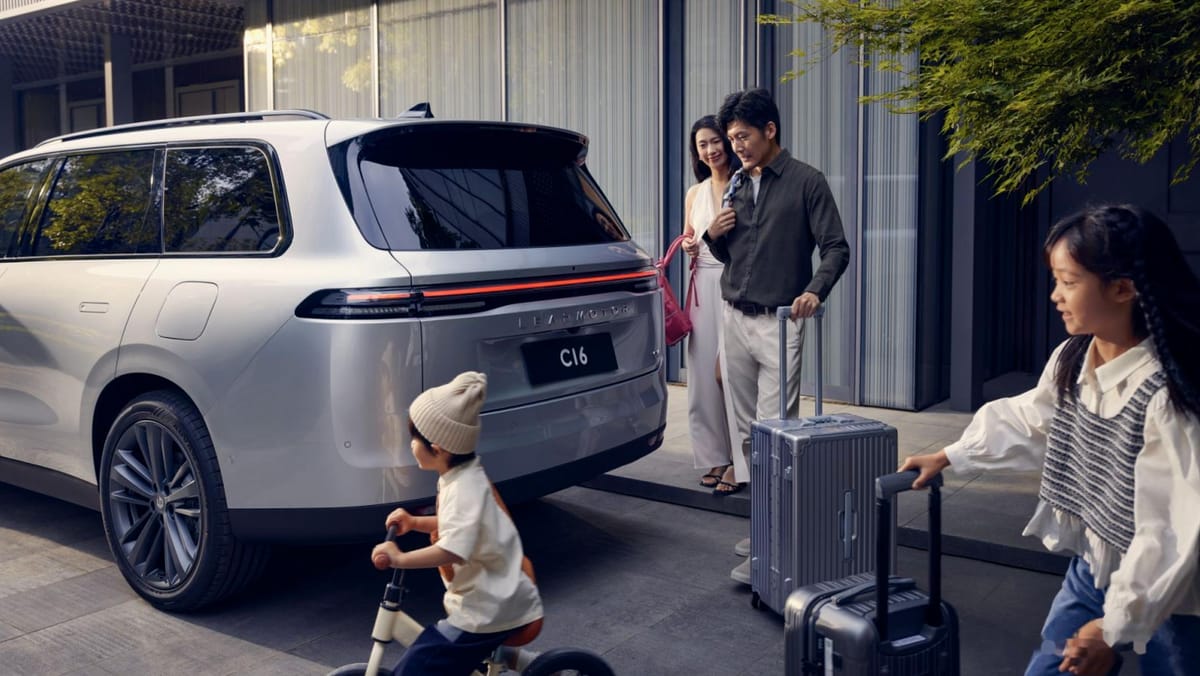
Leapmotor's decade-long journey from a security equipment spinoff to a near-600,000-unit annual seller has culminated in an audacious proclamation: 4 million units within ten years. Yet founder Zhu Jiangming's ambition to transform the Chinese EV upstart into a "world-class automaker" collides with a structural paradox—achieving premium positioning while retaining a channel network originally built for volume efficiency.
The company's tenth-anniversary unveiling of D-series SUV and MPV models signals its formal entry into higher price segments, but the move exposes fragilities masked by earlier successes. Unlike BYD, whose manufacturing dominance underwrites both scale and margin flexibility, Leapmotor's 65% in-house component ratio—while impressive—remains insufficient to support simultaneous channel upgrading and premium brand construction without significant cash burn.
In-House Engineering as Cost Arbitrage, Not Differentiation
Leapmotor's vertical integration strategy deliberately avoided capital-intensive battery cell production, focusing instead on pack assembly and electromechanical components. This approach generated a documented 10% cost advantage versus outsourced alternatives, enabling the "half-price Li Auto" positioning that propelled C11 series sales past 70% of total volume. The company's eight-in-one e-axle and CTC battery-chassis integration represent genuine engineering output, yet they function primarily as enablers of price competitiveness rather than technical moats.
The constraint becomes evident when benchmarked against BYD's 75% self-sufficiency rate and complete battery cell control. Leapmotor's modular approach to in-house development—canceling chip design when economics deteriorated—demonstrates pragmatism but also reveals limits to scaling cost advantages. With D-series vehicles targeting segments where Xpeng and Nio compete on software differentiation rather than hardware cost, Leapmotor's engineering calculus requires recalibration.
Channel Infrastructure Mismatch Threatens Premium Credibility
The 2023 direct-store experiment crystallizes Leapmotor's organizational tension. Eighty company-owned outlets in tier-one cities generated approximately 30 million yuan in losses within twelve months, forcing closures that left just twenty operational. Former channel employee Fang Hai attributes failure to two factors: insufficient product appeal in hyper-competitive urban markets, and revenue models dependent solely on vehicle sales without high-margin aftersales components.
The current "Gold Seed" dealer consolidation program—evaluating partners on capital strength, operational capability, and brand execution—aims to prune smaller operators accumulated during the 2019-2022 land-grab phase. Yet upgrading franchisee quality while simultaneously launching premium products creates timing risk. GAC's Hyper brand, despite 10 billion yuan in backing, struggled partly because shared showrooms with mass-market Aion models diluted positioning. Leapmotor faces identical pressures: existing "mom-and-pop" dealerships lack resources for premium service standards, while rebuilding requires three-to-five-year timeframes that conflict with D-series launch urgency.
The Stellantis partnership for overseas distribution—800 partner locations across Europe—compounds control issues. Leapmotor achieved 60,000 international deliveries in 2025, a 2000% increase, but operates through third-party networks where brand presentation and service consistency remain externally managed. BYD's self-operated experience centers and six global manufacturing bases provide blueprint contrast Leapmotor currently cannot replicate.
The FAW Alliance and Scale Economics Calculus
First Automotive Works' strategic investment addresses manufacturing depth and regulatory navigation—capabilities Leapmotor acknowledges as "traditional OEM DNA" gaps. However, the partnership introduces execution complexity around production allocation and technology licensing that rival the benefits of expanded capacity access.
Reaching 4 million annual units would position Leapmotor alongside BYD's 2024 performance of 4.27 million deliveries, a benchmark requiring not just sustained 33% compound annual growth but maintenance of positive unit economics throughout the scaling curve. BYD achieved this through battery cost leadership and export volumes exceeding 1 million units in 2025—structural advantages Leapmotor has yet to replicate. Its 65% vertical integration rate must increase while simultaneously funding channel transformation, a capital allocation riddle that defies easy resolution.
The company's historical agility—abandoning pure EV exclusivity for range-extenders, pivoting from sports cars to mass-market SUVs—suggests organizational capacity for course correction. Yet premium market entry differs fundamentally from volume positioning. Haval's failed upmarket attempts and Hyper's ongoing struggles demonstrate that cost-engineering prowess alone cannot substitute for brand equity construction, which requires patient, sustained investment in customer experience infrastructure.
Zhu Jiangming's characterization of the company as "just past the subsistence line" reflects awareness that operational profitability remains fragile. The 2022 Hong Kong IPO raised half its 10 billion yuan target and opened with 30% losses, a capital markets reception that constrains financial flexibility for the channel buildout that premium positioning demands. Ten years delivered survival and scale; the next decade requires navigating the considerably narrower path between cost discipline and premium perception—a transition where engineering acumen matters less than brand architecture, and where past successes offer limited predictive value.
By ChinaBiz Insider Analysis Desk