
Xiaomi SU7's Resale Value Plunges 20% as Brand Confidence Overrides Product Cycle in China's EV Secondary Market
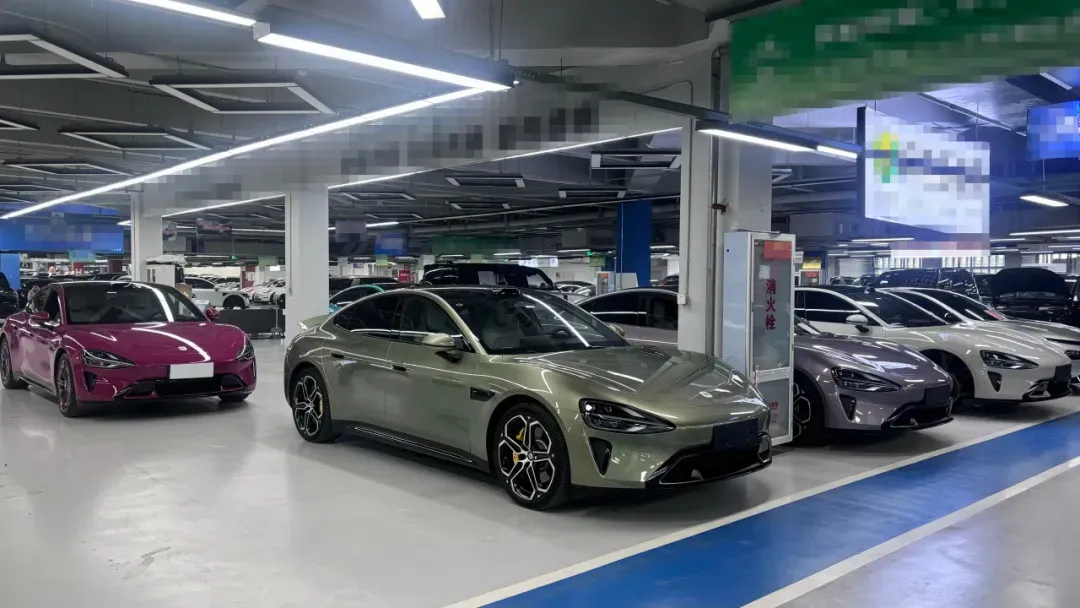
Three months after being hailed as a "wealth management product on wheels," Xiaomi's flagship SU7 sedan now trades at discounts reaching 62,000 yuan ($8,600) below original pricing in Chengdu's secondary markets—a depreciation curve steeper than typical new model releases would justify. Ground-level dealer reconnaissance reveals the erosion stems less from Xiaomi's January 2026 model refresh than from accumulated reputational damage following a series of high-profile accidents, exposing how brand sentiment now drives used EV valuations more powerfully than product specifications in China's maturing electric vehicle ecosystem.
Accident Fallout Creates Inventory Paralysis Among Dealers
Secondary market intermediaries in Chengdu—a bellwether city for China's EV adoption—report unprecedented caution when acquiring Xiaomi vehicles. One dealer candidly disclosed holding two SU7 units purchased pre-October 2025, stating he "definitely wouldn't acquire them" post-accident period. The SU7 Ultra variant exemplifies this volatility: one dealer absorbed a 40,000 yuan loss on a unit purchased at 400,000 yuan that now struggles to move even at 350,000 yuan.
This inventory aversion marks a structural shift. Unlike conventional depreciation tied to mileage or cosmetic condition, dealers now apply a temporal risk premium—vehicles acquired before October 2025 carry implicit "pre-crisis" value, while anything after faces immediate discounting. The Max variant, originally priced at 299,900 yuan, now clusters between 200,000-240,000 yuan depending on odometer readings, with standard editions bottoming out at 150,000-170,000 yuan. Critically, dealers emphasize these figures represent starting points for negotiation rather than firm pricing, signaling desperation to clear aging stock before further sentiment deterioration.
YU7 Scarcity Masks Underlying Vulnerability
Xiaomi's YU7 SUV presents a deceptive stability narrative. With deliveries commencing only in July 2025, limited secondary market circulation keeps depreciation seemingly contained at 40,000-70,000 yuan below retail. However, this reflects supply constraint rather than demand resilience. One Max-spec YU7 with door panel replacement—a minor cosmetic repair—saw pricing collapse from 350,000 yuan landed cost to 280,000 yuan, suggesting the model's perceived durability remains untested at scale.
Dealers anticipate price pressure will materialize post-Lunar New Year, particularly once the refreshed SU7 enters volume delivery—currently projected four months out. The YU7's apparent value retention may prove temporary, mirroring early-stage patterns observed with Nio's ES6 and Xpeng's G9 before secondary markets reached liquidity thresholds that expose true depreciation rates.
Tesla Reasserts Dominance in Residual Value Hierarchy
The Xiaomi volatility contrasts sharply with Tesla's continued leadership in China's used EV market, where dealers uniformly cite Model 3 and Model Y as benchmark assets for portfolio stability. This bifurcation reflects diverging buyer priorities: Tesla's established service infrastructure and eight-year battery warranties translate to quantifiable risk mitigation, while newer entrants like Xiaomi face compounding uncertainty—most used NEVs lose manufacturer warranty protection upon first ownership transfer, leaving buyers exposed to battery replacement costs exceeding 60,000 yuan.
Dealers now stratify the market into distinct tiers. The "confidence bracket" includes Tesla, Li Auto, Nio, and Huawei-backed brands (Aito, Stelato), all offering verifiable after-sales networks. Xiaomi occupies an ambiguous middle ground—strong initial product reception undermined by insufficient operational track record. Brands like Neta and HiPhi, facing existential financial distress, trigger automatic dealer rejection regardless of pricing, as residual values correlate increasingly with corporate survival probability rather than vehicle specifications alone.
The broader implication extends beyond Xiaomi: China's secondary EV market is transitioning from product-driven valuation to ecosystem assessment, where brand infrastructure, warranty transferability, and corporate financial health determine pricing as much as battery health or autonomous driving capabilities. For manufacturers entering this hyper-competitive landscape, the "first 18 months" now constitute a permanent reputational evaluation period where any safety incident or service lapse creates irreversible secondary market penalties—a reality that transforms new model launches from marketing events into high-stakes brand credibility tests.
By ChinaBiz Insider Analysis Desk