
Li Auto Abandons the Market It Created, Betting a Five-Seat Pivot Can Restore Margins
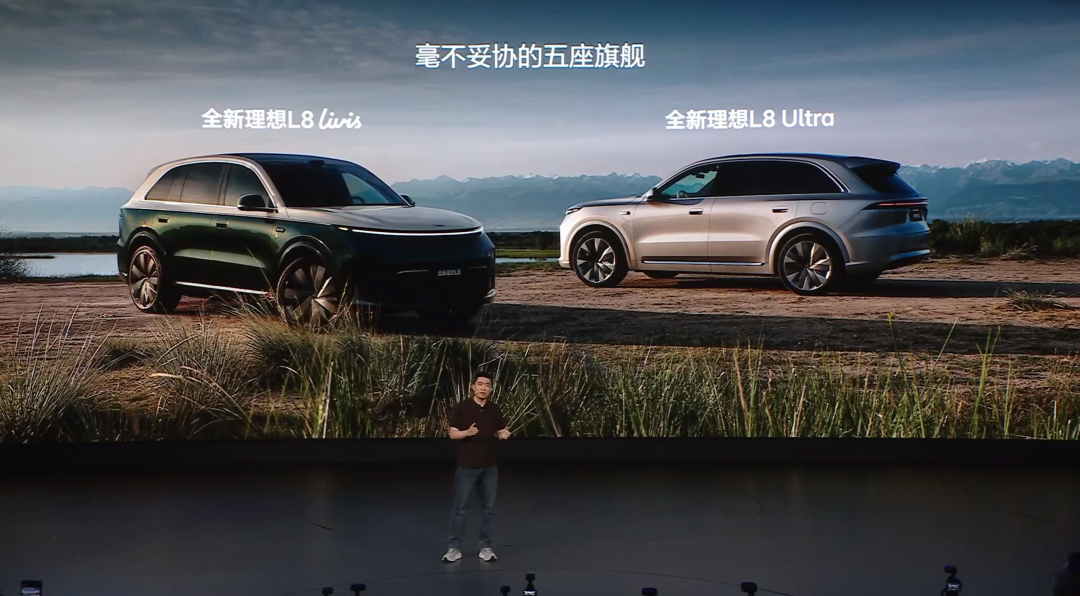
The Chinese EV maker is repricing its entire L-series lineup — pushing the new L8 up to RMB 370,000–430,000 (US$51,400–59,700) and the L7 below RMB 300,000 — in a high-stakes attempt to escape a margin trap of its own making, even as it cedes the RMB 300,000–350,000 segment that Li Auto itself invented.
The product restructuring, confirmed by people familiar with the company's internal deliberations, marks a clean break from the positioning that defined Li Auto for six years. The new L8, launched this week, drops one row of seats, adds roughly RMB 50,000 (US$6,900) to the sticker price, and targets a five-seat flagship SUV segment where competition is thinner — but where consumer willingness to spend above RMB 370,000 on a non-seven-seat vehicle remains unproven.
Markets absorbed the news with measured skepticism; Li Auto’s strategic credibility has been under scrutiny since the company posted consecutive net losses in Q4 2025 and Q1 2026, a sharp reversal from the RMB 35,000 (US$4,900) per-vehicle net profit it recorded in Q4 2023 on a non-GAAP basis.
The timing is not coincidental. Li Auto's vehicle gross margin, once the envy of the domestic EV sector at 22.7% in Q4 2023, has eroded steadily as the cheaper L6 and i6 models shouldered an ever-larger share of total volume. The company now needs the L8-and-above tier to carry margin weight — and the new lineup architecture is designed precisely to force that outcome.
Mapping How Seres Squeezed Li Auto Out of Its Own Segment
The RMB 300,000–350,000 six-seat SUV segment was, until recently, Li Auto's most defensible territory. Li Auto ONE, launched in 2019, essentially created the category by targeting Chinese families with children who were under-served by both mainstream seven-seat MPVs and premium five-seat crossovers. By late 2022, the L9-L8-L7 model ladder had formalized that territory into what appeared to be a durable moat.
Seres and its AITO brand, operating under Huawei's smart-car ecosystem, dismantled that moat with unusual speed. The refreshed AITO M7, launched in September 2023, accumulated 100,000 orders within three months, riding the tailwind of Huawei's Mate 60 smartphone launch. The AITO M9 then displaced the Li Auto L9 as the de facto large six-seat SUV flagship. By 2025, AITO's annual sales reached approximately 420,000 units, edging past Li Auto's 406,000.
The competitive geometry that emerged was a textbook pincer. The 2025-model AITO M8 six-seat version starts at roughly RMB 370,000; the M7 six-seat version starts at RMB 280,000. Together they bracketed the old L8's RMB 320,000–380,000 price band from both directions, compressing L8 monthly sales from a peak above 10,000 units to approximately 2,000 in the second half of 2025 and further to roughly 1,000 units in early 2026.
Leapmotor applied pressure from below. Positioning itself as a "half-price Li Auto," its C10 and C16 models in the RMB 100,000–150,000 range absorbed consumers who might previously have stretched to an L7 or L8. Leapmotor's six-seat flagship D19, launched in the first half of 2026, escalated that challenge further up the price ladder.
Restructuring Reveals the Internal Cannibalization Li Auto Tolerated Too Long
The competitive squeeze from outside was compounded by a structural problem within Li Auto's own portfolio. Because the L9, L8, and L7 share the same extended-range electric platform and near-identical exterior styling, differentiation between models relied heavily on seat count and price gap rather than genuine product hierarchy. At peak, all three models simultaneously exceeded 10,000 monthly units — a feat that masked the underlying fragility.
Once external pressure intensified, the shared-platform strategy inverted. The L6, priced lower than the L7 as a five-seat option, cannibalized L7 demand. The L8 became, in the words of one industry analyst cited in the original reporting, primarily "a car people buy because they can't afford the L9" rather than a product with intrinsic appeal. The L9 itself lacked sufficient luxury differentiation to justify its RMB 450,000-plus price tag against a resurgent AITO M9.
Li Auto's internal conclusion, as described by people close to the company: the RMB 300,000–350,000 six-seat market that Li Auto ONE created has been "vacuum-sealed" — drained not by the disappearance of demand, but by the arrival of more competitive products. Old-generation L8 still sold roughly 40,000 units in 2025, confirming the demand exists. But Li Auto has chosen not to defend it with a dedicated SKU, leaving only the i8 — a model posting roughly 1,000 monthly units — to cover that price band.
New Pricing Architecture Tests Whether Five-Seat Flagships Can Command Premium Multiples
The new product logic is straightforward on paper: the L8 and L9 defend flagship gross margins above RMB 370,000; the L7 (now six-seat, priced below RMB 300,000) and L6 defend volume. The RMB 300,000–350,000 gap is, for now, deliberately vacated.
Execution faces two immediate tests. First, the five-seat SUV segment above RMB 370,000 is not an empty field. Zeekr 8X starts at RMB 320,000; NIO ES6 starts at RMB 340,000; Tesla Model Y and Xiaomi YU7 — both volume leaders — are priced below RMB 300,000. An industry product strategist quoted in the original reporting noted flatly that "five-seat SUV flagships are hard to sell at high prices."
Second, Li Auto must engineer a credible value gap between the new L8 Livis and the L9 Livis. The two vehicles share nearly identical configurations; the L8 costs RMB 70,000 (US$9,700) less and omits one row of seats. Convincing buyers that the price differential is justified — rather than simply paying a RMB 70,000 premium for a third row — is a marketing and product problem that pricing alone cannot solve. Internal discussions reportedly considered an even more aggressive L8 price to avoid cannibalizing L9 sales, suggesting the company remains uncertain about where the equilibrium lies.
Gross Margin Recovery Hinges on a Bet Li Auto Cannot Afford to Lose
The financial stakes are concrete. Li Auto's consecutive losses in Q4 2025 and Q1 2026 reflect the structural consequence of a volume mix skewed toward lower-priced models. Recovering to the per-vehicle economics of 2023 requires either dramatically higher L6/i6 volumes — which further pressures average selling price — or a successful repositioning of the L8 and L9 at price points that support 20%-plus vehicle gross margins.
The new architecture is designed to achieve the latter. But Li Auto is attempting this repositioning without the first-mover advantage that made Li Auto ONE transformative in 2019. At that point, the company was creating a market; today it is fighting for share in a market crowded with well-capitalized rivals running faster product cycles. AITO refreshes models every six to twelve months; Li Auto's discipline around minimal SKUs and three-year generational cycles, which once produced superior margins, has become a strategic liability when competitors can respond to market shifts more quickly.
The RMB 300,000–350,000 segment that Li Auto ONE built now belongs, in meaningful part, to AITO. Whether the five-seat flagship segment above RMB 370,000 can become Li Auto's next proprietary territory — or whether the company has simply traded one contested market for another — will likely be visible in L8 order data within the next two quarters.
Related Coverage:
Li Auto's Revenue Craters as Li Xiang Doubles Down on Embodied AI Pivot