
Li Auto's Revenue Craters as Li Xiang Doubles Down on Embodied AI Pivot
Li Auto is burning through its profitability cushion to fund a decade-long bet on embodied artificial intelligence — and the market has yet to validate the wager.
The company's first-quarter 2026 financial results laid bare the severity of the divergence between strategic ambition and commercial reality: revenue fell 11.4% year-on-year to RMB23 billion ($3.19 billion), while the company swung to a net loss of RMB2.3 billion ($319 million) from a net profit of RMB647 million in Q1 2025. Vehicle gross margin — the single most watched metric in China's hyper-competitive new energy vehicle sector — collapsed from 19.8% to 6.1% in the same period. The broader gross margin fell from 20.5% to 7.9%.
The deterioration arrives precisely as founder and CEO Li Xiang is staging the most ambitious product offensive in the company's history, launching three major events in under two months and redefining Li Auto not as a carmaker, but as an embodied intelligence enterprise.
Collapsing Margins Expose the Cost of Transition
The financial damage is structural, not cyclical. Li Auto's full-year 2025 deliveries totaled 406,300 vehicles — an 18.8% year-on-year decline from the 500,500 units delivered in 2024, itself a year already hobbled by the disastrous launch of the MEGA electric MPV. The trajectory marks a sharp reversal from 2023, when the company delivered 376,000 vehicles, a 182.2% surge driven by its L-series extended-range SUV matrix, and maintained vehicle gross margins consistently above 20%.
The immediate culprit in the margin collapse is product mix. Li Auto i6, a relatively lower-priced battery electric vehicle, is now the company's sole volume driver. Data from Dongchedi shows that in May 2026, the i6 was the only Li Auto model delivering more than 10,000 units in a single month. The flagship Li Auto L8 and the MEGA each recorded fewer than 500 monthly deliveries — figures that are commercially insignificant for a company of Li Auto's scale and cost base.
The i6's dominance is a double-edged sword: it stabilizes headline delivery numbers while systematically diluting per-unit economics, leaving high-margin L-series models to gather dust on dealer floors.
New L8 Launch Attempts to Reignite Premium Demand
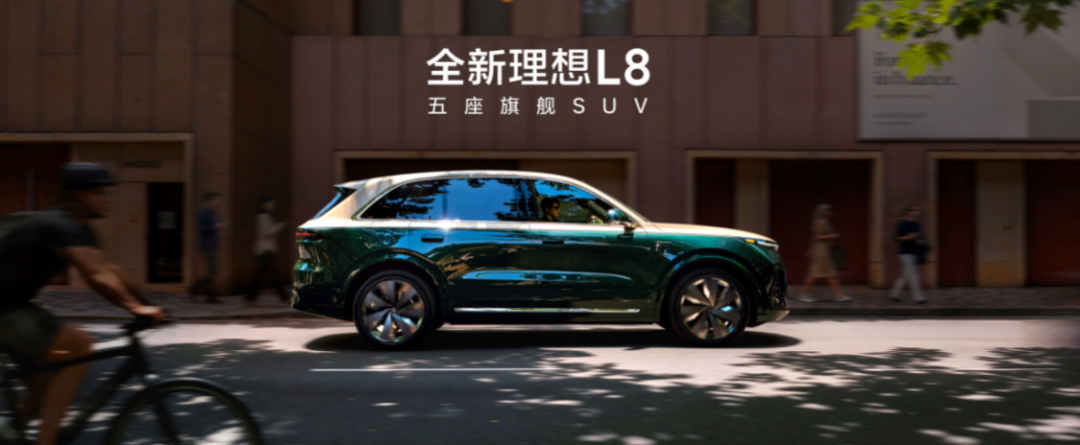
On June 23, Li Auto launched the redesigned Li Auto L8, positioning it as "the world's best five-seat flagship SUV" — a claim that echoes the company's earlier "best SUV under RMB 5 million" marketing for the L9. The L8 is offered in two configurations: the Ultra at RMB369,800 ($51,361) and the Livis at RMB429,800 ($59,694), with introductory pricing set at RMB359,800 and RMB419,800, respectively.
The L8 shares core technology with the recently refreshed Li Auto L9, including steer-by-wire, rear-wheel steering, and the company's proprietary zero-gravity seating system — the last of which Li Auto claims is exclusive across the entire industry. However, a notable supply chain distinction separates the two models: the L9 is equipped exclusively with Contemporary Amperex Technology (CATL) ternary lithium battery cells across all trims, while the L8 uses cells sourced from Sunwoda Electronic, a supplier with a lower brand premium in the eyes of Chinese premium-car buyers.
The L9 Livis, which began deliveries on May 17, generated over 10,000 firm orders within its first two weeks — a result Li Auto credited with arresting the delivery decline. Whether the L8 can replicate that momentum remains unconfirmed; the company had not disclosed order figures as of publication.
Li Xiang Reframes the Company Around Embodied Intelligence
The product launches are the visible layer of a deeper organizational transformation. At the Livis Day software and AI event held between the two vehicle launches, Li Xiang spent more than two hours articulating a vision in which automobiles are redefined as embodied AI agents — simultaneously an electric vehicle, a professional chauffeur, an AI computing platform, and a lifestyle assistant.
The centerpiece of the technical roadmap is the Mach M100, a proprietary AI chip developed in-house. Li Auto's OTA deployment schedule, disclosed at Livis Day, is aggressive: a 30% improvement in assisted driving efficiency targeted for July 2026; full-scenario autonomous reversing and road-surface self-learning capabilities by September; and by December, a system Li Auto claims will react 56% faster than a human driver, with the ability to recognize traffic police hand signals and switch user accounts via exterior facial recognition.
Earlier this year, Li Xiang restructured the company's entire R&D architecture around three pillars — a foundation model team, a software body team, and a hardware body team — with both automobiles and humanoid robots classified under the hardware body category. The reorganization signals that Li Auto's long-term competitive identity is being staked on AI platform development rather than vehicle manufacturing alone.
Strategic Vision Runs Ahead of Organizational Readiness
The boldness of the pivot has generated internal friction. Multiple Li Auto employees in frontline sales, factory operations, and non-R&D roles have reportedly described Li Xiang's embodied intelligence narrative as difficult to comprehend and disconnected from their day-to-day responsibilities, according to employee commentary reviewed by 36Kr.
Industry analysts offer a measured read. The strategic logic is sound: the endgame for intelligent vehicles is autonomous agency, and Li Auto is positioning early. The risk, however, is timing and cash flow. Embodied intelligence capabilities are unlikely to translate into near-term purchase decisions for Chinese family-car buyers, meaning the heavy R&D investment required to build the platform will continue to compress margins before it generates incremental revenue.
The extended-range vehicle segment that Li Auto pioneered has been fully commoditized. Competitors including Seres-Huawei's Aito, Leapmotor, Xpeng, Xiaomi, SAIC-GM-Wuling's IM Motors, GAC, Volkswagen, and Mazda now offer extended-range models spanning RMB 100,000 to RMB 500,000. Simultaneously, advances in 800V ultra-fast charging — with at least one industry player achieving a 10%-to-98% charge in six minutes and 27 seconds — are accelerating pure-EV adoption and compressing the addressable market for range-extender technology.
Owner sentiment has also soured. One customer who purchased a Li Auto L9 in 2024 for RMB 450,000 (US$62,500) told 36Kr they felt blindsided when the model's price was subsequently cut sharply to clear inventory. "Even accounting for how fast EVs depreciate, seeing a flagship model drop that aggressively is demoralizing," the owner said. A former Li Auto ONE owner who switched to an Audi electric vehicle cited a loss of confidence in the brand's current trajectory.
The Fundamental Tension: Vision Requires Fuel
Li Auto's situation distills to a classic innovator's dilemma. The company needs sustained cash generation from vehicle sales to fund the multi-year AI infrastructure buildout Li Xiang envisions. Yet the product lineup capable of generating that cash — the L-series premium SUVs — is losing competitive relevance faster than the new Livis-generation models can rebuild it.
The i6 provides a floor but not a foundation. The new L8 and L9 Livis models represent a genuine technological step forward, but they are entering a market where consumer trust in Li Auto's pricing stability has been eroded and where rival intelligence features are advancing rapidly across every price band.
Li Xiang's ten-year embodied AI wager may ultimately prove prescient. In the near term, however, the company's ability to execute on that vision depends entirely on its capacity to sell cars — a task that, through the first quarter of 2026, it has not yet convincingly demonstrated it can do at scale.
Related Coverage:
Li Xiang Positions Li Auto's In-House Chip Push as AI Infrastructure Play, Not a Vanity Project