
Li Auto Bets on In-House Battery Mastery to Redraw EV Value Chain
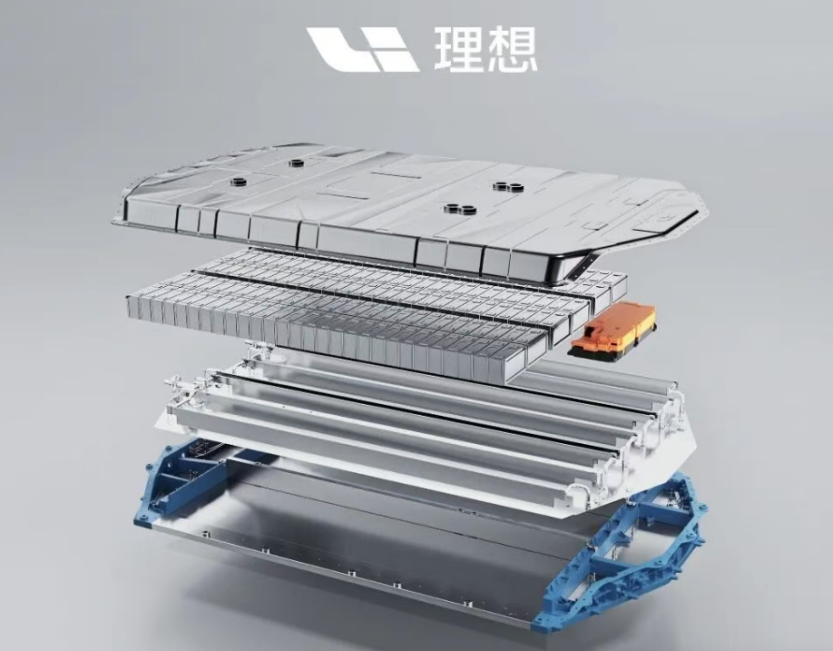
Li Auto is staking its competitive future not on displacing battery giants, but on seizing the technical definition rights over the entire electric powertrain—a strategic posture that mirrors how Apple controls hardware-software integration while outsourcing manufacturing.
The Beijing-based automaker formalized its in-house battery strategy at a media briefing held at its Beijing R&D headquarters, with Co-founder, President and Chief Engineer Ma Donghui laying out a six-year roadmap that began quietly in 2020 and is now delivering commercial products in 2026. The timing is deliberate: as battery chemistry matures and incumbent suppliers such as Contemporary Amperex Technology and BYD consolidate market share, Li Auto is arguing that the next battleground is not cell chemistry per se, but the data loop connecting manufacturing parameters, vehicle systems, and end-user behavior.
Market observers note that Li Auto's approach diverges sharply from the capital-intensive vertical integration pursued by BYD, and instead resembles a platform-control model—one that could structurally reduce its dependence on any single supplier without incurring the full balance-sheet burden of owning gigafactories.
Reframing the "Black Box": Why Data Integration Drives the Strategy
The central thesis Ma presented is that legacy procurement relationships leave automakers with what he calls a "grey box"—access to finished battery packs but not to raw material formulations, process parameters, or per-cell inspection data generated during manufacturing. This information asymmetry, Li Auto argues, is a latent safety and quality risk that only surfaces after vehicles reach consumers.
Li Auto's proposed solution is a three-layer data unification: first, bridging component manufacturing data with vehicle-level telemetry and user behavioral data; second, integrating the battery with the electric drive, thermal management, and charging systems at the engineering level; and third, aligning product definition, quality standards, and after-sales accountability under a single brand umbrella.
"Whatever the root cause—cell, pack, software, or integration—the responsible party for the consumer must be the car brand," Ma said. "Find Li Auto. That's enough."
This accountability logic directly informs Li Auto's hybrid manufacturing model. The company self-designs and outsources cell production (自研代工) while retaining full in-house control over battery pack (PACK) assembly and battery management systems (BMS). The structure preserves manufacturing scalability while keeping the data architecture proprietary.
Xinwangda and CALB Partnerships Signal an Open-Ecosystem Play
Rather than a closed supply chain, Li Auto is constructing what it describes as a tiered partnership ecosystem governed by four criteria—Technology, Quality, Cost, and Delivery (TQCD)—with a fifth condition added: openness to deep data and R&D collaboration.
Shenzhen Xinwangda Electric Vehicle Battery represents Li Auto's deepest integration: a relationship traceable to 2017, followed by an equity investment in 2022 and a further capital injection in 2026. The two companies have established a joint-venture PACK manufacturing entity. China Aviation Lithium Battery has been added as a second cell contract-manufacturing partner, with products already listed in China's Ministry of Industry and Information Technology (MIIT) vehicle catalog for deployment in the upcoming Li Auto i6.
Ma was explicit that cell quality standards are identical across both partnerships, and that additional battery suppliers meeting Li Auto's data-sharing requirements remain eligible to enter the ecosystem. The message to the supply chain is unambiguous: this is not a supplier-exclusion strategy, but a qualification-gate strategy.
The 15C Calculus: Engineering Backwards From User Experience
Perhaps the most analytically revealing element of the briefing was Li Auto's rationale for targeting 15C charge rates—a figure that appears aggressive until the engineering logic is unpacked.
Liu Liguo, Senior Vice President of Vehicle Electrification R&D and Chairman of Shandong Li Auto Battery, walked through the arithmetic. A 100 kWh battery pack operating at 5C already demands peak charging power exceeding 500 kW. Of Li Auto's more than 4,000 proprietary charging stations, fewer than 5% can deliver 800 kW; a significant share cap out at 480 kW. In other words, grid infrastructure—not cell chemistry—is already the binding constraint for charging speed beyond 5C.
Li Auto's consumer-experience target for the next product generation is "500 km of range in 5 minutes." Back-calculating from that threshold, accounting for thermal management headroom, grid variability, and degradation buffers, the required cell-level capability resolves to approximately 15C. The company is therefore not chasing a round number; it is engineering to a user outcome and sizing the technology requirement accordingly.
This methodology—experience-first, parameter-second—is a deliberate departure from the specification escalation that has characterized much of the Chinese EV industry's public communication around charging speed. Li Auto's current EV owner Net Promoter Score (NPS) for charging experience stands above 93.5%, a data point the company cited as evidence that 5C, introduced commercially with the MEGA in 2024, has already cleared the user-satisfaction threshold.
Cost Architecture: Efficiency Over Component Substitution
Li Auto is also pushing back against the conventional assumption that in-house battery development is primarily a cost-reduction play. Ma decomposed battery cost into five components: production line amortization, manufacturing overhead, raw materials, logistics and warehousing, and R&D amortization. He argued that meaningful cost improvement comes from system efficiency, not from squeezing any single line item.
Specific levers cited include: raising production line utilization through cell platform consolidation; improving cell yield rates via Li Auto's proprietary Lianshan manufacturing monitoring system; gaining upstream raw material visibility to hedge price volatility; and eliminating redundant packaging, tooling, and logistics costs that arise from managing multiple battery form factors.
Notably, Li Auto stated explicitly that its contract manufacturing arrangements are structured to preserve reasonable gross margins for supply partners. "Otherwise they cannot develop in a healthy way," Ma said—a comment that reads as a direct signal to the market that Li Auto is not attempting to use its scale to extract supplier margins in the manner that has drawn criticism toward some other OEMs.
Annual battery R&D expenditure has exceeded RMB 200 million (approximately US$27.8 million) every year for the past six years, with cumulative investment in the low-to-mid single-digit billions of renminbi. Li Auto indicated that spending will accelerate over the next two to three years as it builds out a tri-city R&D network spanning Beijing, Shanghai, and Shandong province.
Solid-State Gap Acknowledged; Competitive Framing Deliberately Narrow
In a market where technology claims frequently outpace engineering reality, Li Auto's explicit acknowledgment of its limitations relative to CATL in solid-state battery research stands out as a credibility signal rather than a concession.
Liu stated that Li Auto has conducted materials-layer, interface-layer, and device-layer research in solid-state technology and has produced 5 Ah prototype cells. He simultaneously acknowledged that the gap with CATL—which has disclosed significantly larger R&D programs in this area—is "comparatively large." Li Auto's fleet of vehicles incorporating its self-defined battery products has reached 420,000 units in market, a base Liu cited as evidence of competitive quality on currently commercialized technology.
The competitive framing Liu offered was precise: Li Auto is not attempting to become the next CATL, nor is it seeking to sell batteries externally. Its target state is a battery capability set sufficient to support Li Auto's own product experience roadmap—no more, no less.
Strategic Implications: The Engine Analogy and the Definition-Rights Thesis
The broader strategic argument Li Auto is advancing draws a direct parallel to the combustion-era transition. Early Chinese domestic automakers predominantly sourced engines externally. As the industry matured, proprietary powertrain capability became a prerequisite for product differentiation and brand credibility. Li Auto's leadership contends that electrification is compressing the same transition into a shorter timeframe—and that the companies which establish definition rights over battery-electric drive-thermal-charging integration in this window will hold structural advantages that are difficult to replicate later.
Beijing's Intelligent Supercharging Key Laboratory is already scoping next-generation technologies oriented toward a 2035 horizon, providing institutional infrastructure for longer-cycle research that individual product programs cannot justify.
The question Li Auto is implicitly posing to the industry: as batteries, electric drives, chips, and chassis systems become more tightly coupled, who should hold the technical definition authority over a smart electric vehicle? Li Auto has answered that question for itself. How its peers—and its suppliers—respond will shape the competitive architecture of China's EV industry through the end of the decade.
Related Coverage:
Li Auto Adds CALB as Its Third Battery Supplier to Strengthen Supply Chain Control