
Li Auto's Chip Unit Eyes RMB 15 Billion Valuation in Spinout That Redefines China's Auto-Silicon Race
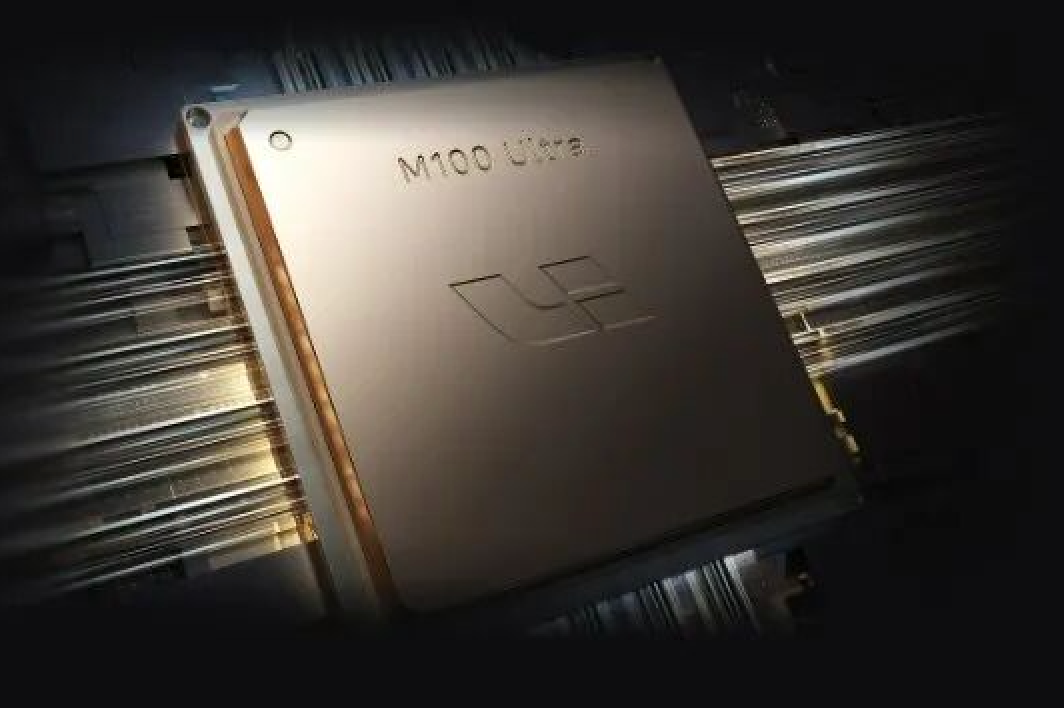
Li Auto is carving its in-house chip operation into a standalone company seeking external capital at a pre-money valuation of RMB 15 billion (US$2.08 billion), a structural bet that simultaneously offloads mounting R&D costs from a deteriorating balance sheet and positions the unit to compete for customers beyond the automaker's own vehicle lineup.
The move, reported by LatePost Auto, marks the most consequential organizational pivot since Li Auto formally launched its chip program in November 2022. Mach Intelligent Cores Limited was incorporated in Hong Kong in July 2026, with its wholly owned Shanghai subsidiary — Shanghai Mach Intelligent Cores Technology — registered in August under the legal representation of Li Auto Chief Technology Officer Xie Yan. A second-tier subsidiary has since been established beneath the Shanghai entity. The company is simultaneously negotiating labor-relation transfers with chip-team employees, signaling that the spinout is operational rather than merely structural.
The timing is pointed. Li Auto reported first-half 2026 revenue of RMB 48.65 billion (US$6.76 billion), down 13.4% year-on-year, with gross margin collapsing from 20.3% to 9.5% and a net loss of RMB 3.98 billion (US$553 million). Cash reserves fell to RMB 87.5 billion (US$12.15 billion) from RMB 101.2 billion (US$14.06 billion) at end-2025. Against that backdrop, keeping a multi-year, multi-billion-yuan chip program entirely on the consolidated income statement was becoming structurally untenable.
Counting the Cost: Why a 5-Nanometer Chip Demands Billions Before a Single Car Rolls
The Mach M100 — Li Auto's first proprietary system-on-chip — entered mass production in May 2026 after roughly three and a half years of development. The team numbers approximately 200 engineers spanning AI compute architecture, chip design, compiler development, and associated software.
Headcount, however, is the visible fraction of the bill. A production-grade automotive SoC at advanced process nodes requires payments for architecture design, processor and interface IP licensing, EDA software, simulation compute, physical design, tape-out, packaging, testing, functional-safety certification, and vehicle-level validation. A single failed tape-out can add tens of millions to hundreds of millions of renminbi in cost and push mass-production timelines back by months.
Industry cost estimates cited by the Center for Strategic and International Studies place average design expenditure for a 5-nanometer chip at approximately US$449 million; 3-nanometer rises to US$581 million; 2-nanometer reaches US$725 million. Complexity, die area, IP reuse, and tape-out frequency vary widely across projects, but the figures establish the order of magnitude for advanced-node SoC investment — equivalent to several billion renminbi for a 5nm program.
The economics then pivot entirely on volume. Assuming front-end development costs of RMB 3 billion and a per-vehicle saving of RMB 10,000 versus external procurement, break-even requires cumulative shipments of 300,000 units; at RMB 5,000 per vehicle, the threshold doubles to 600,000. Those calculations exclude capital costs, next-generation development, yield management, and ongoing software investment — which is precisely why Li Auto has moved aggressively to deploy the M100 across the L9, L8, L6, MEGA, and i9 model lines. Scale is the only variable that makes the arithmetic work.
As of August 2026, Li Auto disclosed cumulative M100 deliveries exceeding 50,000 units — sufficient to validate stable mass production, but a fraction of what is required to absorb total program costs.
Benchmarking the M100: What 1,280 TOPS Actually Buys
The M100 is manufactured on a 5-nanometer automotive-grade process and carries a rated compute figure of 1,280 TOPS, paired with a 24-core Arm Cortex-A78AE processor, eight-channel LPDDR5X memory, and peak memory bandwidth of 273 GB/s. High-specification vehicle configurations run a dual-chip arrangement delivering 2,560 TOPS. Li Auto reports hardware utilization of 82%, a metric that, if independently verified, would represent a meaningful efficiency advantage over conventional GPU-based platforms.
The architectural thesis behind the M100 centers on dataflow design. Traditional GPU architectures function as general-purpose compute platforms, repeatedly reading data from memory, executing operations, and writing results back — a pattern where data movement costs can exceed compute costs as model sizes grow. The M100's compiler pre-schedules data routing, directing computation along fixed paths into designated processing units to reduce latency, cache pressure, and redundant data transfer.
Li Auto claims the M100 delivers approximately three times the effective compute of Nvidia's (英伟达) Thor-U on the company's proprietary models, at a unit bill-of-materials cost below external procurement. The company has previously indicated that high-end vehicles using external high-compute chips can cost between US$1,600 and US$2,000 per unit in silicon alone — approximately RMB 11,500 to RMB 14,400.
Two caveats matter here. First, TOPS figures across vendors are not directly comparable: different vendors apply different compute precision, sparsity ratios, and test conditions. Li Auto's "three times" claim reflects performance on its own models within its own software stack, not a portable benchmark applicable to third-party workloads. Second, the M100's dataflow architecture shifts a portion of hardware complexity onto the compiler and software toolchain. Li Auto reports that early model-update-to-vehicle-deployment cycles took two months; that figure has been compressed to under one week, with a target of sub-one-day. That deployment velocity is arguably the more commercially significant metric — it determines whether the chip can keep pace with the rapid iteration cycles of large language models driving next-generation in-vehicle intelligence.
For internal use, where Li Auto controls the chip, model, operating system, and vehicle control stack simultaneously, migration costs are manageable. For external customers, re-adapting models, completing operator coverage, and passing functional-safety validation represents a hidden cost that may exceed the chip procurement price itself.
Valuation Gap Signals Cloud Ambitions, Not Just Vehicle Economics
The RMB 15 billion pre-money valuation demands scrutiny against the nearest comparable. NIO's chip subsidiary Anhui ShenJi Semiconductor completed a RMB 2.257 billion (US$313 million) Series A in February 2026 at a post-money valuation approaching RMB 10 billion (US$1.39 billion), with NIO retaining 62.7%, external investors holding 27.3%, and 10% reserved for employee incentive structures. At the time of that round, ShenJi's NX9031 chip had shipped more than 150,000 units. Li Auto's M100 had delivered fewer than 50,000 units by August 2026, yet the pre-money valuation of the Mach entity stands roughly 50% above ShenJi's post-money figure.
The premium is legible only if the market is pricing in the cloud inference chip program currently under development. Li Auto is exploring a server-side chip using the same dataflow architecture to handle autonomous-driving data processing, simulation workloads, large language model inference, and related cloud tasks. If vehicle-side and cloud-side chips can share compute units, compiler infrastructure, and software tooling, the front-end development investment gets amortized across two distinct markets — materially improving the unit economics of both programs.
The technical requirements diverge substantially, however. Vehicle-side tasks are relatively static, prioritizing low power consumption, deterministic latency, and long-term reliability. Cloud inference must simultaneously handle heterogeneous models, variable-length inputs, and fluctuating concurrent request volumes. Competing against Nvidia GPU clusters or dedicated inference accelerators in a data-center environment means winning on cost per million inferences — a benchmark where the M100's architecture has not yet been tested at scale.
If the cloud chip delivers efficiency gains only on a narrow set of proprietary models, it remains an internal cost-reduction tool. Only when it supports standardized interfaces, broad model compatibility, and paying external customers does the RMB 15 billion valuation — or higher — find durable support.
Spinout Structure Solves a Talent Problem as Much as a Capital Problem
Assuming a RMB 2 billion fundraise at the stated pre-money valuation, external investors would hold approximately 11.8% of the entity post-close; a RMB 3 billion raise implies roughly 16.7%, before adjustments for secondary transfers, employee pools, and transaction terms.
The equity separation addresses a retention problem that is at least as pressing as the funding question. AI chip development cycles run three to four years per generation, and the same pool of computer architecture engineers, compiler developers, and functional-safety specialists is being actively recruited by Nvidia, domestic fabless peers, and a rapidly expanding cohort of embodied-intelligence startups. A standalone equity structure gives chip engineers a direct line of sight to returns tied to the chip business's own funding rounds, customer wins, and valuation — rather than waiting for Li Auto's consolidated vehicle market capitalization to recover from its current pressure.
In June 2026, Li Auto granted a combined 35 million share options to Xie Yan, Ma Donghui, and Li Tie, with Xie receiving 10 million options under vesting conditions linked to long-term market capitalization targets. A separate equity pool at the chip subsidiary level creates a parallel incentive architecture specifically calibrated to chip program milestones.
What Comes Next: The Distance Between Internal Component and Market Product
The strategic logic of the spinout is internally coherent. Externalizing a portion of long-cycle chip investment reduces pressure on an income statement already strained by falling revenue and compressed margins. Independent equity incentives address talent retention in a competitive hiring environment. And a cloud inference program, if successful, meaningfully expands the addressable market beyond Li Auto's own vehicle production.
The execution gaps are equally clear. As an internal component, the M100 can be optimized around Li Auto's specific vehicle architectures, proprietary models, and electrical systems. As a commercial product sold to third parties — whether rival automakers, robotics companies, or embodied-intelligence startups — it must support diverse sensor configurations, operating systems, model families, and vehicle platforms. Problems currently resolved through internal coordination must be converted into documented interfaces, developer tooling, technical support commitments, and defined quality liability.
The first external M100 customers are likely to be teams already familiar with Li Auto's software ecosystem. The inflection point that validates the commercial thesis — an unaffiliated customer running a sustained production program on M100 silicon — has not yet arrived.
Li Auto's first-half 2026 R&D expenditure totaled approximately RMB 5.5 billion (US$764 million), with no breakdown disclosed between vehicle programs, chip development, and other initiatives. With vehicle-side and cloud-side chip programs running concurrently, the Mach entity will continue to be a net consumer of capital for several years. The external fundraise transfers a portion of that risk to industrial investors — and buys the chip team the runway to find out whether a highly optimized internal component can become a product the rest of the market will pay for.
Related Coverage:
Li Auto Adds CALB as Its Third Battery Supplier to Strengthen Supply Chain Control
Li Auto Bets RMB 2.65 Billion on Battery Independence, Reshaping Its CATL Dependency