
Li Auto Bets RMB 2.65 Billion on Battery Independence, Reshaping Its CATL Dependency
Li Auto is executing a calculated pivot away from commodity battery procurement, investing RMB 2.65 billion (US$368 million) into Sunwoda EVB while simultaneously rolling out proprietary 5C battery technology across its entire vehicle lineup — a dual move that signals the company is building industrial-grade supply chain control, not merely a research capability.
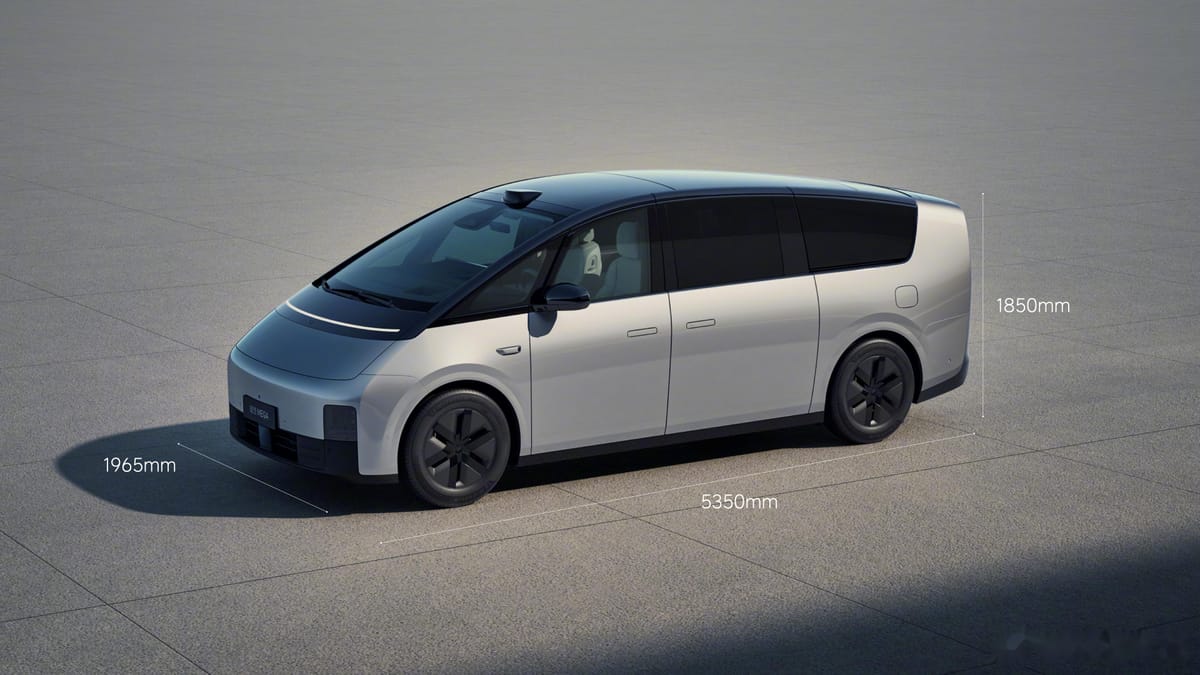
The strategic shift crystallized on September 7, 2026, when Li Auto drew a hard line at 3:00 p.m. local time: customers who locked orders for the next-generation MEGA before that timestamp will receive vehicles equipped with Contemporary Amperex Technology (CATL) 5C ternary lithium cells; those who ordered after will enter a delivery queue — expected to begin in November — fitted with Li Auto's own in-house 5C ternary lithium battery. The cutover, triggered in part by CATL's inventory running thin against unexpectedly strong MEGA demand, made the real-world consequence of single-supplier dependence impossible to ignore.
Three days earlier, on September 4, Beijing Li Auto announced it would inject RMB 2.65 billion (US$368 million) in cash into Sunwoda EVB, acquiring an 8.79% direct stake. Combined with the 2.60% previously held through Chongqing Chezhi Yuan Venture Capital, Li Auto's consolidated holding in Sunwoda EVB reaches approximately 11.17%, making it the battery maker's second-largest shareholder. The transaction was priced at a pre-money valuation of RMB 27.48 billion (US$3.82 billion), consistent with Sunwoda EVB's prior Series C round.
Eleven Years of R&D Converge on a Single Supply Chain Decision
Li Auto's battery self-development is not a recent ambition. The company assembled a battery engineering team at inception in 2015, initially designing fully proprietary battery pack solutions for an early micro-EV project that was ultimately shelved. What survived the cancellation was the team itself — and a design philosophy that treats battery architecture as inseparable from vehicle integration.
The extended-range electric vehicle (EREV) platform sharpened that philosophy. When Li Auto committed to the EREV route around 2015, no commercially viable high-power, large-capacity battery existed for the application. The company co-developed its first large EREV battery with CATL, launching what it describes as the industry's first extended-range large-format battery in 2019 alongside the Li ONE.
The in-house trajectory accelerated from there. Li Auto set a 4C fast-charging target in 2018, formally established a full-stack self-development team in 2019, and initiated 5C fast-charging battery development in 2020 — at a time when the industry mainstream was clustered around 2C. Mass production of the 5C high-density fast-charging battery was achieved in 2024.
Liu Liguo, Senior Vice President of Electrification R&D at Li Auto, has stated that battery procurement cannot be reduced to a sourcing decision. The cell must be co-engineered with the chassis, body structure, thermal management system, charging architecture, and software algorithms to meaningfully address real-world range anxiety and charging speed. Liu Zhimin, Senior Director of Power Battery at Li Auto, adds that 5C charging is not achieved by simply increasing current — it requires simultaneous resolution of cell chemistry, electrode design, thermal management, structural integrity, and long-cycle degradation.
The current-generation Li L8 equipped with the proprietary 5C cell demonstrates the output of that decade-long effort: 72.7 kWh capacity, 430 km pure-electric range, and peak 5C fast-charging capable of reaching 80% state of charge in 10 minutes — on an extended-range SUV platform, not a purpose-built BEV.
A Six-Year Partnership Hardens Into Equity Alignment
Li Auto and Sunwoda EVB have maintained a working relationship for approximately six years, a timeline that predates the equity investment by a wide margin. The division of labor, as described by Li Auto executives, is precise: Li Auto owns product definition — cell chemistry, electrode architecture, pack design, and BMS development — while Sunwoda EVB contributes manufacturing engineering, production ramp expertise, and quality execution.
Sunwoda EVB's relevance to Li Auto's requirements is rooted in its hybrid electric vehicle (HEV) battery heritage. HEV cells must sustain high-frequency charge-discharge cycles and high-power output — technical terrain that closely mirrors the demands of 5C fast-charging architectures. The manufacturer also carries validated supply relationships with Apple, Tesla, and Xiaomi, providing a quality management and large-scale delivery reference that Li Auto views as directly applicable to its own standards.
Liu Zhimin has noted that Sunwoda EVB's depth in high-power cell manufacturing and production ramp management is precisely what Li Auto requires as its non-standard battery specifications preclude shared production lines with other customers. Standard-cell manufacturers can co-produce across clients on common lines; Li Auto's proprietary cell geometries and performance specifications demand dedicated tooling.
The equity stake formalizes what was previously a contractual arrangement into a structural one. Li Auto gains earlier access to Sunwoda EVB's manufacturing planning cycles — enabling R&D and production engineering to run in parallel rather than sequentially — along with deeper integration into quality control at the cell and pack level. Sunwoda EVB, in turn, secures a long-duration anchor customer whose non-standard requirements generate differentiated technical capability rather than commoditized volume.
Q4 2026 Becomes the Inflection Point for Full-Fleet Deployment
The fourth quarter of 2026 represents the most concentrated transition in Li Auto's battery supply history. Three vehicle programs are shifting simultaneously:
- Next-generation MEGA: Post-September 7 orders migrate to Li Auto proprietary 5C ternary lithium cells, with deliveries commencing November 2026.
- New Li i9: Initial production batches retain CATL 5C cells; transition to proprietary cells follows production ramp stabilization.
- 2026 Li i6: Ships from factory with proprietary 5C cells and the Mach chip; pre-order window opens late September, first deliveries scheduled for early November.
Combined with existing deployments on the Li L8, L6, and i8, the Q4 rollout effectively completes the transition of Li Auto's active model lineup to in-house battery technology.
The Investment Buys Certainty, Not Control
Multiple investors familiar with the transaction, as cited by industry publication Next-Gen Autonomous Driving, characterize the RMB 2.65 billion outlay as purchasing certainty across three dimensions: R&D synchronization, quality governance, and production capacity assurance.
Li Auto has been explicit that the investment does not signal an intent to consolidate or control Sunwoda EVB. CATL remains an active supply partner. The company's stated position is that proprietary development and external procurement are complementary — self-development addresses performance specifications that commodity products cannot meet, while external supply provides volume flexibility and cost optionality.
The 11.17% stake is nonetheless sufficient to embed Li Auto's engineering requirements into Sunwoda EVB's forward planning. Liu Liguo has argued that for high-rate, high-energy-density cells, separating R&D completion from manufacturing engagement systematically increases production ramp risk. The equity relationship restructures that sequencing.
For the broader Chinese EV supply chain, the transaction reflects an accelerating pattern: automakers are moving from procurement relationships to equity-anchored technical partnerships with battery manufacturers, compressing the boundary between vehicle OEM and cell supplier. Li Auto's approach — define the product internally, manufacture it through a strategically aligned partner — represents one model for how that boundary is being redrawn.
Related Coverage:
Li Auto’s Product Reset Is Improving. The Hard Part Comes in Q4