
Li Auto's L9 Relaunch: Make or Break
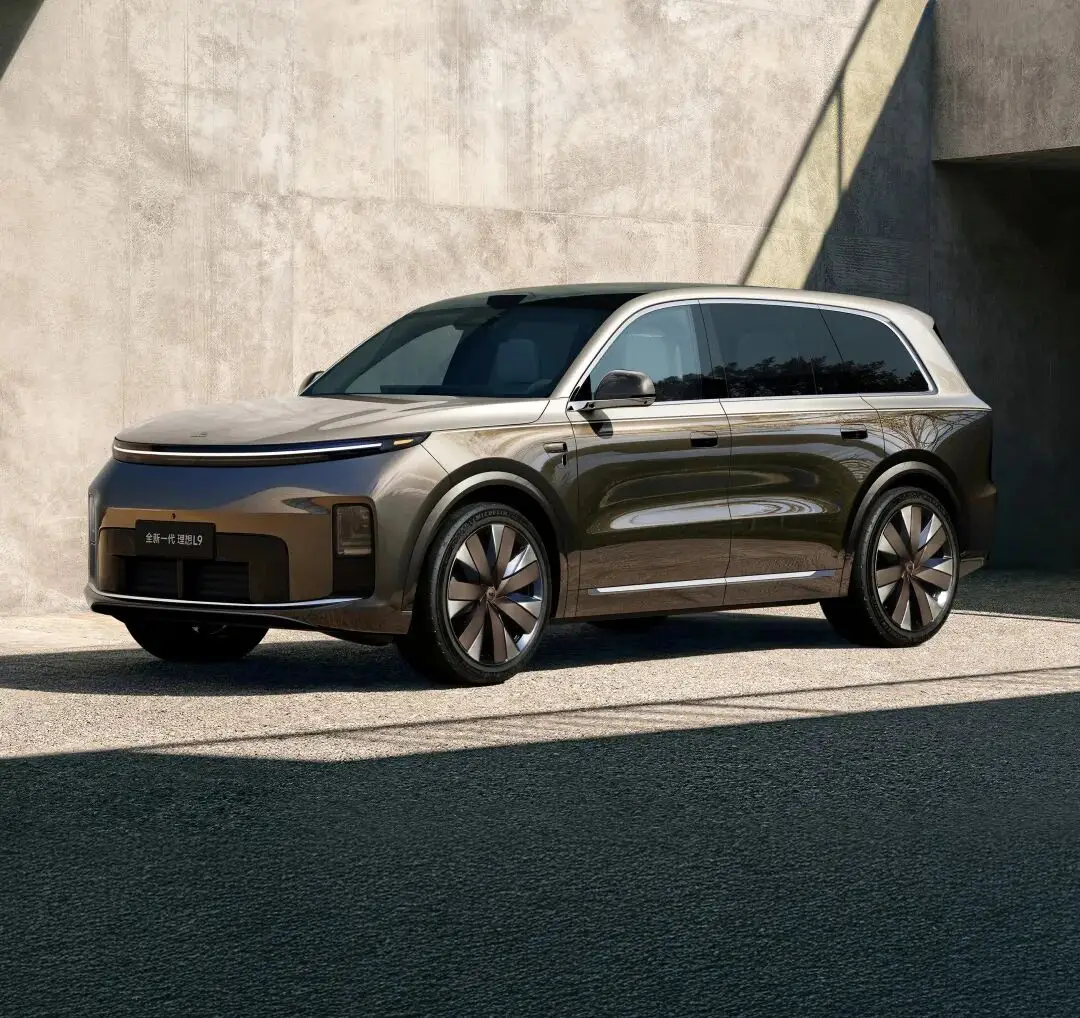
Morgan Stanley issued a research note on Li Auto on May 11, 2026, framing the imminent launch of the 2026 L9 as the most consequential product event the company has faced in years. With the stock trading near its 52-week low and profitability under pressure, the bank's analysts aren't just watching a product debut — they're watching a potential inflection point for one of China's most closely followed EV brands.
A Cornerstone Moment, Not Just a Car Launch
The 2026 L9 is scheduled to debut on May 15, and Morgan Stanley's team, led by analyst Tim Hsiao, is explicit about the stakes. "The upcoming launch of the 2026 L9 is the cornerstone of Li Auto's recovery strategy and arguably its most consequential product launch in years," the note states.
The L9 Livis carries a pre-sale price of RMB 559,800 (US$77,200), with the bank expecting Li Auto to introduce one to two additional trims priced below RMB 500,000. Management has reportedly concentrated its top resources on this single model, treating it as the linchpin for revitalizing the broader product lineup and pushing the brand upmarket.
The competitive landscape is unforgiving. The L9 Livis will go head-to-head with AITO M9, NIO ES9, Zeekr 9X, and established large-format SUVs from German luxury marques — a crowded field where differentiation increasingly hinges on software and autonomous driving capability rather than hardware alone.
Low Expectations as a Floor, Not a Ceiling
Morgan Stanley maintains an Overweight rating on Li Auto with a price target of US$21.50, implying roughly 19% upside from the May 8 closing price of US$18.00.The stock has remained largely range-bound year-to-date, weighed down by the prior decline in high-margin L-series sales that drove a sharp compression in profitability. Full-year 2026 EPS is estimated at RMB 0.96, actually below 2025's RMB 1.12, before a projected recovery to RMB 6.63 in 2027.
The bank's constructive near-term view rests partly on the argument that suppressed sentiment sets a low bar. "Subdued market expectations set a low bar," the note reads — a classic setup for a relief rally if execution holds. That said, Morgan Stanley is careful not to oversell the catalyst. Even a smooth rollout is unlikely to resolve the structural volatility, given the crowded three-row SUV segment. The analysts flag that further re-rating will likely require additional catalysts in the second half of 2026, including two to three new model launches such as the i9 and L6.
The Chip Bet: 2560 TOPS and Long-Duration AI Optionality
Beyond the commercial calculus, the L9 launch carries a deeper strategic signal. The vehicle adopts two in-house 5nm M100 chips delivering up to 2560 TOPS of computing power — comparable to three NVIDIA Thor-U chips. The platform also features an 800V active suspension system, steer-by-wire, an electromechanical braking system, and four LiDAR sensors.
Morgan Stanley frames this hardware architecture as a deliberate bet on software compounding. "Li Auto is securing years of software optionality by removing hardware as the binding constraint," the note argues, positioning the company as a "long-duration AI platform — where competitive advantage evolves over successive OTA cycles rather than at launch." In other words, the chip investment is less about today's specs and more about building a platform where autonomy, perception, and decision-making capabilities can be layered in over time without requiring a hardware refresh.
Risk Factors Remain Real
The bull case is not without friction. Morgan Stanley's probability-weighted DCF model applies a WACC of 15.9% and a beta of 2.1 — reflecting the high-risk, high-volatility profile of Chinese EV names. Downside risks include component bottlenecks, delayed model launches, and moderating auto sales growth in China. On the upside, a faster-than-expected ramp in L-series volumes or accelerated autonomous driving development could materially improve the margin trajectory.
For now, all eyes are on May 15. In a market where the narrative around Chinese EV challengers has shifted from hypergrowth to survival-of-the-fittest, Li Auto's L9 relaunch is less a product event than a credibility test.
Related Coverage:
Li Auto CEO Unveils Next-Generation L9 SUV with Premium Livis Variant at $78,000