
Li Auto’s Reckoning: How China’s EV Darling Crumbled, and Why Its Next Bet Is on AI
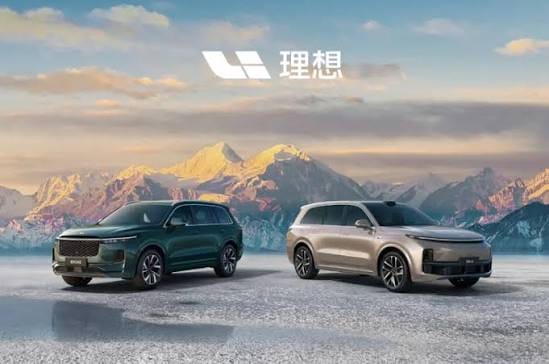
The visionary founder who mastered the family car market with “refrigerators, TVs, and sofas” saw his empire falter after a single misstep. Now, armed with $15 billion in cash and a high-stakes bet on AI, Li Auto is fighting to reclaim its crown.
BEIJING – In the gilded halls of China’s auto industry, the spring of 2024 was meant to be a coronation. Li Auto, the darling of the electric vehicle boom, unveiled the MEGA, a futuristic, bullet-train-shaped minivan priced at nearly $83,000. It was the company’s audacious leap from its comfortable niche into the ultra-premium, pure-electric market. Confidence was sky-high. Founder and CEO Li Xiang, a charismatic serial entrepreneur, was at the zenith of his power.
Then came the reckoning.
The MEGA, intended as a masterpiece, landed with a thud. Sales were a fraction of expectations. Social media buzzed with unflattering memes. More critically, the launch cannibalized sales of Li Auto’s cash-cow L-series SUVs. The market’s verdict was swift and brutal. Within weeks, Li Auto's market capitalization plunged from a peak of 46.1 billion to just 21.5 billion.
The moment shattered the company’s aura of invincibility. In a candid internal letter, the once-bombastic Li admitted to a tactical blunder. “We fell into a pit,” he wrote, acknowledging an overestimation of the pure-electric market and a misjudgment of his own customers. The humbling was complete a few months later when, in May 2025, the company laid off over 18% of its workforce—more than 5,600 employees.
From the pinnacle of success to a crisis of confidence in a single quarter, Li Auto’s story is a stark parable of the perils of hubris in the world's most ferocious automotive market. Now, the company is mounting one of the industry's most closely watched comebacks, pivoting from a master of product definition to a hardcore technology contender. The question is whether its massive war chest and a bold gamble on artificial intelligence can reignite the magic that once made it unstoppable.
The ‘Mobile Living Room’ Empire
To understand the fall, one must first appreciate the dizzying ascent. Founded in 2015 by Li Xiang—already a celebrated tech mogul after founding PCPop.com and the auto portal Autohome—Li Auto wasn't the first or the flashiest EV startup. Its early years were marked by trial and error, including a scuttled plan for a small, two-seater urban commuter vehicle that failed to secure regulatory approval.
The breakthrough came from Li’s almost preternatural understanding of a single, lucrative demographic: the Chinese middle-class family. While rivals were obsessed with chasing Tesla and building the fastest, sleekest sedans, Li focused on what he called the “mobile home.”
His solution was the Li ONE, launched in 2018. It was a large, six-seater SUV with a deceptively simple-yet-brilliant proposition. Instead of going all-electric and forcing customers to confront “range anxiety,” the Li ONE used an extended-range electric vehicle (EREV) powertrain. A small gasoline engine acted as a generator to recharge the battery, never directly driving the wheels. It offered the smooth, quiet ride of an EV with the go-anywhere convenience of a gas car.
But the real genius was inside. Li Auto became famous for what critics and fans alike dubbed the “refrigerator, TV, and big sofa” formula. Its vehicles were decked out with expansive screens, a built-in refrigerated compartment for drinks, and plush, spacious seating. It was less a car and more a rolling living room, perfectly tailored for family road trips with kids and grandparents in tow.
“They didn’t sell a vehicle; they sold an experience,” says Michael Dunne, CEO of the Asia-focused automotive consultancy ZoZo Go. “While others talked about kilowatts and 0-to-60 times, Li Auto was talking about family happiness. It was a marketing masterstroke built on a legitimately clever product.”
The strategy worked spectacularly. The Li ONE became a blockbuster, and the subsequent L-series models—the L9, L8, and L7—solidified the company’s dominance in the premium family SUV segment. By late 2023, monthly sales were roaring past 50,000 units. The company went public on the Nasdaq in 2020 and added a Hong Kong listing in 2021. By early 2024, it was celebrating its 11th consecutive quarter of profitability—a rarity among EV startups—and sat on a staggering cash pile that now exceeds $15 billion (¥106.9 billion).
From Sofas to Silicon
The MEGA flop exposed a critical vulnerability: Li Auto’s success was built on a concept that was becoming easy to imitate. Competitors, from BYD’s Denza division to Huawei’s AITO brand, quickly began rolling out their own large, feature-packed family SUVs, often with similar EREV technology. The “refrigerator, TV, sofa” was no longer a unique selling point; it was table stakes.
“The problem with being a product definition genius is that good ideas get copied,” notes a Shanghai-based auto analyst who tracks the company. “Li Auto won the first round on comfort and convenience. The next round will be won on core technology.”
Faced with this new reality, Li and his team have orchestrated a profound strategic pivot, moving the company’s center of gravity from creature comforts to computational power. The new mantra is less about interior design and more about integrated circuits.
The centerpiece of this transformation is a massive bet on autonomous driving. In an all-hands effort mirroring Tesla’s push with its Full Self-Driving (FSD) system, Li Auto is rolling out its own in-house developed “VLA” (Vision-Language-Action) large model. Li Xiang has called its forthcoming update the company’s “iPhone 4 moment,” a generational leap he claims will make its cars safer than human drivers within two years.
“We found ourselves in a situation where we would make a move, and our competitors would make two counter-moves,” Li explained on a recent earnings call, alluding to how rivals were reacting to his product cycle. “We were playing with our cards face up. Now, we must accelerate our pace of innovation.”
To power this ambition, the company is going vertical. It has tapped its first self-designed AI chip, which it claims offers two to three times the performance of current mainstream processors for running complex models. It’s also formed a joint venture with battery maker Sunwoda to bring cell production in-house. This is a dramatic shift for a company that once relied heavily on an outsourced supply chain for its core components, including its engines and batteries.
Organizational charts are being redrawn to match the new focus. The company has adopted the Integrated Product Development (IPD) process playbook made famous by Huawei, aiming to instill a more rigorous, process-driven culture to complement its founder’s product instincts.
The Electric Gamble
This tech-forward strategy is being married to a retooled product plan. After the MEGA’s failure, Li Auto is cautiously re-entering the pure-electric market, this time with more moderately priced SUVs aimed squarely at its core family-oriented base.
The upcoming i6, a five-seater pure-electric SUV, is seen as the true test. Promising ultra-fast 5C charging that can add 500 kilometers of range in just 10 minutes and featuring the new VLA autonomous system, it is designed to be the company’s volume seller in the battery-electric space. Teaser photos have even shown the car with a bicycle rack on the back—a subtle but significant signal of a pivot towards a broader family lifestyle appeal beyond just in-car comfort.
The company is also streamlining its notoriously complex product trims, a lesson learned from the disastrous MEGA launch which confused potential buyers. “We are returning to the era of the Li ONE and L9,” Li has stated, “focusing on a single, (jízhì – ultimate) configuration for each model that offers the strongest value.”
The company’s financial health gives it a powerful advantage. That $15 billion war chest provides a formidable safety net, allowing it to weather sales slumps and fund its capital-intensive R&D in AI and chips without needing to placate nervous investors in the short term.
“Plenty of startups wish they had Li Auto’s problems,” says the Shanghai analyst. “They have a brand, a loyal customer base, and more cash than they know what to do with. The challenge isn’t survival; it’s relevance in a market that’s evolving at hyperspeed.”
A World of Rivals
But even with deep pockets and a clear new strategy, the path forward is fraught with peril. The Chinese EV market has become a brutal, zero-sum game—a “red sea,” in local parlance.
Huawei, the tech behemoth, has emerged as a particularly formidable foe. Its AITO-branded SUVs, powered by Huawei’s HarmonyOS and advanced driver-assistance systems, are direct competitors that attack Li Auto’s primary weakness: its perceived lack of a deep-tech moat. Meanwhile, BYD, the world’s largest EV maker, is relentlessly pushing upmarket with its Denza and Yangwang brands, leveraging its colossal scale and vertical integration to apply crushing price pressure.
As it fights these battles at home, Li Auto is also turning its gaze abroad. It has declared 2025 its “year of going global,” with an initial focus on the Middle East. It’s a necessary, if challenging, next step to find new avenues for growth outside the saturated Chinese market.
The humbling of 2024 has forced a period of intense soul-searching at Li Auto. The company that won hearts and minds by creating the ultimate family cocoon on wheels must now prove it has the technological muscle to compete with the world’s most powerful tech and manufacturing giants. The charismatic founder who once confidently cursed his critics has adopted a more measured, reflective tone.
The transition from a company that sold dream-like comfort to one that promises silicon-based intelligence is the most demanding journey Li Auto has yet undertaken. It is betting its future not on the next big sofa, but on the belief that the smartest car will win.
On the back of its next electric vehicle, a simple bicycle rack hints at this new direction—a quiet promise of a family's journey, not just inside a comfortable cabin, but out in the wider world.