
Li Auto’s Reign Fades in China’s SUV Market Amid Fierce New Competition
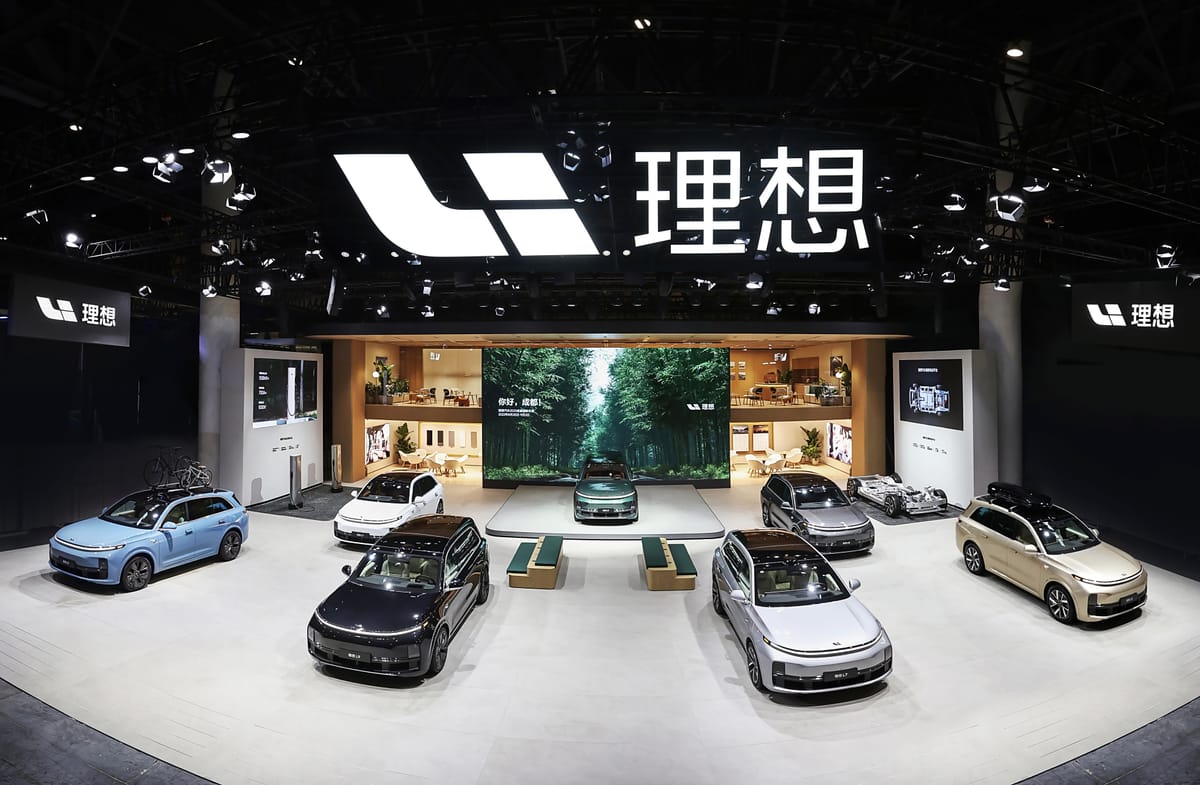
Li Auto, the trailblazer that once dominated China’s lucrative market for large six-seater family SUVs, is seeing its market leadership rapidly erode as a wave of aggressive rivals redefines the segment and exposes the limits of its narrowly focused strategy.
The shift is starkly illustrated by September 2025 sales figures. Leapmotor, often dubbed a "half-priced Li Auto," saw its deliveries surge 97.4% year-on-year to 66,657 units, placing it atop the new-energy vehicle startup sales chart for the seventh consecutive month and making it the second such firm to reach one million cumulative units produced.
In sharp contrast, Li Auto fell to sixth place among its startup peers. Its September deliveries slid 36.8% from the previous year to 33,951 vehicles, a significant reversal for a company that had pioneered and previously monopolized the premium family SUV category.
This downturn signals a market in rapid transition, where Li Auto’s highly successful "daddy car" formula is being outmaneuvered by competitors offering greater versatility and new technology. The intensifying battle for market share is forcing incumbents to adapt or risk being left behind in one of the world's most competitive automotive arenas.
Li Auto’s Waning Dominance
For years, Li Auto’s success was phenomenal. Its L-series lineup—spanning the L6 to the L9 models—created an almost unassailable position in the 200,000 to 450,000 yuan price range by precisely targeting the needs of Chinese families. However, this hyper-focus on the "parent-child" use case has become a strategic liability, leaving the brand vulnerable as consumer demands evolve.
The company’s product DNA, consistent from its entry-level to flagship models, largely overlooks other key scenarios such as business transport or social outings with friends. Furthermore, the extended-range electric vehicle (EREV) technology that Li Auto pioneered has transformed from a "blue ocean" opportunity into a highly contested "red sea," with numerous rivals now crowding the space and competing on every niche.
Rivals Encroach on Core Turf
The most immediate pressure comes from competitors like the Aito brand, a partnership between Seres Group and Huawei Technologies Aito has systematically launched a product portfolio—from the M5 to the high-end M9—that directly targets each of Li Auto’s core models.
The Aito M8, launched in April of this year, serves as a prime example of this encroachment. It surpassed 20,000 deliveries within 45 days of its launch and has accumulated over 80,000 units in four months. This rapid success coincides with Li Auto's sales decline, which began in June, indicating a significant diversion of customers from Li Auto's traditional user base.
Internal Stumbles and a Pure-EV Pivot
Compounding external pressures are Li Auto's internal strategic struggles, particularly with its much-anticipated pivot to pure battery-electric vehicles (BEVs). The market launch of its first BEV, the i8 SUV, was met with a cool reception from consumers, hampered by what was perceived as an excessive price point, confusing configuration options, and lengthy delivery wait times.
Although Li Auto moved quickly to simplify the product offering and implement price reductions, the initial misstep damaged market confidence. The episode highlights a core dilemma for the company: its profitable EREV L-series sets a high pricing benchmark that restricts its ability to price its BEVs competitively, fearing cannibalization of its core products. This has left Li Auto in an awkward position, struggling to gain traction in the BEV segment while its foundational EREV business faces unprecedented competition.
A ‘Warring States’ Era for SUVs
The market is set to become even more crowded. A new fleet of large six-seater SUVs from ambitious players including Xiaomi, Nio, and IM Motors is poised to launch in late 2025 and early 2026.
- Xiaomi: The smartphone giant’s first EREV SUV, codenamed "Kunlun," features a large, boxy design distinct from its sleek sedans, catering directly to family-use space requirements.
- Nio: Its upcoming flagship ES9 is expected to be one of the largest new-energy SUVs on the Chinese market, likely inheriting advanced features like active suspension and steer-by-wire from its ET9 sedan.
- IM Motors: The SAIC-backed brand's LS9 model, already revealed in regulatory filings, will feature a large 66kWh battery pack enabling 450 km of pure-electric range.
These models, along with recently released vehicles from Leapmotor, Chery Automobile, and Denza, are ushering in a "Warring States" period for the large SUV segment, where technological innovation and feature differentiation will be key battlegrounds.
A Fundamental Shift in Demand
The struggle between incumbents and challengers reflects a deeper evolution in consumer expectations. Li Auto’s initial triumph came from meeting the explicit functional needs of family users—more space, child-friendly features. Today’s competitors, however, are focused on a broader "user experience." Aito incorporates a business mode, while Xiaomi leverages its vast device ecosystem.
This transition from fulfilling functions to creating comprehensive experiences is at the heart of the current market disruption. Consumers are no longer satisfied with a single-purpose vehicle; they now demand versatility. This shift does not spell the end for Li Auto, which still commands a massive user base and strong brand recognition. However, to reclaim its peak position, the company must break free from its path dependency on the "daddy car" image and innovate across technology and use-case scenarios. In today's automotive landscape, past success is no guarantee of future dominance.