
Linkerbot Eyes Hong Kong Listing at RMB 100B Valuation, Raising Questions Over Pricing Rationality
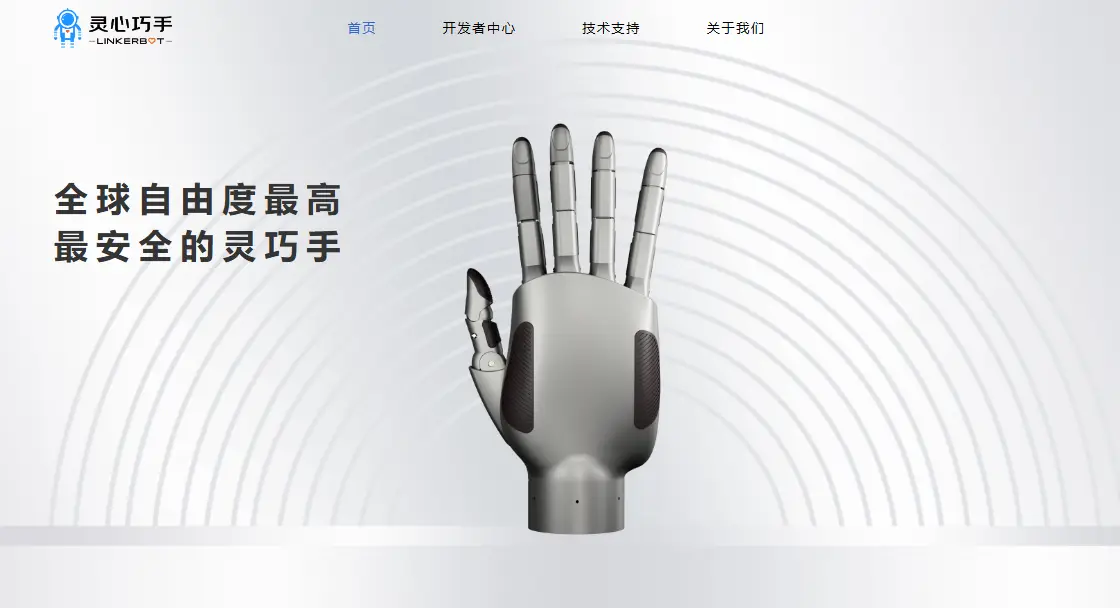
A Chinese dexterous-hand maker founded just three years ago is racing toward a Hong Kong IPO backed by seven funding rounds, but a prospective price-to-sales multiple exceeding 380x is forcing investors to ask whether secondary-market buyers will be left holding an overpriced baton.
Linkerbot, formally registered as Linkerbot Beijing Technology, has initiated preparations for a Hong Kong Stock Exchange listing, with a target filing date of 2027, according to multiple market sources cited by 36Kr on July 15, 2026. CMB International, CITIC Securities, and HSBC have been appointed as joint sponsors — a marquee underwriting trio that signals the company is playing for institutional credibility from the outset.
The company's April 2026 Series B+ round, led by Zhongguancun Science City Fund, pushed its valuation above RMB 20 billion (US$2.78 billion). Yet primary-market participants are already circulating a far more aggressive target: RMB 100 billion (US$13.89 billion) — a figure that would make Linkerbot one of China's most richly valued robotics pure-plays before it prints a single public share.
Seven Rounds in Under Two Years Compress a Decade of Normal Startup Maturation
Linkerbot's fundraising velocity is, by any benchmark, extraordinary. From a seed round in April 2025 — led by Sequoia Seed Fund and Wankai New Materials — through a Series A, A+, A++, B, and B+ closing in April 2026, the company secured seven tranches of capital in roughly 24 months. Anchor names include Ant Group, China International Capital Corporation (CICC), Sequoia China, Gaorong Capital, and Zhongguancun Science City Fund.
The February 2026 Series B alone raised nearly RMB 1.5 billion (US$208 million), lifting the valuation past RMB 10 billion for the first time. Two months later, the B+ round doubled it to RMB 20 billion.
In March 2026, Linkerbot completed a corporate restructuring, converting from a limited-liability company to a joint-stock company — a standard pre-IPO step in China. Registered capital surged from approximately RMB 11.83 million to RMB 920 million, a 7,647% increase, before being further raised to RMB 1.132 billion. The move is widely interpreted by market observers as a direct precursor to an exchange listing.
Dominant Market Share and Hyper-Growth Revenue Provide the Bull Case
The investment thesis rests on a genuinely differentiated operational profile. Linkerbot claims more than 80% global market share in high-degree-of-freedom (high-DoF) dexterous hands, and is, by its own account, the only manufacturer worldwide delivering at a monthly run rate exceeding 1,000 units. Monthly production capacity has already crossed 4,000 units.
The competitive contrast is stark: Shadow Hand, the British industry benchmark with more than two decades of history, has accumulated fewer than 1,000 cumulative unit sales. Domestic rivals including Yinshi Robotics, Zhiyuan Robotics, and Sigling operate at annual production capacities in the hundreds of units.
Revenue growth mirrors the production ramp. Full-year 2024 revenue remained in the low tens of millions of renminbi. By full-year 2025, it reached RMB 260 million (US$36.1 million) — a more than 25-fold year-on-year increase. As of early 2026, the company reported an order backlog exceeding RMB 400 million (US$55.6 million), with overseas orders accounting for more than 30% of the total. Management has set a 2026 delivery target of 50,000 to 100,000 units.
The product architecture spans three mechanical paradigms — linkage-drive, direct-drive, and tendon-driven — with pricing ranging from RMB 6,666 (US$926) for the entry-level Linkerbot O6 to six-figure sums for research-grade configurations. The O6, weighing 370 grams, can lift 50 kilograms, delivering a payload-to-weight ratio reportedly more than 100 times that of Shadow Hand at roughly 1% of the price.
Founder Zhou Yong, a graduate of Huazhong University of Science and Technology's gifted-youth program, brings 15 years of experience across internet and robotics ventures, including prior startups in gaming communities and autonomous vehicles. Co-founder Zuo Jiaping, a veteran of CloudMinds and Segway-Ninebot, oversees hardware manufacturing. Chief AI Architect Su Yang previously held roles at Source Code Capital and the Beijing Academy of Artificial Intelligence (BAAI). Algorithm lead Cao Gang has contributed to China's National "Next-Generation AI" major research program and maintains ties to Zhipu AI, Galaxy General Robotics, and ModelBest.
Valuation Arithmetic Strains Credibility Against Comparable Public Benchmarks
The bull case, however, runs directly into valuation mathematics that few analysts are willing to defend at face value. At RMB 100 billion against RMB 260 million in 2025 revenue, the implied price-to-sales multiple exceeds 380x. For context, UBTECH Robotics, a listed Hong Kong robotics peer, trades at roughly 30x sales. Even the most aggressively priced AI large-model companies in China's primary market have not consistently commanded multiples at this level.
One unnamed investor quoted in the original 36Kr report was blunt: "This price has already pulled forward three years of growth."
The revenue quality question compounds the concern. Of Linkerbot's RMB 260 million full-year 2025 revenue, approximately RMB 250 million — or 96% — was recognized in the fourth quarter alone. Such extreme back-loading raises legitimate questions about the nature of channel arrangements, the proportion of firm purchase orders versus framework agreements within the stated RMB 400 million backlog, and the timing of actual cash collection. None of these details have been publicly disclosed.
Competitive Moat Faces Accelerating Erosion From Well-Capitalized Rivals
Linkerbot's 80% market share, while impressive today, was built during a period when most competitors were still in prototype or early-pilot phases. That window is narrowing.
AGIBOT's subsidiary has crossed a US$1 billion valuation and launched a 20-DoF fully direct-drive dexterous hand. Unitree Robotics is shipping its Dex5 series bundled with its own humanoid platform. BrainCo has reached 21 active degrees of freedom with its Revo 3. Yinshi, Sigling, and Zhongke Lingxi are all accelerating production ramp-ups.
The cost and manufacturing-scale advantages that Linkerbot has assembled are real, but they are not structurally insurmountable in a segment where capital is abundant and the technology learning curve is steep.
IPO Timing Shifts to 2027, Leaving Secondary Investors to Absorb Primary Froth
Earlier market reports suggested Linkerbot could list in the second half of 2026. The revised timeline — a 2027 HKEX filing — buys the company additional operating history to present to public investors, but it also extends the period during which primary-market backers hold illiquid positions at elevated marks.
The structural dynamic is familiar: headline institutions enter in early rounds at low bases, subsequent rounds layer in at escalating valuations, and the terminal price discovery shifts to public-market participants who absorb whatever premium remains. Whether Linkerbot's underlying business — genuinely disruptive as its technology may be — can grow into a RMB 100 billion valuation on a reasonable forward horizon is a question that will ultimately be answered not by venture consensus, but by the Hong Kong market itself.
Related Coverage:
Beijing Robotics Startup Linkerbot Raises Funds to Scale Dexterous Hand Production