
Rept Claims Global No.1 in Residential Storage as H1 2026 Revenue Surges Up to 60%
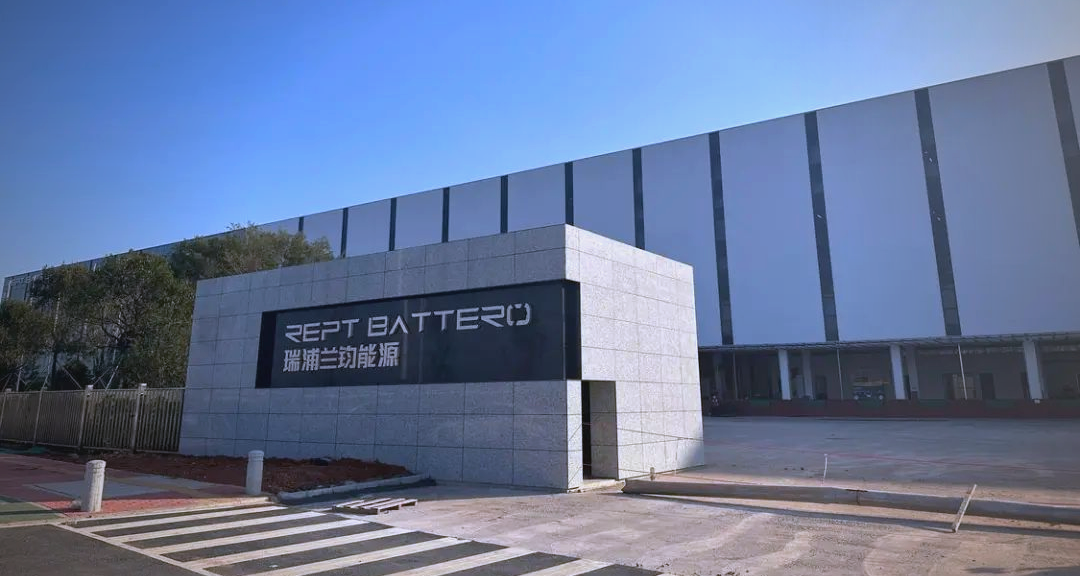
A nine-year-old Chinese battery maker that only turned profitable in 2025 has quietly outmaneuvered larger rivals to capture the top global position in residential energy storage cells — and its financial trajectory suggests the lead is widening, not narrowing.
Rept Battero Energy, the battery unit backed by Tsingshan Holding Group, disclosed in a preliminary earnings announcement that it expects first-half 2026 revenue of RMB 14.5 billion to RMB 15.2 billion (US$2.01 billion to US$2.11 billion), representing year-on-year growth of 52.8% to 60.1%. Net profit attributable to shareholders is projected at RMB 700 million to RMB 850 million (US$97 million to US$118 million) — already exceeding the company's full-year 2025 net profit of RMB 680 million (US$94 million) in just six months.
Market research firm Xinluo Information confirmed that Rept Battero ranked first globally in residential energy storage cell shipments for the first half of 2026, while placing second worldwide in commercial and industrial (C&I) storage cell shipments. The dual ranking, achieved simultaneously, marks a structural inflection point for a company that reported a net loss exceeding RMB 2 billion as recently as 2024.
Early Bet on Storage Pays Off as Sector Outpaces EV Batteries
The foundation of Rept Battero's current market position was laid when the energy storage sector was still considered a policy-dependent grey zone. Around 2020, when global energy storage installations totalled less than 10 GWh annually, the company committed capital to manufacturing facilities in Wenzhou and Jiashan, Zhejiang province, and built out a product portfolio spanning residential, C&I, and utility-scale storage — while most peers remained focused on the more immediately lucrative EV battery market.
That contrarian allocation has since been validated by demand data that few anticipated at the time. According to Gaogong Industry Research Institute (GGII), China's lithium battery storage shipments reached 630 GWh in 2025, growing 85% year-on-year — more than double the 35% growth rate recorded by EV batteries, which reached 717.4 GWh over the same period. The convergence of the two markets in absolute scale, and the divergence in growth velocity, confirms that Rept Battero's early capital allocation was directionally correct.
By 2025, storage battery products accounted for 55.7% of Rept Battero's total revenue of RMB 24.33 billion (US$3.38 billion), making it the company's single largest revenue segment and the primary driver of its profitability turnaround. Full-year 2025 net profit swung from a loss of more than RMB 2 billion to a gain of RMB 680 million — a reversal of over RMB 2 billion within 12 months.
European Standardization Move Unlocks Premium Pricing Power
Within the broader storage opportunity, Rept Battero made a strategically asymmetric move as early as 2019: securing a customized order from a leading European residential storage brand and establishing a common cell specification for high-voltage residential storage systems in Europe. By creating a de facto standard that allowed system integrators to reduce redesign effort, shorten certification cycles, and simplify maintenance logistics, the company embedded itself into European supply chains before the demand surge materialised.
That positioning proved decisive when Russia's invasion of Ukraine in February 2022 triggered a sharp spike in European household energy costs, catalysing a residential storage boom. GGII data shows global residential storage system shipments reached approximately 35 GWh in 2025, up nearly 50% year-on-year. Rept Battero's 2025 annual report explicitly noted that its storage business orders are "directed toward high-margin markets including Europe, the Americas, and Australia, significantly improving the profitability structure."
The strategic logic is straightforward: residential storage behaves more like a consumer electronics product than a commodity, with end users willing to pay a premium for safety, reliability, and integration quality. This contrasts with utility-scale storage, where procurement decisions are dominated by levelized cost of storage and price competition is more intense. Currently, three of the top five residential storage brands in Europe are Rept Battero customers, according to the company.
Demand-Driven Product Architecture Replaces Spec-Sheet Competition
Rather than developing standardized cells and seeking applications afterward, Rept Battero has inverted the conventional battery development model — designing cell specifications backward from regional use cases. The company's residential storage cell matrix spans six capacity tiers: 50Ah, 72Ah, 100Ah, 280Ah, 314Ah, and 392Ah, each mapped to distinct market conditions.
In Europe, where rooftop solar integration and limited installation space are primary constraints, smaller-format 50Ah and 72Ah cells dominate. The 72Ah cell, which carries a cycle life exceeding 6,000 cycles, has entered the supply chain of premium German residential storage brands. In Australia and North America, where modular low-voltage systems are prevalent, the 100Ah series provides flexible configuration for diverse household energy setups. In Africa and Southeast Asia, where power infrastructure is less developed and cost sensitivity is acute, larger-format 280Ah and 314Ah cells reduce the number of series-parallel connections required, lowering structural and integration costs.
At the high end, Rept Battero's Wending® 392Ah cell and a 588Ah ultra-large-capacity cell — both launched in 2025 — carry cycle lives exceeding 10,000 cycles with projected durability of 25 to 30 years. These products target utility-scale and long-duration storage applications where total cost of ownership over the asset's life matters more than upfront cell price.
On the systems side, the company's Powtrix® 6.9 MWh storage system reduces on-site installation labor by 28%, land footprint by 30%, and equipment count by 28% relative to prior-generation configurations — metrics that directly reduce the balance-of-system costs that now constitute a growing share of total project expenditure.
Supply Chain Integration Provides Structural Cost Floor
Rept Battero's parent, Tsingshan Holding Group (青山实业), operates one of the world's largest vertically integrated nickel and stainless steel supply chains. This upstream position gives Rept Battero direct access to raw materials and smelting capacity, and the company has extended this integration downstream to encompass materials processing, cell manufacturing, and battery recycling — creating a closed-loop supply chain that competitors without similar backing cannot easily replicate.
The practical significance of this structure became visible at the end of 2025, when raw material prices began to move. Rept Battero was reportedly the first battery company to formally notify customers that its product pricing would be linked to upstream raw material cost fluctuations — a commercially assertive posture that reflects confidence in its cost structure and supply chain visibility. In an industry where margin erosion from input cost volatility has been a persistent risk, the ability to pass through cost changes contractually represents a meaningful competitive advantage.
The company has also articulated an explicit discipline around order quality, publicly committing to concentrate resources on high-margin markets and proactively reducing exposure to low-profitability business segments. In the context of an industry still characterized by aggressive capacity expansion and price competition, this capital allocation discipline is notable.
What the H1 Numbers Signal for the Second Half
The H1 2026 earnings guidance implies an annualized revenue run rate of approximately RMB 29 billion to RMB 30.4 billion (US$4.03 billion to US$4.22 billion), well above the RMB 24.33 billion recorded for full-year 2025. If the profitability trajectory holds, full-year 2026 net profit could reach RMB 1.5 billion to RMB 2 billion (US$208 million to US$278 million) — a level that would mark Rept Battero's definitive transition from a turnaround story to a sustainably profitable enterprise.
The more consequential question for investors and supply chain participants is whether the company's dual ranking — first in residential storage, second in C&I storage — can be sustained as larger competitors including Contemporary Amperex Technology (CATL) and BYD intensify their own storage pushes. Rept Battero's answer, embedded in its operational choices over the past six years, appears to be that product-market fit, service localization, and supply chain depth matter more than scale alone in the storage segment — a thesis that its H1 2026 numbers are, for now, supporting.
Related Coverage:
China's Lithium Battery Exports Hit $40B in Jan-May 2026, Even as Unit Prices Scrape Historic Lows