
Momenta Debuts as World's First "Physical AI" Pure-Play, Commanding HK$70B Valuation
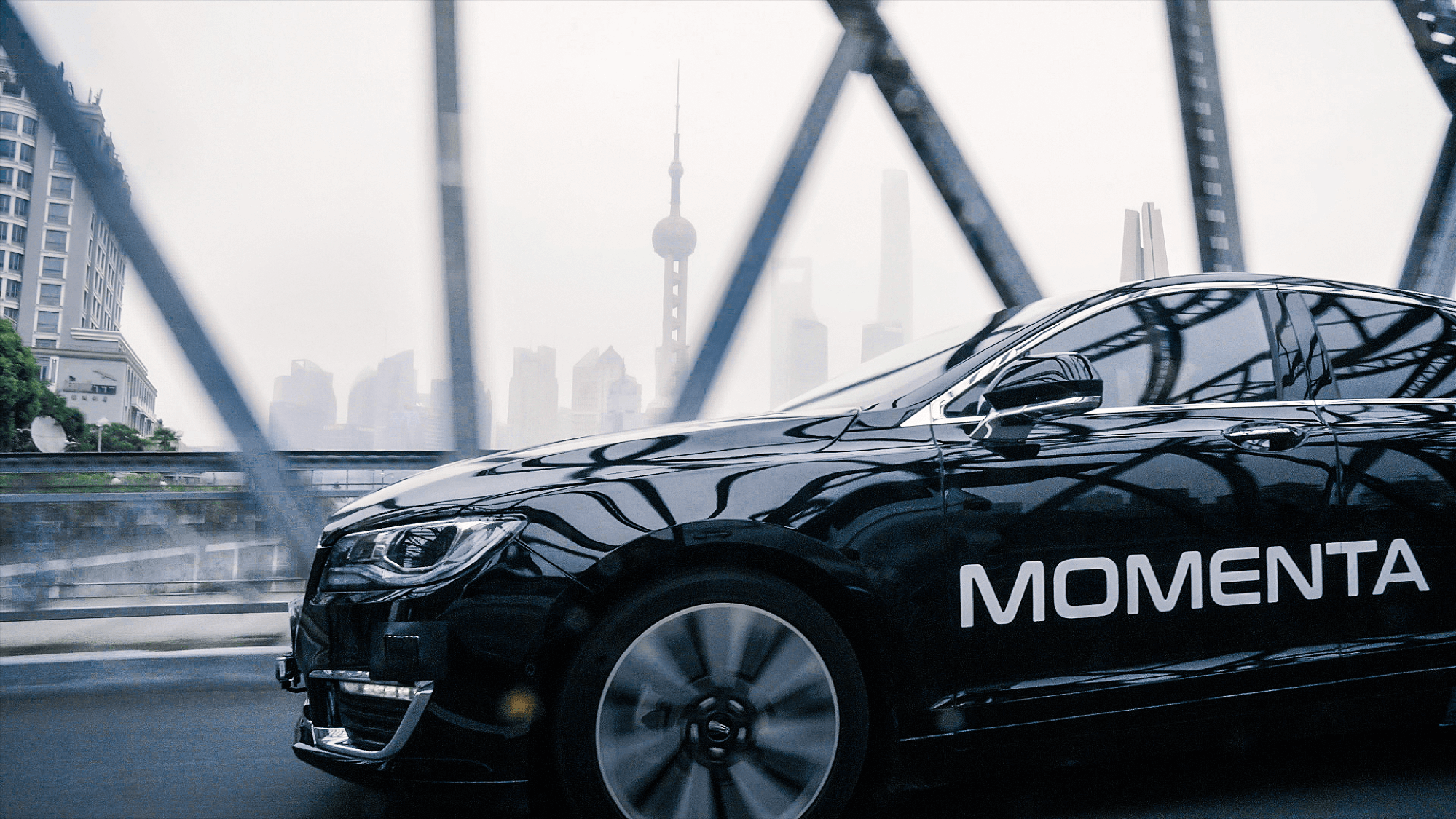
Momenta — the Suzhou-headquartered autonomous driving and physical AI platform — began trading on the Hong Kong Stock Exchange on July 8, 2026, priced at HK$295.60 per share and opening to a market capitalization exceeding HK$70 billion (approximately US$9.7 billion). The listing, the largest among five companies ringing the bell at HKEX that day, raises up to HK$6.8 billion (US$944 million) assuming full exercise of the 15% greenshoe option, with base proceeds of approximately HK$5.89 billion (US$751 million). Shares traded up roughly 4.80% to HK$309.80 by midday, signaling measured but positive market reception.
The transaction's headline number, however, understates the strategic signal embedded in its investor roster. Fourteen cornerstone investors — spanning sovereign wealth funds, global long-only asset managers, OEM strategics and Chinese domestic institutions — committed approximately HK$3 billion (US$376 million), representing nearly half the base offering. Long-only demand alone exceeded the offering size by more than 15 times, according to people familiar with the book-building process. In a Hong Kong IPO market that has seen renewed momentum in 2026 but remains selective on technology listings, that level of institutional conviction is analytically significant.
Cornerstone Lineup Reveals a Convergence Bet Across Industries
The composition of Momenta's cornerstone book is as instructive as its size. GIC and Fidelity International each anchored US$100 million, the largest individual commitments. BlackRock contributed US$25 million; Oaktree Capital US$20 million; Franklin Templeton US$10 million. On the strategic side, Mercedes-Benz — which first invested in Momenta in 2017 and only launched its first joint production vehicle in the second half of 2025, an eight-year gestation — committed US$25 million. BYD, China's dominant EV manufacturer, contributed US$15 million. Supply chain partner GigaDevice added US$6 million.
Chinese domestic institutional capital rounded out the slate: top-tier private equity firms Perseverance Asset Management and Boyu Capital, public fund managers China Asset Management and GF Fund Management, and long-duration insurer Pacific Insurance each committed US$10 million.
The cross-sector breadth — sovereign funds alongside OEM competitors, global asset managers alongside Chinese state-linked insurers — reflects a market judgment that physical AI is not a niche autonomous driving bet but a platform-level infrastructure play. The comparison being drawn in investment circles is to CATL's cornerstone structure at its own landmark listing: a reference that positions Momenta as potentially category-defining rather than merely sector-leading.
Revenue Trajectory Narrows the Path to Profitability
Momenta's financial profile presents the classic high-growth, pre-profit structure that sophisticated institutional investors have learned to underwrite in Chinese deep-tech listings — but with a gross margin trajectory that materially de-risks the thesis.
Revenue grew from RMB 743 million (US$103 million) in 2023 to RMB 2.413 billion (US$335 million) in 2025, a compound annual growth rate exceeding 80%. The more analytically important metric is the revenue mix shift: licensing revenue — which carries near-zero marginal cost once the underlying model is trained — expanded from RMB 23 million in 2023 to RMB 968 million (US$134 million) in 2025, a 42-fold increase in three years. That shift drove gross margin from 17.5% in 2023 to 71.6% in 2025, a 54-percentage-point expansion that is structurally analogous to a software company reaching scale.
Adjusted net loss narrowed from RMB 1.093 billion (US$152 million) in 2023 to RMB 303 million (US$42 million) in 2025, placing the company within striking distance of operating breakeven. R&D expenditure totaled RMB 1.869 billion (US$259 million) in 2025, bringing the three-year cumulative research investment to RMB 4.658 billion (US$647 million). With 1,157 R&D personnel representing 82% of total headcount, the cost structure is deliberately front-loaded — a deliberate bet that data-driven margin expansion will outpace the burn rate as production volumes scale.
IPO proceeds are allocated with this logic in mind: approximately 60% directed toward core technology, algorithms, closed-loop toolchains, AI compute capacity and data storage; 20% toward Robotaxi commercialization; 10% toward mass-production vehicle solutions; and 10% toward working capital.
"One Flywheel, Two Legs" Strategy Builds a Defensible Data Moat
Understanding Momenta's competitive positioning requires unpacking the strategic architecture that founder and CEO Cao Xudong designed at inception. Born in Gansu province in 1986, Cao entered Tsinghua University at 18 to study engineering mechanics, subsequently dropped out of a doctoral program to join Microsoft Research Asia in 2010, and later worked at SenseTime before founding Momenta in September 2016.
Where most autonomous driving startups bifurcated into either capital-intensive L4 full autonomy development or volume-driven L2 ADAS production, Cao constructed what he termed a "one flywheel, two legs" model: a single algorithmic architecture that simultaneously serves mass-production assisted driving and full-autonomy robotaxi applications. Every kilometer driven by a production vehicle generates real-world data that trains the L4 system; L4 advances feed back into the production stack. The flywheel requires scale to spin — and Momenta has achieved it.
Over one million production vehicles now carry Momenta systems. The company has delivered software to more than 100 mass-production vehicle models, with cumulative design-win nominations exceeding 210 models. Nine of the world's ten largest automakers by volume have active partnerships with Momenta. According to CIC, Momenta held a 65% share of China's third-party urban NOA (Navigation on Autopilot) supplier market in the 12 months ending February 2026 — a dominant position in what Citic Securities estimates will see national penetration rates rise from 14% in 2025 to 23% in 2026, and which CIC projects will reach 62% in China by 2030.
That installed base of over one million vehicles, accumulating more than 120 billion kilometers of real-world driving data, is the asset that is most difficult to replicate. It is also the input that powers Momenta's R7 World Model, which entered mass production in April 2026 and serves as the foundational model layer supporting applications across passenger vehicles, Robotaxi and Robovan platforms, with planned extensions into Robotruck and embodied intelligence.
Physical AI Framing Captures a Broader Valuation Narrative
The "physical AI" label Momenta has claimed is not merely marketing. It reflects a substantive distinction from both conventional autonomous driving suppliers and generative AI companies — and it carries direct implications for how investors should frame the addressable market.
Generative AI processes and produces digital content. Physical AI, as articulated by NVIDIA CEO Jensen Huang — who first used the term publicly in July 2025 and devoted a 90-minute CES 2026 keynote to elaborating its implications — refers to AI systems that understand, predict and act within the physical world. The world model is the core enabling technology: a foundation model trained on real-world physical interactions that can simulate future states, reason about causality and generate optimal decisions in novel environments.
The global race to build world models has attracted extraordinary capital. In February 2026, World Labs — founded by Stanford AI researcher Fei-Fei Li — closed a US$1 billion funding round. In March 2026, AMI, the world model startup led by Yann LeCun, completed a seed round of approximately US$1.03 billion at a post-money valuation exceeding US$4.5 billion, setting a European seed-round record.
Momenta's differentiation within this landscape rests on a combination that neither pure-play AI labs nor traditional Tier 1 automotive suppliers can easily replicate: a proprietary world model trained on real-world driving data at scale, a commercialized production pipeline generating recurring license revenue, and a global OEM customer base that took years to build and is structurally sticky. Cao has described the dynamic bluntly: domestic OEM relationships typically require three years from first meeting to contract; international OEM relationships take five to seven years. That friction is a barrier to entry, not a weakness.
Hong Kong's Autonomous Driving Pipeline Deepens
Momenta's listing arrives as Hong Kong consolidates its position as the preferred public market for Chinese intelligent driving companies. UISEE Technology, an L4 autonomous driving solutions provider, listed on the HKEX Main Board on May 20, 2026. Qingzhou Zhihang and Yuan Rong Qidong have both filed listing materials and are expected to complete their offerings in the second half of 2026.
The competitive dynamics of the sector will intensify as these listings proceed. Cao's own forecast — that two to three Chinese suppliers and three to four global suppliers will ultimately capture the market, with network effects more concentrated than in the semiconductor industry — implies a winner-take-most outcome that justifies the premium valuations the market is currently assigning to leaders. Momenta's 65% urban NOA market share and nine of ten top-ten OEM relationships suggest it enters the public market in a commanding position. Whether that position is defensible as Robotaxi commercialization accelerates and embodied intelligence applications emerge will be the central question for investors over the next 24 months.
Joint sponsors for the offering were China International Capital Corporation (CICC) and Deutsche Bank.
Related Coverage:
Momenta’s $9B IPO Turns Autonomous Driving Into a Royalty Platform Story