
Morgan Stanley Raises China AI Chip TAM to $91B by 2030, Bets Big on Domestic GPU Champions
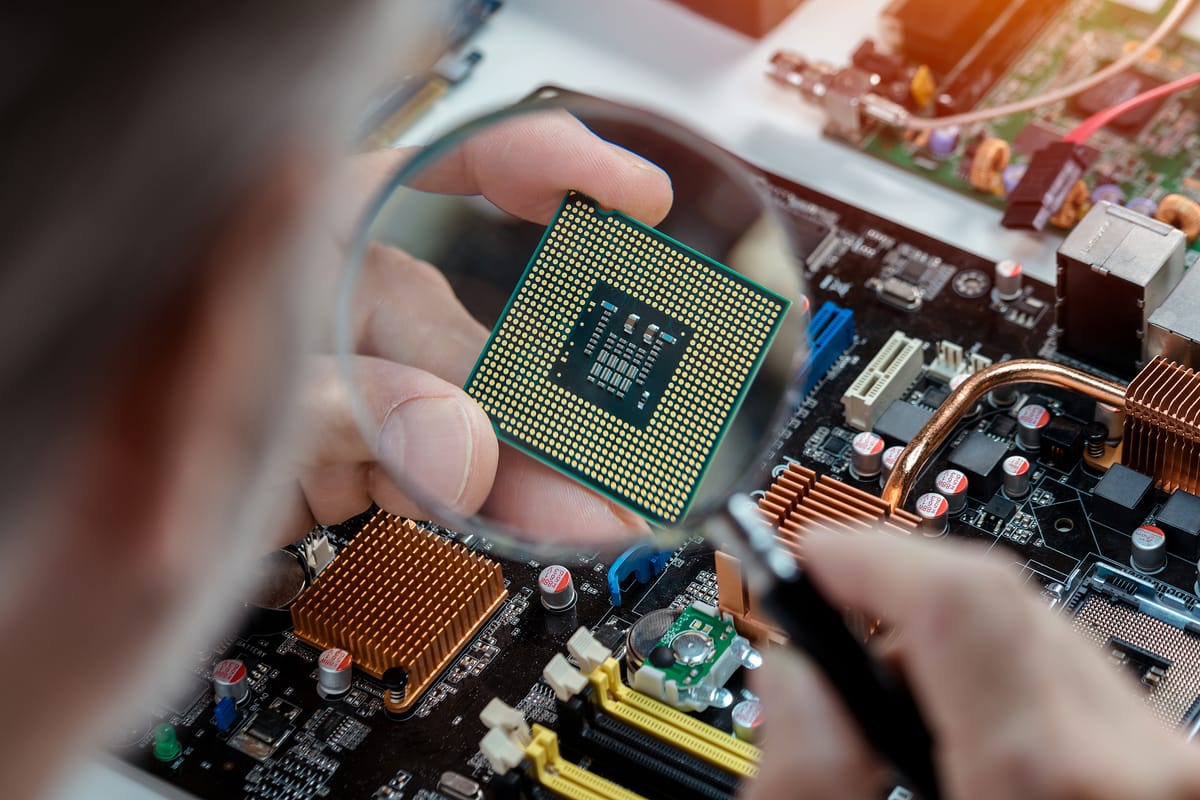
In a research note published June 22, 2026, Morgan Stanley's Greater China semiconductor team delivered a significant upward revision to its China AI chip market forecast — one that carries direct implications for how investors should think about the geopolitical tailwinds now reshaping the global semiconductor landscape. The bank raised its China AI GPU total addressable market estimate by 36% to US$91 billion by 2030, up from its prior forecast of US$67 billion, implying a 23% compound annual growth rate over 2025–2030. The revision is not a routine model tweak. It reflects a structural reassessment driven by tightening US export controls, surging Chinese cloud spending, and an accelerating domestic chip supply chain that may be approaching a critical inflection point.
Export Controls as a Catalyst, Not Just a Constraint
The proximate trigger for Morgan Stanley's revised outlook is the US Department of Commerce's move in early June 2026 to close a loophole that had allowed advanced chips — including NVIDIA's Blackwell processors — to reach subsidiaries of Chinese companies operating outside China. Rather than treating this as purely a headwind, the analysts frame it as a "bull case" scenario for domestic Chinese AI GPU vendors.
"In the short term, China CSPs may turn to more GPU rental to fulfill the strong computing demand," the report states, "while in the mid-to-longer term, it is likely that China AI GPU may potentially see overseas adoption." Morgan Stanley's revised model now includes a new TAM category — Chinese cloud service providers' overseas AI data center capex addressed by local GPUs — assuming zero penetration through 2027, rising to 3%, 10%, and 20% in 2028, 2029, and 2030, respectively.
This is a meaningful structural bet: that Chinese AI chip vendors will not merely substitute domestically, but will eventually follow Chinese cloud capital abroad.
ByteDance, Kingsoft, and the Sovereign AI Spending Wave
Beyond export control dynamics, the TAM revision is underpinned by three additional demand drivers. First, ByteDance is reportedly planning to sharply increase capital expenditure in 2026 and 2027, with 2027 capex potentially reaching US$100 billion under favorable conditions. Morgan Stanley applies a conservative haircut, modeling US$80 billion — equivalent to approximately RMB 542 billion (US$75 billion) — to reflect execution uncertainty.
Second, Kingsoft Cloud has been added to Morgan Stanley's coverage database. The company's capex surged to RMB 3 billion (US$415 million), with full-year 2026 capital investments projected to exceed RMB 15–20 billion as it races to meet explosive AI and cloud demand.
Third, the sovereign and SOE-related TAM has been revised upward to US$9 billion from US$7 billion previously. A Bloomberg report from June 9 indicated China is preparing RMB 2 trillion (US$277 billion) over the next five years for national data center infrastructure — a figure that, even without formal government guidance, signals a directional shift toward heavier state-backed AI infrastructure spending.
Morgan Stanley's field research in China reinforces the urgency: despite ongoing capacity expansion, major cloud service providers continue to face compute shortages, while vendor qualification activity is accelerating. The bank believes 2026 will be a critical year for domestic suppliers to enter CSP procurement systems.
Self-Sufficiency on the Rise — But Supply Chain Gaps Remain
Morgan Stanley projects China's AI chip self-sufficiency ratio to climb from 42% in 2025 to 70% by 2030. The path is not frictionless. Access to leading-edge foundry capacity remains a key differentiator, and vendors approved under CCATS (Commodity Classification Automated Tracking System) with the Bureau of Industry and Security retain access to TSMC manufacturing, benefiting from superior cost and power efficiency — for example, the 7nm/6nm node available to Iluvatar CoreX Semiconductor. Industry participants expect a more stable domestic supply chain to emerge by 2027–2028, supported by capacity beyond SMIC South.
Stock Calls: Overweight on Cambricon and Iluvatar, Constructive on Foundry and Equipment
Morgan Stanley raises its price target on Cambricon Technology Corporation to RMB 1,528 from RMB 1,342, maintaining an Overweight rating. The revision reflects a 6% revenue upgrade for 2026, rising to 10% for 2027 and 9% for 2028, alongside gross margin improvements driven by a richer product mix — particularly the next-generation MLU690, expected in Q4 2026, which could deliver approximately 2.2x performance uplift. EPS estimates are lifted 5%, 12%, and 12% for 2026, 2027, and 2028, respectively.
For Iluvatar CoreX Semiconductor, the price target is raised to HK$688 from HK$600, also Overweight. Iluvatar's differentiated position — TSMC-manufactured, BIS-compliant chips with high CUDA compatibility — gives it a credible path to profitability, with breakeven expected in 2026 and full-year profitability in 2027. Revenue forecasts are raised 6%, 10%, and 8% for 2026, 2027, and 2028.
On the infrastructure enabler side, Morgan Stanley remains constructive on SMIC (0981.HK, Overweight) and Hua Hong Semiconductor (1347.HK, Equal-weight) as foundry pillars of China's localization push. In equipment, the bank favors NAURA Technology Group, Advanced Micro-Fabrication Equipment, ACM Research Inc. (ACMR), and ASMPT Ltd. (0522.HK) as key enablers of China's accelerating semiconductor capex cycle.
The Bigger Picture
What makes this note more than a routine price target revision is its implicit acknowledgment that US export controls — however aggressive — are functioning as a forcing function for Chinese semiconductor self-reliance rather than a ceiling on it. With ByteDance alone potentially deploying tens of billions in AI infrastructure, sovereign buyers ramping state-backed data center construction, and domestic chip vendors moving up the performance curve, the addressable market for China's homegrown GPU ecosystem is expanding faster than most consensus models had assumed. Morgan Stanley is now explicitly pricing that in.
Related Coverage: