
Morgan Stanley Sees "Irrational" Disconnect in CATL Market Positioning Amid Conflicting Demand Signals
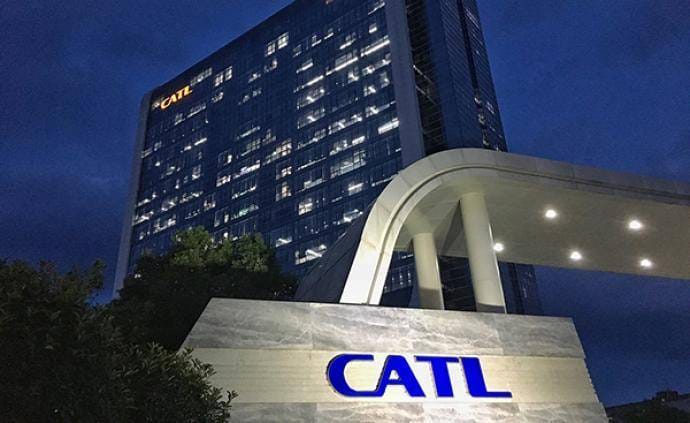
Morgan Stanley has identified what it calls an unsustainable market disconnect pressuring Contemporary Amperex Technology, with auto analysts anticipating weak EV demand while materials analysts expect robust battery component pricing – a contradiction the bank argues cannot persist.
In a research note published January 12, 2026, analysts Jack Lu, Kaylee Xu, and Yiyi Wang maintained their Overweight rating on the world's largest battery maker with a price target of RMB 490 (US$67.80), representing 35% upside from the current RMB 361.68. Yet they acknowledge the stock has become "one of the least preferred" amid investor concerns over margin compression and cost pass-through capabilities.
The Core Contradiction
The crux of Morgan Stanley's argument centers on what it views as mutually exclusive market expectations. Auto sector analysts project sluggish EV demand growth, implying slower battery volume expansion. Meanwhile, materials analysts forecast strong demand driven by energy storage systems (ESS), justifying elevated prices for lithium, nickel, and other battery raw materials.
"This divergence has pressured CATL's positioning," the analysts wrote, but added bluntly: "We believe this view is irrational. If demand were truly weak, CATL would cut orders, and material prices would not remain as strong as they appear."
The bank laid out two scenarios to illustrate the logical impossibility of the current market narrative. In the first, if EV and battery demand proves genuinely weak as automotive analysts suggest, CATL would slash procurement to align with lower production requirements. Such order reductions would inevitably undermine upstream demand, forcing battery material prices downward rather than supporting current elevated levels.
Margin Pressure as Market Clearing Mechanism
In the second scenario, if CATL truly cannot pass through rising input costs to customers, the company would rationally reduce procurement volumes to protect margins. This would trigger "a secondary correction in material prices, as upstream suppliers face oversupply," Morgan Stanley argued.
Critically, the analysts noted that marginal-cost producers – typically tier-2 battery manufacturers – would suffer disproportionately in such an environment. "These players lack pricing power and financial buffers, and if cost inflation cannot be passed through, many would likely exit the market, accelerating industry consolidation."
Both scenarios, Morgan Stanley concluded, demonstrate that material price strength and weak battery demand cannot coexist sustainably. "Market expectations will converge as fundamentals normalize," the analysts predicted.
Historical Track Record Supports Pricing Power
Morgan Stanley pointed to CATL's demonstrated ability to navigate previous cost inflation cycles, which they characterized as "even more severe than the current one." This historical precedent reinforces their confidence in the company's margin protection capabilities despite near-term volatility.
The analysts project revenue growth from RMB 410.6 billion in 2025 to RMB 612.4 billion by 2027, with earnings per share advancing from RMB 15.38 to RMB 23.75 over the same period. They expect electric truck (e-truck) and ESS demand robustness to "largely drive earnings growth in 2026/27," along with CATL's elevated exposure to the premium EV segment, which provides greater pricing flexibility.
Valuation Framework
Morgan Stanley employs a 17x EV/EBITDA multiple on 2026 estimated EBITDA of RMB 114.3 billion, implying a 25x price-to-earnings ratio and 1x PEG ratio based on a 25% five-year earnings compound annual growth rate. The methodology aligns with how the bank's global battery analysts value international peers and reflects the average PEG level CATL has traded at over the past three years.
For the Hong Kong-listed shares (3750.HK), Morgan Stanley applies a 10% H-share premium over A-shares, positioned at the midpoint of premiums observed for TSMC and BYD.
Risk Factors
The bank acknowledged multiple risk vectors, including weaker-than-expected EV penetration and ESS adoption, potential competitive threats from emerging battery manufacturers, and geopolitical tensions that could fragment the battery supply chain. Market share erosion represents another downside scenario.
Conversely, upside risks include accelerated EV and ESS deployment, de-escalation of geopolitical pressures, superior margin performance, and faster market share gains than currently modeled.
Morgan Stanley disclosed it has received investment banking compensation from CATL within the past 12 months and expects to seek further compensation for such services in the next three months. The firm beneficially owned more than 1% of CATL's common equity as of December 31, 2025, and managed or co-managed a public offering for the company within the past year.
The disconnect Morgan Stanley highlights reflects broader uncertainty across the Chinese EV and battery value chain as growth rates normalize from pandemic-era expansion. Whether the resolution favors CATL's positioning or validates the more cautious auto sector view will likely depend on ESS market development and the premium EV segment's resilience – two areas where the battery giant maintains structural advantages but faces mounting competitive and macroeconomic headwinds.