
Morgan Stanley Suggests Li Auto to Cut i6 Pricing to Sub-200,000 Yuan Range as Pure EV Push Faces Critical Test
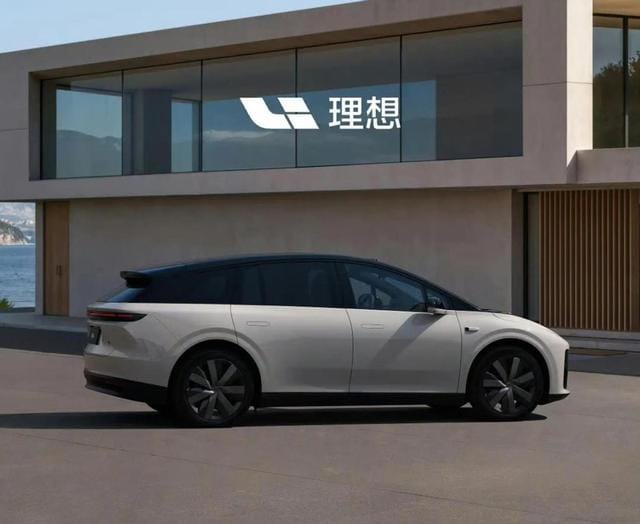
Li Auto Inc. should slash pricing for its upcoming i6 electric SUV to 200,000-250,000 yuan ($27,700−$34,600) from the initially planned 250,000-300,000 yuan range to boost sales volumes, Morgan Stanley said in a research note Thursday. The Wall Street bank called the i6 launch a "critical battle" for the Chinese automaker's pure electric vehicle transition.
The recommendation comes as Li Auto faces mounting pressure following disappointing performance from its i8 model and record booking volumes from competitors. Morgan Stanley analysts said the company must choose between maintaining a 20% gross margin and achieving monthly sales of 20,000 units for its pure EV lineup.
The investment bank maintained its "overweight" rating on Li Auto with a $36 price target, suggesting recent share price declines have reduced downside risks. Analysts view the i6 launch as a potential catalyst for stock recovery.
Morgan Stanley emphasized that aggressive pricing combined with immediate delivery of high-specification variants would be crucial for Li Auto to meet its target of 10,000 monthly i6 sales or 20,000 combined monthly sales across its pure EV models including the i6, i8 and Mega.
Intense Competition Demands Strategic Pricing
The i6 will compete in China's crowded mid-to-large SUV segment against established players including Huawei's Aito M7, Xiaomi's YU7, Tesla's Model Y, Xpeng's G9, Zeekr's 7X and Nio's ES6. The competitive landscape presents significant pricing pressure for Li Auto's new model.
The i6 features a 3,000-millimeter wheelbase, one LiDAR sensor, Thor chip technology, and CLTC range of 660-720 kilometers. While these specifications offer competitive advantages, Morgan Stanley noted the challenging price environment with rivals positioned across similar ranges.
Aito M7 carries a pre-sale price of 288,000-348,000 yuan, Xiaomi YU7 sells for 254,000-330,000 yuan, Tesla Model Y ranges from 264,000-314,000 yuan, and Xpeng G9 is priced at 249,000-279,000 yuan. Morgan Stanley argued that Li Auto's initially planned 250,000-300,000 yuan pricing would struggle to differentiate in this crowded field.
The bank's analysts believe more aggressive pricing at 200,000-250,000 yuan would better position the i6 for volume success, even if it potentially impacts gross margins or affects sales of the company's L6 model.
L-Series Upgrade Urgency Grows
Morgan Stanley identified the aging L-series lineup as Li Auto's primary challenge, with weak sales performance requiring urgent product refreshes. The bank said new extended-range electric vehicles launching in the second half of 2025 will intensify competition, making L-series upgrades more critical.
The investment bank recommended that L-series updates include completely new interior and exterior designs plus 800V electric drive systems. While implementing these changes within 2025 may prove challenging, Morgan Stanley stressed that earlier execution would be preferable.
Analysts positioned L-series upgrades as Li Auto's top priority, noting that product renewal speed directly correlates with market share retention in China's increasingly competitive new energy vehicle sector. The company needs to rapidly rebuild market confidence in its 2026 model cycle while maintaining current product strategies.
Stock Rebound Potential Identified
Morgan Stanley noted that investors have closely monitored Li Auto's moves ahead of the i6 launch, viewing it as another opportunity in the electric vehicle competition. The bank seeks marginal improvements from the i6 release to trigger meaningful share price recovery.
Previous heavy short interest in the stock has created conditions for potential rebounds, according to Morgan Stanley's analysis. The bank's maintained "overweight" rating reflects confidence in Li Auto's long-term prospects despite near-term challenges.
Current valuation metrics show Li Auto trading at 21.7 times earnings based on 2024 figures, with multiples expected to compress to 19.7 times and 12.5 times for 2025 and 2026 respectively, indicating improving valuation attractiveness for investors.