
New Solid-State Battery Advances in China Could Double EV Range
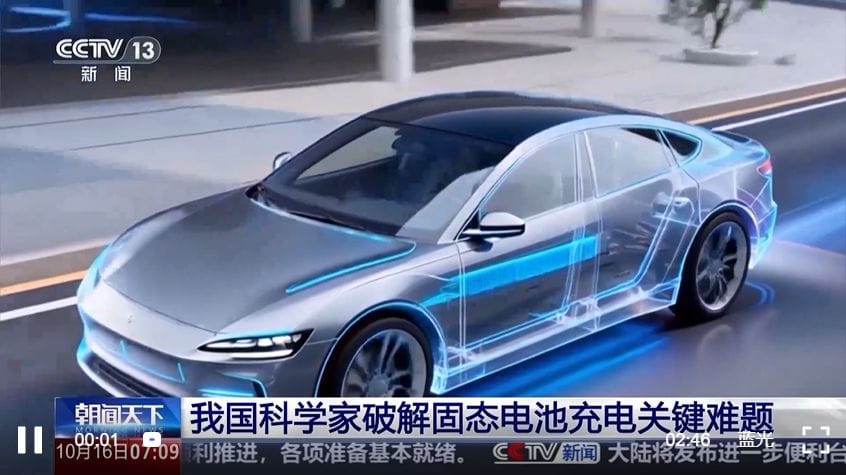
Chinese scientists have announced a series of notable advancements in solid-state battery technology, addressing critical challenges that have hindered its widespread adoption. These breakthroughs could potentially double the driving range of electric vehicles, with researchers suggesting a 100-kilogram battery pack could one day power a car for over 1,000 kilometers, a significant increase from the current 500-kilometer range for a pack of similar weight.
A primary obstacle for all-solid-state lithium metal batteries has been the poor physical contact at the solid-solid interface. The connection between the soft lithium metal anode and the hard, brittle solid electrolyte is often uneven, which impedes the flow of lithium ions and reduces the battery's overall efficiency and performance. Several research teams have now reported distinct solutions to this problem.
A team including researchers from the Institute of Physics, Chinese Academy of Sciences, has developed a method using iodine ions. These ions migrate to the interface during battery operation, acting as a self-healing agent to fill microscopic gaps. This creates a more intimate and stable contact between the electrode and the electrolyte, addressing a key bottleneck for practical application.
In a separate development, scientists at the Institute of Metal Research, Chinese Academy of Sciences, engineered a flexible polymer skeleton for the solid electrolyte. This innovation imparts significant durability, allowing the battery to withstand twisting and bending. By incorporating specific chemical additives into this framework, the team also improved ion transport and reported a potential 86% increase in energy storage capacity.
Meanwhile, a research team from Tsinghua University has enhanced electrolyte stability by modifying it with a fluorine-containing polyether material. The inherent high-voltage resistance of fluorine creates a protective layer on the electrode, preventing electrical breakdown. This significantly boosts safety, with the modified battery successfully passing nail penetration and 120°C high-temperature tests without failure.
These collective advances represent a significant step toward the commercialization of high-performance solid-state batteries, a next-generation technology considered vital for the future of electric vehicles and other applications, such as the emerging advanced air mobility sector.