
NIO ES8's December Surge Exposes China's High-End EV SUV Paradox
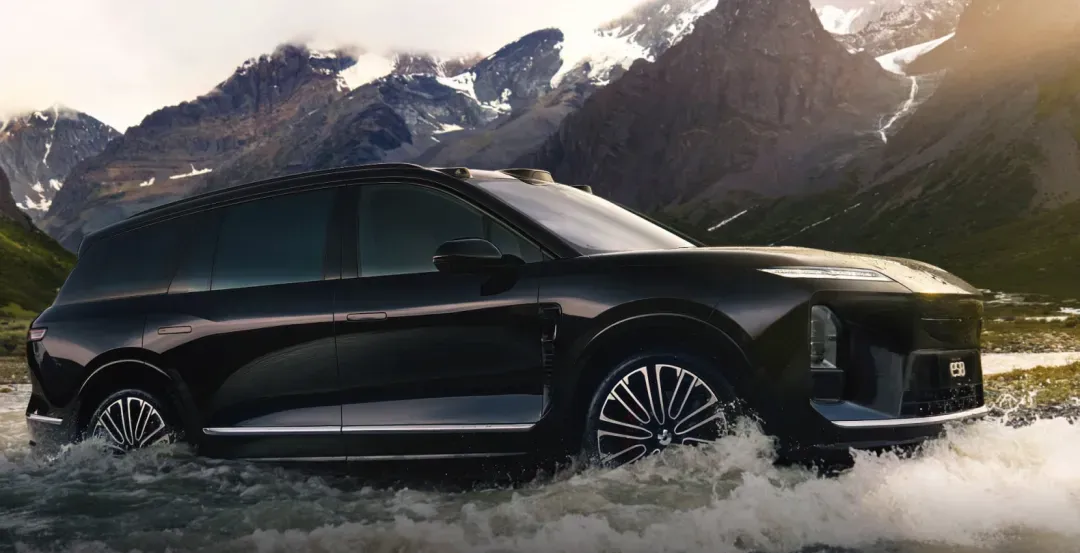
NIO's all-electric ES8 captured the large SUV segment crown in December 2025 with 22,258 deliveries—a 108% month-over-month surge that challenges prevailing market assumptions about premium pure-electric demand. The victory came amid intensifying competition from plug-in hybrid rivals and signals a structural shift in how Chinese automakers are staking territory in the RMB 300,000-plus bracket, where range anxiety traditionally favored dual-powertrain architectures.
Pure-Electric Positioning Against Hybrid Momentum
The ES8's December performance stands in sharp contrast to segment dynamics. While AITO M8 retained second place with 17,123 units and Zeekr 9X secured third with 9,482 deliveries—both offering extended-range electric (EREV) options—NIO's flagship relied exclusively on battery power. This divergence matters: only two vehicles in the top ten, ES8 and Onvo L90, eschewed combustion engines entirely. The ES8's RMB 400,000-plus positioning magnifies this achievement, occurring within a price tier where internal NIO data suggests buyers typically hedge with backup powertrains.
NIO's manufacturing infrastructure explains part of the execution. Vehicle product marketing VP Kang Kai noted in November that ES8 represented the company's fastest production ramp ever. CATL's dedicated supply chain—reportedly allocating three to four battery plants exclusively for NIO's NT3 platform—enabled the 108% month-over-month scaling without delivery bottlenecks that historically plagued high-voltage architecture rollouts. The production maturity contrasts with segment entrants like Voyah Free struggling with 3,154 first-month deliveries despite comparable pricing.
Compressed Competitive Windows in 30-50 Million RMB Tier
December's sales distribution reveals fracturing within the large SUV category. A pronounced gap separates the top two performers (ES8 and M8 combining for 39,381 units) from third-tier contenders—Zhiji LS9 entered at 4,768 units in its first full month, while Livan T11 plateaued at 4,551 despite undercutting competitors by RMB 50,000. This bifurcation reflects diverging buyer priorities: the sub-RMB 300,000 segment prioritizes space-per-yuan metrics, while premium buyers weight battery capacity and voltage architecture more heavily.
New model density will test these boundaries in 2026. SAIC Volkswagen's ID.ERA 9X, Zeekr 8X, and Zhiji LS8 all target the "8-series" SUV designation—vehicles approximating 5.0-5.1 meters in length, positioned between traditional mid-size and full-size categories. This dimensional clustering, borrowed from Ideal Auto's L-series playbook, aims to capture family buyers upgrading from 4.9-meter vehicles without requiring RMB 500,000-plus budgets. AITO M8's 150,000 cumulative sales since launch demonstrate the commercial viability of this sizing strategy, yet also telegraph the crowding ahead.
Purchase Tax Tailwinds and 2026 Policy Reversion
The December spike across multiple nameplates—DENZA N8L up 19.6% to 6,510 units, Zeekr 9X up 16%—correlates directly with China's year-end purchase tax subsidy deadline. This policy cushion, which effectively reduced buyer costs by RMB 18,000-30,000 depending on vehicle price, created artificial pull-forward demand. Several manufacturers, including DENZA, extended private subsidy commitments into January to smooth order book transitions.
The subsidy's expiration introduces margin pressure precisely as technical specifications escalate. Voyah Free's entry at RMB 379,900-459,900 with quad-lidar arrays and tri-motor configurations establishes new equipment baselines that compress pricing flexibility. Zhiji LS9's 450-kilometer pure-electric range and 800V architecture at RMB 332,800 demonstrates how rapidly "premium" feature sets migrate downmarket. AITO M9's January refresh—adding 4D millimeter-wave radar and upgrading to quad-lidar—represents defensive repositioning against these encroachments rather than pioneering new capability tiers.
Overcapacity Risks in Specialized Segment
The large SUV category's appeal—three-row seating, 5.0+ meter length, RMB 300,000+ pricing—simultaneously defines its constraint. China's passenger vehicle market sold approximately 23 million units in 2024, with large SUVs representing roughly 3-4% of total volume. December's top-ten aggregate of 81,841 units suggests annualized segment capacity approaching 900,000-1 million vehicles, yet new entrants from Leapmotor, Xpeng, and SAIC Volkswagen will add production volume into a category where the current leader holds just 22,258 monthly sales.
Onvo L90's 31% month-over-month decline to 4,105 units illustrates cannibalization dynamics. Positioned as NIO's value brand with RMB 179,800 BaaS pricing, L90 competes for the same household budget as parent company ES8 while facing external pressure from Livan T11 and Geely Galaxy M9 below RMB 250,000. The intra-brand tension suggests platform proliferation may be outpacing genuine market segmentation—a risk magnified as Ideal Auto's rumored next-generation L9 and AITO's alleged M9L stretch variant add further SKU complexity.
Ideal L9's December performance—2,732 units representing just 18.3% of its December 2023 volume—serves as cautionary precedent. Despite pioneering the "dad car" category, the model's 42.98-48.98 RMB positioning now faces compression from below (Zhiji LS9) and above (Voyah Free), while lacking the 900V architecture differentiation newer platforms provide. CEO Li Xiang's Q3 earnings call commitment to "entrepreneurial management mode" signals recognition that first-mover advantage erodes rapidly when follower products incorporate newer battery chemistry and semiconductor generations.
By ChinaBiz Insider Analysis Desk