
NIO Posts First-Ever Quarterly Profit, Issues Blowout Q1 Guidance
NIO Inc. has reached a defining financial milestone, reporting its first quarterly operating and net profit since the company's founding, as surging deliveries and disciplined cost cuts transformed the electric vehicle maker's bottom line.
The Chinese automaker posted fourth-quarter 2025 revenue of 34.65 billion yuan, up 75.9% year-on-year, with deliveries climbing 71.7% to a record 124,807 units. Vehicle margin jumped to 18.1%, and the company swung to a Non-GAAP adjusted operating profit of 1.251 billion yuan and adjusted net profit of 727 million yuan — figures that mark a clean break from years of deep losses.
Looking ahead, NIO issued first-quarter 2026 guidance that points to sustained momentum: deliveries of 80,000 to 83,000 units and revenue of 24.48 billion to 25.18 billion yuan, representing year-on-year growth of more than 100%. NIO's American depositary shares rose more than 6% in pre-market trading following the results.
Three-Brand Strategy Drives Record Deliveries
NIO's Q4 delivery surge was powered by all three of its brands operating in concert. Of the 124,807 vehicles delivered, flagship brand NIO contributed 67,433 units, family-oriented brand ONVO added 38,290, and premium compact brand FIREFLY accounted for 19,084.
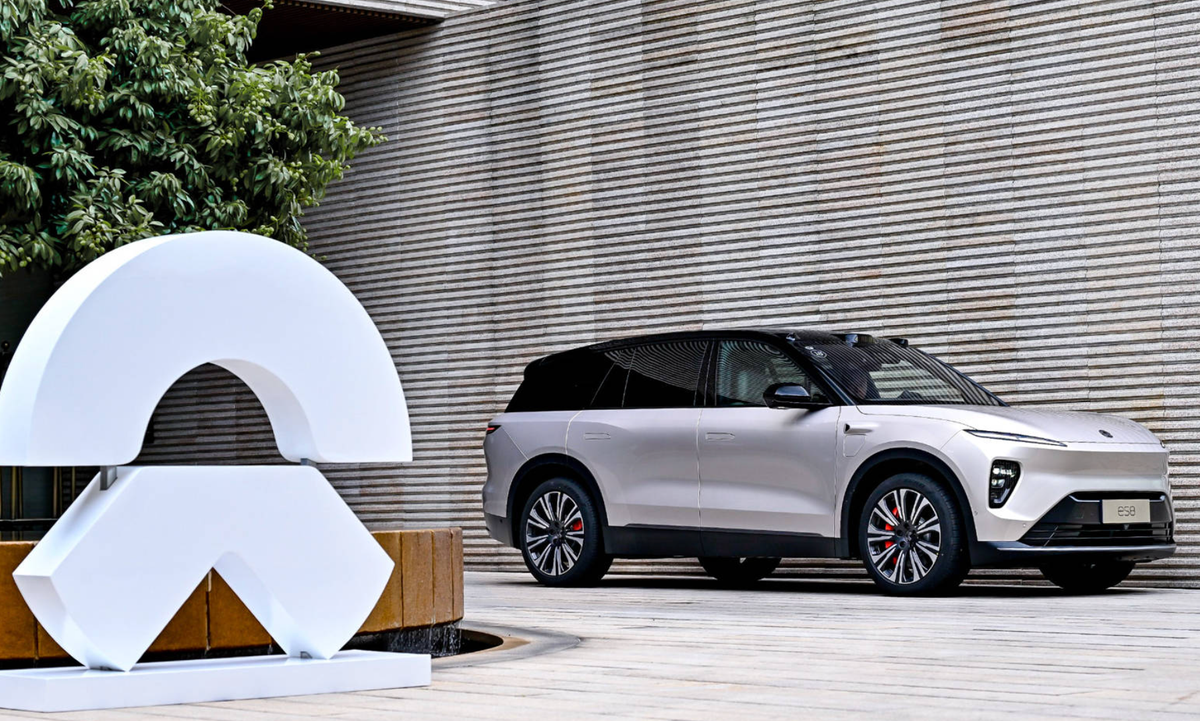
Key products drove the performance across segments. The new NIO ES8 set a monthly delivery record in the above-400,000-yuan price band. ONVO's L90 became the best-selling large all-electric SUV of 2025. FIREFLY held a leading position in the premium small-car segment since its launch. The three brands collectively span the high-end flagship, mainstream family, and boutique compact segments, giving NIO a broader footprint in China's mid-to-premium EV market. The company noted that a more favorable product mix from ONVO and FIREFLY contributed to the improvement in vehicle margin.
Margin Surge Marks a Profitability Inflection
The most consequential development in the quarter was the reversal of NIO's long-standing profitability deficit. Vehicle margin expanded to 18.1% from 13.1% a year earlier and 14.7% in the prior quarter — a 500-basis-point year-on-year improvement — while overall gross margin reached 17.5%.
On a GAAP basis, NIO recorded operating profit of 807 million yuan, compared with an operating loss of 6.03 billion yuan in the same period a year ago. GAAP net profit came in at 283 million yuan, while Non-GAAP adjusted net profit reached 727 million yuan. CFO Qu Yu called the result "a significant milestone in the company's operating performance," attributing the turnaround to delivery growth, product mix optimization, and cost reduction initiatives.
For the full year 2025, NIO's total revenue reached 87.488 billion yuan, up 33.1%, while the net loss narrowed by 33.3% year-on-year.
Operating Leverage Emerges as Cost Cuts Take Hold
Expense discipline was a critical enabler of the quarterly profit. Q4 research and development expenses fell 44.3% year-on-year to 2.03 billion yuan, while selling, general and administrative expenses dropped 27.5% to 3.54 billion yuan. The primary driver was a headcount reduction program launched in the first half of 2025, which directly reduced labor costs across R&D and marketing. Lower design and development spending also reflected the varying development stages of new models.
Over the full year, R&D expenses declined 18.7% to 10.6 billion yuan from 13.04 billion yuan in 2024, while SG&A costs rose only marginally by 2.2% to 16.09 billion yuan. The combination — near-zero growth in operating expenses against a 33% revenue increase — is the core driver of NIO's rapidly improving operating leverage.
On February 26, NIO's autonomous driving chip subsidiary Shenji (GeniTech) closed an external funding round of 2.257 billion yuan. NIO retains a 62.7% controlling stake, with external investors holding 27.3% and equity incentive plans accounting for the remaining 10%. Separately, on March 6, NIO's board approved a grant of approximately 248 million restricted stock units to founder, chairman and CEO William Li, subject to vesting conditions tied to specific market capitalization and net profit targets.
Chairman William Li stated that NIO will continue to invest in twelve full-stack core technologies in 2026, signaling that R&D spending could stabilize or increase even as the company maintains cost discipline.
Cash Position Solid, But Liquidity Warrants Monitoring
As of December 31, 2025, NIO held combined cash, restricted cash, short-term investments and long-term time deposits totaling 45.9 billion yuan (approximately $6.6 billion), providing substantial operational runway.
The company nonetheless addressed going-concern considerations in its filing, a relatively unusual disclosure. Current liabilities of 78.58 billion yuan exceeded current assets of 76.63 billion yuan, leaving the current ratio modestly below 1.0. NIO stated it expects existing resources to be sufficient to fund normal operations for the next twelve months, citing revenue growth, operating efficiency improvements, and available bank credit facilities.
The liquidity picture is improving at the margin. NIO generated positive operating cash flow in both Q3 and Q4 of 2025 — a rare occurrence in the company's history — suggesting the financial pressure is easing. If delivery growth and profitability continue on their current trajectory, the going-concern overhang may ease materially through 2026.
Q1 2026 Outlook: Revenue Set to Double Year-on-Year
NIO's guidance for the first quarter of 2026 significantly exceeded market expectations. The company projects deliveries of 80,000 to 83,000 units, representing year-on-year growth of 90% to 97%, and revenue of 24.48 billion to 25.18 billion yuan, implying year-on-year growth of 103.4% to 109.2%.
The sequential decline from Q4's 124,807 units reflects normal seasonal factors including the Lunar New Year holiday period and does not indicate a reversal in underlying demand. CFO Qu Yu said NIO will continue to improve operational efficiency and optimize cost structures in 2026, with a goal of delivering "stronger and more sustainable results for users, partners and shareholders."