
NIO Eyes Controlled Q1 Loss After Historic Profitability Milestone
NIO is poised for a significant improvement in its first-quarter 2026 financial performance, with projected blended average gross profit margins reaching 17.3% and net losses controlled within RMB 900 million yuan (US$124 million).
The optimistic forecast marks a strategic inflection point for the Chinese electric vehicle manufacturer as it shifts focus from volume growth to profitability enhancement through premium product mix optimization and operational efficiency.
Three Pillars Supporting Margin Expansion
Citigroup analysts identify three primary drivers behind the anticipated margin improvement during what is traditionally a weak selling season for automobiles.
First, sales mix enhancement through higher-end products is expected to lift average selling prices by 6% quarter-over-quarter. The company's premium large SUVs, carrying gross margins of 20-25%, will comprise a greater proportion of total deliveries. The recently launched ES8, with margins approaching 25% in Q4 2025, exemplifies this strategy.
Second, inventory rationalization—specifically digesting accumulated battery and memory component stockpiles from previous quarters—is projected to stabilize margins by approximately 2-3 percentage points sequentially.
Third, ongoing optimization of selling, general and administrative expenses alongside research and development intensity will further compress the cost structure. Management indicated its intention to maintain SG&A expenses within 10% of total revenue in 2026 through efficiency improvements, though absolute spending will increase with sales growth.
Aggressive Product Roadmap Supports Volume Targets
NIO maintains its 40-50% delivery growth target for 2026, underpinned by an extensive new model pipeline across its brand portfolio.
The flagship NIO brand plans to launch the ES9 and refreshed versions of the ET5, ET5T, ES6, and EC6 models in the second quarter. A large five-seater SUV based on the all-new ES8 platform will follow in Q3. The company will field five large premium SUVs by year-end.
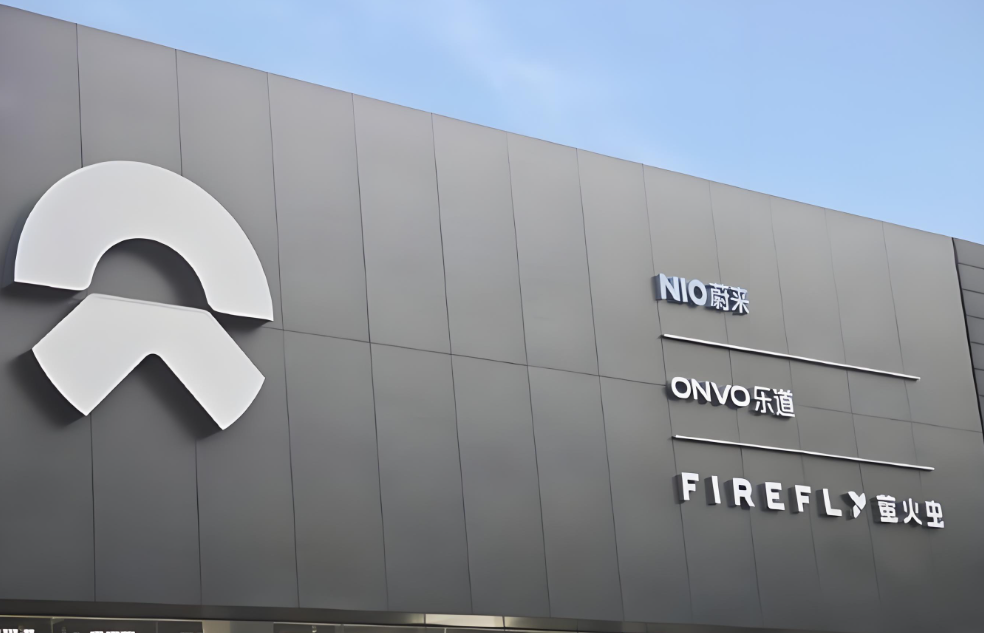
The mass-market Onvo sub-brand will introduce the L80 in Q2 2026 while upgrading existing L60 and L90 models. Meanwhile, the Firefly brand will spearhead NIO's international expansion efforts this year.
Company management emphasized that strong early-year performance and the comprehensive large SUV lineup position it favorably to achieve its annual volume objectives despite traditional Q1 seasonality.
Technology Investments Bearing Fruit
NIO's vertical integration strategy continues advancing across multiple technology fronts.
Shenji, the company's in-house semiconductor subsidiary, completed a Series A financing round of RMB 2.257 billion yuan in February 2026, valuing the business at over RMB 8 billion yuan (US1.1 billion) post-investment. Its second-generation 5nm automotive-grade chip has completed tape-out and is preparing for mass production, offering performance equivalent to three NVIDIA Orin X chips at lower cost.
The chip's applications extend beyond smart driving to robotaxi and embodied artificial intelligence fields. Shenji will supply chips for both internal NIO use and external original equipment manufacturers, with commercial discussions currently underway with third-party automakers.
On the software front, NIO's updated World Model incorporating closed-loop reinforcement learning drove smart driving usage time up more than 80% month-over-month in February 2026. The company plans two major model upgrades in Q2 and Q4 this year with increased computing power investment, focusing on usage ratios and accident mitigation as core key performance indicators.
Cash Flow Turns Positive
Financial discipline improvements are materializing in operating metrics. NIO achieved quarterly positive free cash flow in both Q3 and Q4 2025, with full-year 2025 operating cash flow turning positive.
Management indicated its target to achieve full-year 2026 non-GAAP operating profit break-even, supported by volume growth and improved product mix.
The company's extensive charging infrastructure continues expanding, with 3,815 battery swap stations and over 28,000 superchargers deployed globally. NIO plans to add approximately 1,000 new swap stations annually, positioning battery swapping as both a customer convenience feature and a distributed energy storage business opportunity.
Services Business Contributes
NIO's services segment, encompassing battery subscriptions, charging infrastructure operations, and value-added offerings, became profitable in 2025 with revenue exceeding RMB 10 billion yuan (US$1.4 billion). Margin expansion in this business line is expected to continue in 2026 as scale economics improve.
Management emphasized it currently has no plans to pass raw material cost inflation to consumers, instead relying on supply chain efficiency and high-margin large SUV sales to absorb input price increases. The company expects to maintain Q1 2026 vehicle gross margins at Q4 2025 levels despite the traditional low season, supported by favorable product mix toward the high-margin ES8.
Quarterly research and development investment will be maintained at RMB 2-2.5 billion yuan (US$276-345 million), with spending dynamically adjusted based on return on investment and business requirements.
Citigroup maintains its Buy rating on NIO shares with a target price of US 47.3 0f HongKong−listed shares and US6.20 for US-listed American depositary receipts.