
NIO Races Against Time to Hit Make-or-Break Q4 Profit Goal
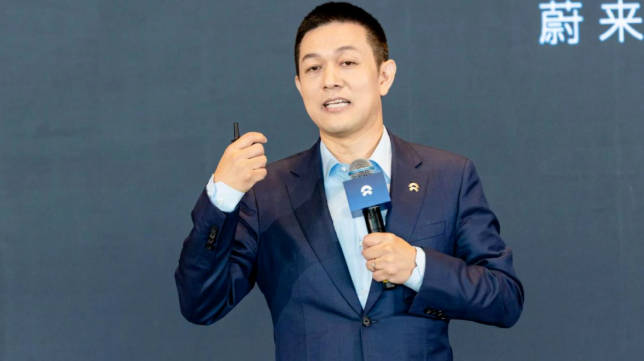
Nio Inc. is in a high-stakes race to achieve profitability in the fourth quarter of 2025, a critical target its chief executive has set to ensure the electric vehicle maker’s long-term survival amid mounting losses and intensifying pressure on its cash reserves.
The push has been elevated to a top corporate priority, with CEO William Li recently telling employees in an internal meeting that hitting the Q4 profitability goal is a "must-achieve" target and the top item on his personal performance review. He framed the objective not as a move to appease outsiders, but as a "cornerstone for the company's long-term sustainable development."
The urgency stems from Nio’s precarious financial position. The company has accumulated losses exceeding 120 billion yuan (US$16.6 billion) since its inception and posted a loss of 10.4 billion yuan in the first half of 2025 alone. With cash reserves at 27.2 billion yuan as of the end of the second quarter, failure to staunch the cash burn could exhaust its funds within 16 months.
Compounding the pressure, Nio is facing a lawsuit from Singapore’s sovereign wealth fund, GIC, over allegations of inflated revenue. The legal challenge, which Nio denies, targets the very investor confidence the automaker desperately needs to maintain as it continues to rely on capital markets for funding.
A Three-Pronged Strategy
To meet the ambitious profitability target, Li has outlined a three-pronged strategy focused on execution in the final 70 days of the year: boosting vehicle deliveries, securing the supply chain while cutting costs, and delivering high-quality software to enhance user experience.
The primary focus is on sales volume. “Every additional car delivered increases the probability of profitability this year,” Li stated. The company will concentrate its marketing efforts on the new ES8 SUV and the Ledao L90 model, its sub-brand’s latest vehicle. Nio will not release any new models in the fourth quarter besides an updated version of the Ledao L60.
Securing the supply chain is the second pillar of the plan, aimed at avoiding the production bottlenecks that hampered deliveries of the Ledao L60 and led to lost orders. Li has set a target for the ES8’s production capacity to exceed 15,000 units per month in December. This push for efficiency is paired with an aggressive cost-reduction campaign, with Li personally involved in scrutinizing expenses "to the fourth decimal place" and implementing an organizational revamp where business units operate with independent accounting.
Finally, the emphasis on delivering “high-quality software on time” reflects a strategic need to maintain user trust, particularly as public scrutiny of autonomous driving safety intensifies. For a premium brand like Nio, protecting its reputation for safety and user experience is considered a non-negotiable baseline.
Specter of Accounting Allegations
Just as Nio mobilizes for its all-out push for profitability, a legal challenge has emerged that threatens to undermine investor confidence. Singapore’s GIC has filed a lawsuit against Nio and its senior executives, alleging the company inflated its revenue and net income through its battery-asset entity, Wuhan Mirattery Battery Asset Co., Ltd.
The news sent Nio’s stock plunging. The company responded swiftly, stating the lawsuit is based on unfounded allegations from a 2022 report by short-seller firm Grizzly Research. At the heart of the dispute is Nio's Battery-as-a-Service (BaaS) model. Grizzly alleged that by selling batteries to Mirattery, a related company, and recognizing the revenue upfront, Nio was improperly booking future years of battery subscription fees. Nio maintains that its accounting is compliant with financial standards because control of the batteries was fully transferred at the point of sale.
While the case awaits a judicial outcome, its timing could not be worse. It strikes at Nio’s most vulnerable point: its reliance on capital market support. The company has conducted three public financings in 2025, including a US$1.16 billion equity issuance in a two-tranche deal in September. For a business that has yet to achieve sustainable profitability, a crisis of investor trust could prove more destructive than a temporary dip in sales.
A Steep Climb to Profit
Achieving fourth-quarter profitability requires Nio to clear two significant hurdles laid out by Li earlier in the year: hitting a combined monthly sales volume of 50,000 units for its Nio and Ledao brands, and reaching a consolidated gross margin of 17-18%.
The sales challenge is formidable. The company set a new quarterly delivery record of 87,000 vehicles in the third quarter, with September deliveries reaching 34,749 units. However, this is still considerably short of the 50,000 monthly target. To hit its internal Q4 goal of 150,000 deliveries, Nio will need to sell nearly 70% of the volume it achieved in the first nine months of the year. Bright spots include strong initial orders for the new ES8, which have surpassed 100,000 units, and the rising volume of the Ledao L90.
The path to a higher gross margin is equally steep. Nio’s overall gross margin in the second quarter was 10%, a significant gap from its 16-17% target for the fourth quarter. Cost-cutting measures are already in effect, including the closure of two premium "Nio House" showrooms in Guangzhou and reductions in customer perks. Li has hinted that these efforts are bearing fruit, noting that third-quarter results, while not yet finalized, have “laid a foundation for Q4 profitability.”