
Nio’s Weekly Sales Top 10,000 as Turnaround Strategy Gains Traction
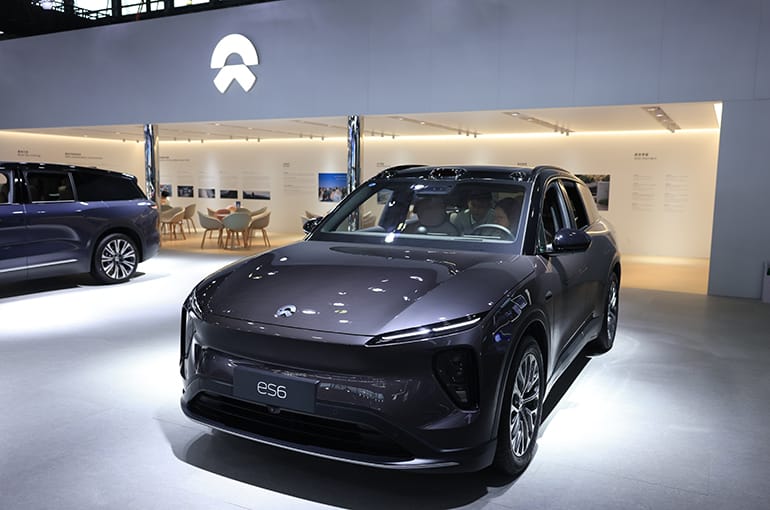
NIO Inc.’s weekly vehicle deliveries have surpassed the 10,000-unit mark for the first time, signaling that the electric vehicle maker’s multi-brand strategy and steadfast investment in core technologies are yielding significant results in a fiercely competitive market.
For the week of October 13-19, the Chinese automaker delivered a combined total of over 10,000 vehicles across its three brands, according to data released by industry observers. The figures include over 4,000 units from its premium Nio brand, more than 5,000 from its mainstream family-focused Ledao brand, and over 1,500 from its Firefly brand targeting the compact car segment.
The sales surge marks a notable rebound for NIO, which faced market skepticism at the beginning of 2025. The performance contrasts with competitors who have increasingly relied on aggressive price cuts or adopted range-extender technologies to boost sales. Nio’s achievement suggests its long-term focus on the pure-electric route, backed by an extensive battery-swapping network, is gaining market acceptance.
The strong delivery numbers bolster the company's prospects of achieving its stated goal of single-quarter profitability in the fourth quarter of 2025. The growth, driven by key models like the Ledao L90 and a revamped ES8, indicates that NIO’s substantial upfront investments in its product and service ecosystem are beginning to translate into market-share gains.
Strategic Focus, Tactical Flexibility
NIO's recent success is attributed to a strategy of maintaining long-term technological conviction while flexibly adapting its product offerings to evolving consumer demands. William Li, NIO's founder, chairman, and CEO, has emphasized that while the company's commitment to its technology roadmap is unwavering, product definitions must evolve to meet user needs.
This approach is evident in NIO’s continued expansion of its battery-swapping infrastructure, a core part of its pure-electric strategy. Despite earlier doubts about the model's viability, the company increased its network of battery-swap stations to over 3,500 by September 2025, a 13% increase from February. The company’s commitment extends to remote regions, underscoring its goal of making battery swapping as convenient as refueling a conventional car. The market has also shown signs of shifting in NIO’s favor, with September data indicating that sales growth for pure-electric vehicles (up 32% year-over-year) is outpacing that of plug-in hybrids and range-extender models, which saw sales decline.
While holding firm on its technology, NIO has made tactical adjustments. The July launch of the Ledao L90, a large three-row SUV with a battery-as-a-service option starting under RMB 180,000 yuan (approximately US$24,800), resonated strongly with family buyers. It sold over 20,000 units within 60 days of launch. The recently updated Nio ES8 has also seen strong demand, appealing to users seeking a vehicle for both business and family use.
System-Wide Victories
The automaker's performance is increasingly driven by the combined strength of its product, infrastructure, and user community systems, rather than a single blockbuster model. This integrated approach is a key differentiator in a market where rivals often rely on individual product successes.
In its product lineup, the premium Nio brand, the mass-market Ledao, and the boutique Firefly brand work in concert. The Nio ES8 and Ledao L90, for instance, have established a strong presence in the large three-row pure-electric SUV segment at different price points. Meanwhile, the Firefly model has carved out a niche in the premium compact car market.
NIO’s battery-swapping network serves as a critical infrastructural advantage for all its brands. Li has revealed that fifth-generation stations, set to begin construction early next year, will be compatible with Ledao, Firefly, and third-party brands, further solidifying its ecosystem. This aligns with Chinese government policy, which supports a "one-third share" among battery swapping, supercharging, and home charging solutions.
The company also leverages a highly engaged user base as a form of "soft power." At its recent NIO Day event, the company featured car owners, not professional performers, to showcase its products and brand culture, demonstrating a level of brand loyalty that goes beyond traditional marketing.
Path to Profitability and Long-Term Growth
With sales momentum building, NIO has reaffirmed its focus on achieving profitability. CEO William Li has repeatedly stated that the company must turn a profit in the fourth quarter of 2025. To achieve this, NIO is concentrating on marketing key models, securing its supply chain, implementing cost reductions, and ensuring timely software delivery.
These efforts are supported by internal organizational reforms. The company has implemented a "Customer-Based Unit" (CBU) structure, creating independently operated business units to improve efficiency and accountability. NIO’s CFO, Qu Yu, stated that comprehensive cost-saving measures showed initial results in the second quarter, with operating losses narrowing by over 30% quarter-over-quarter, excluding restructuring expenses. The company also plans to optimize R&D spending, aiming to reduce quarterly expenses to between 2 billion and 2.5 billion yuan by 2026, down from 3.007 billion yuan in Q2 2025, while improving output.
A critical mid-term goal is to resolve production bottlenecks. The current sales growth is expected to increase NIO’s leverage with suppliers. The company plans to ramp up monthly production capacity for the ES8 model to 15,000 units and its total brand capacity to 25,000 units by the end of 2025.
NIO's long-term competitiveness hinges on its deep technology investments, which total over 60 billion yuan ($8.3 billion) since its founding in 2014. Innovations stemming from this investment include a 240-liter front trunk in the L90, made possible by component miniaturization, and self-developed automotive chips that reduce costs per vehicle by over 10,000 yuan. These technological gains have demonstrated an ability to enhance product value, with the new, higher-spec ES8 launching at a price nearly 130,000 yuan lower than its predecessor.