
NVIDIA Embeds Itself in China's Humanoid Supply Chain With Unitree H2 Plus Launch
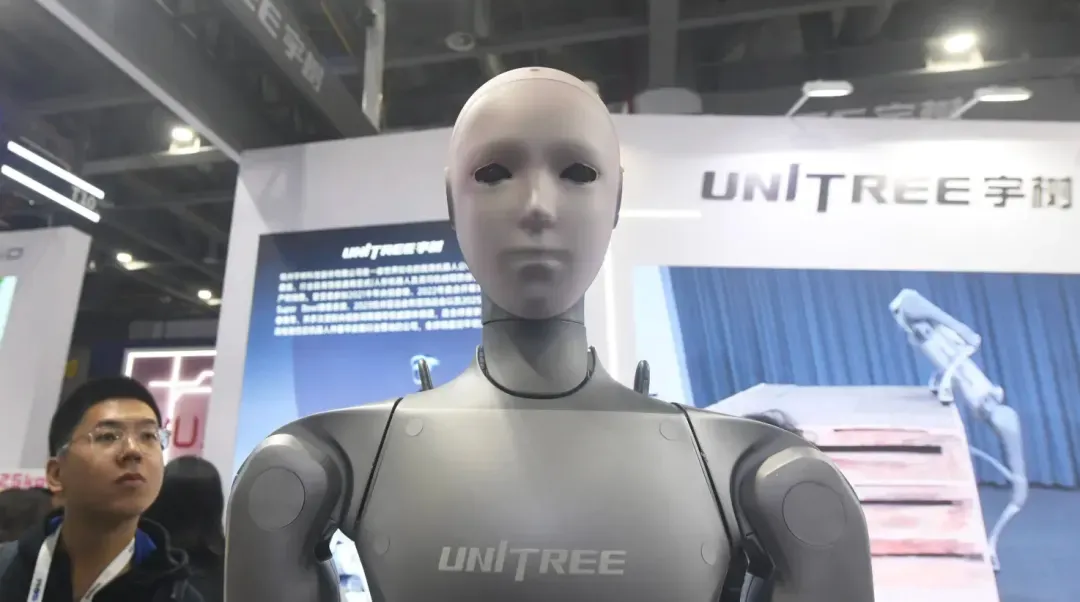
NVIDIA is deploying its most aggressive move yet to dominate the physical AI stack, partnering with Unitree Robotics to release the H2 Plus — a fully integrated humanoid reference design that pairs Chinese-built hardware with American AI computing infrastructure, targeting a commercial launch in 2H26.
The announcement, made by NVIDIA Chief Executive Jensen Huang at the GTC Taipei conference on June 1, marks a strategic escalation beyond chip sales: NVIDIA is now co-authoring the hardware blueprint that competing robotics developers will be measured against. Unitree's marketing director Huang Jiawei confirmed to reporters on June 2 that the H2 Plus will ship in the second half of this year, with the defining feature being what the company calls a dramatically upgraded "intelligent brain" — NVIDIA's own compute platform embedded at the core.
The timing is not incidental. Morgan Stanley analysts, in a May 14 report, projected China's humanoid robot annual shipments will more than double in 2026 to approximately 28,000 units — the highest volume of any single market globally — describing the sector as a potential "next pillar supporting China's manufacturing and export ecosystem." NVIDIA, with the H2 Plus, is positioning itself as the indispensable infrastructure layer before that demand inflection fully materializes.
Dissecting the Stack: Who Builds What
The H2 Plus is a three-party integration that reveals how the global humanoid supply chain is crystallizing. Unitree Robotics provides the mechanical body: the H2 humanoid frame standing approximately 1.8 meters tall and weighing roughly 68 kilograms, with 31 degrees of freedom across the main body. Singapore-based Sharpa contributes the five-fingered dexterous hands, each carrying 25 degrees of freedom — a specification that signals the system is designed for manipulation tasks, not merely locomotion.
NVIDIA supplies the entire computational and software layer. The compute substrate is the Jetson AGX Thor T5000, built on NVIDIA's Blackwell GPU architecture, equipped with 128GB of memory and capable of up to 2,070 teraflops of FP4 floating-point performance. Sitting atop that hardware is the Isaac GR00T foundation model — NVIDIA's robot-specific AI framework that handles advanced reasoning and motor control — along with a complete suite covering data generation, physics simulation, and deployment environments.
Unitree CEO Wang Xingxing described the combination as providing development teams "a validated starting point for building robot skills and deploying them in real-world scenarios" — language that underscores the reference design's role as an accelerant for third-party application developers, not a finished consumer product.
Solving the Data Problem That Blocks Physical AI Scaling
Huang used the GTC Taipei stage to articulate what he called the fundamental bottleneck in physical AI development: the absence of first-person-perspective training data. The vast majority of video data available globally is captured from third-person viewpoints, while robots require egocentric data — footage and sensor streams from the robot's own vantage point — to train effective manipulation and navigation policies.
To address this, NVIDIA simultaneously unveiled Cosmos 3, a world foundation model described as capable of understanding the physical environment from both first- and third-person perspectives. Cosmos 3 is designed to generate synthetic training data at scale, effectively manufacturing the first-person datasets that real-world robot deployment currently cannot produce fast enough.
The strategic logic here is direct: if NVIDIA controls the simulation environment that generates training data, every robotics team building on that synthetic pipeline becomes a recurring customer for NVIDIA compute — both for simulation workloads and for inference at the edge.
Replicating the CUDA Playbook in Robotics
NVIDIA's approach to humanoid robotics is a structural echo of how CUDA captured the AI training market over the preceding decade. By releasing reference designs and open development platforms, NVIDIA lowers the barrier to adoption while ensuring that the software ecosystem — Isaac GR00T, Cosmos, the Omniverse simulation stack — runs most efficiently on NVIDIA silicon.
The H2 Plus is the latest and most visible instance of this strategy. Critically, Unitree is not NVIDIA's only Chinese partner executing this playbook. Zhiyuan Robotics, Galaxy General Robotics, and UBTECH Robotics have each adopted the Jetson AGX Thor mass-production module to power their latest hardware platforms. The pattern indicates that NVIDIA's compute standard is becoming the de facto baseline specification for China's tier-one humanoid manufacturers — a market-structure outcome with significant implications for any competitor attempting to offer an alternative AI compute platform in this segment.
Huang has previously forecast that "physical AI" could evolve into a multi-trillion-dollar market. In comments to investors last month, he projected NVIDIA's robotics business will scale rapidly over the next five years. The H2 Plus, priced for research institutions including Stanford University and ETH Zurich, seeds that pipeline at the academic level — where the engineers who will design the next generation of commercial systems are currently being trained.
Impact Assessment: What Investors and Supply Chain Participants Should Watch
For investors tracking the humanoid robotics theme, the H2 Plus launch crystallizes three near-term indicators worth monitoring. First, whether the H2 Plus commercial pricing — not yet disclosed — positions it competitively against standalone research platforms from Boston Dynamics or Agility Robotics, which would signal NVIDIA's appetite for direct market share rather than pure platform licensing. Second, the rate at which Chinese OEMs beyond the current four adopt Jetson AGX Thor as their standard compute module, which would validate NVIDIA's platform lock-in thesis in the world's highest-volume humanoid market. Third, the adoption curve of Cosmos 3 among non-NVIDIA hardware ecosystems — if competing manufacturers begin using NVIDIA's simulation stack even on non-NVIDIA inference hardware, it would represent a software moat that transcends the chip cycle.
The H2 Plus is, at its core, a reference design. But in markets where standards are still being written, the entity that authors the reference often ends up writing the rules.
Related Coverage:
China's Unitree Launches H2 Robot, Upping Ante in Humanoid Race