
PDD Pivots to ‘Rational Growth’ as Temu Shrugs Off Tariff Jitters
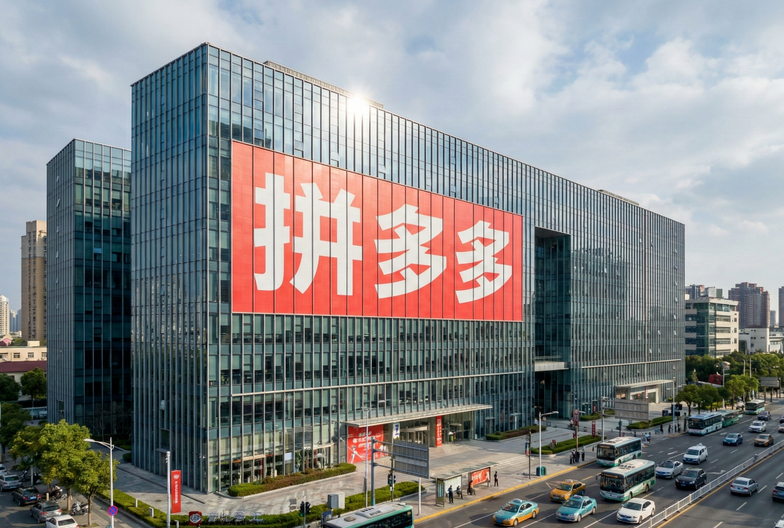
PDD Holdings Inc. has traded its trademark volatility for calculated stability, delivering a fourth-quarter 2025 report that signals a decisive strategic shift: the domestic e-commerce cash cow is maturing, while the global engine, Temu, has successfully navigated the post-tariff storm to become the primary driver of future valuation.
The company reported revenue of RMB 123.9 billion (US$17.2 billion) for the quarter, a 12% year-over-year increase that aligned closely with analyst estimates. While the days of triple-digit hypergrowth are over, the results quell investor fears regarding the sustainability of its overseas expansion. The data suggests Pinduoduo has evolved from a disruptor burning cash into a disciplined operator balancing domestic saturation with aggressive—yet targeted—global scaling.
Domestic Deceleration Signals Policy Pivot
The core domestic business is clearly feeling the macro headwinds. Advertising revenue, a proxy for merchant sentiment on the main app, grew just 5%, missing the Bloomberg consensus of 8%. However, this deceleration reveals a structural resilience compared to rivals like JD.com and Alibaba.
As the government-backed "National Subsidy" programs retreated in late 2025, PDD’s competitors—who relied heavily on these subsidies to prop up GMV—saw sharper retractions. PDD’s lower reliance on state subsidies allowed it to weather the withdrawal with less friction. Furthermore, the looming strict enforcement of merchant tax compliance, set to centralize reporting by October 2025, poses a new challenge. While this may squeeze margins for smaller merchants, PDD’s algorithm-driven traffic allocation creates a natural selection process that is less dependent on forced pricing, potentially insulating the platform from the worst of the regulatory shock.
Temu: The Valuation Anchor
The narrative surprise lies in Transaction Services revenue, which surged 19% to RMB 63.9 billion (US$8.9 billion), beating expectations. This metric effectively tracks Temu’s performance. The beat confirms that the US tariff shocks of 2025 were a temporary speed bump rather than a roadblock.
With US user activity recovering to pre-tariff levels and legal challenges mitigating some levies, Temu is no longer just a cash-burn story. The unit is pivoting toward a semi-managed model and expanding rapidly in Europe and Latin America. Analysts estimate Temu’s GMV grew approximately 50% in the quarter. This resurgence strengthens the case for a Sum-of-the-Parts (SOTP) valuation, where Temu is priced as a standalone high-growth asset rather than a drag on group margins.
Capex Over Buybacks
Investors hoping for immediate capital returns may be disappointed. Management announced the formation of a "New Pin-Mu" division, backed by an initial RMB 15 billion (US2.1billion) injection and a planned RMB 100 billion (US13.9 billion) investment over three years. This initiative aims to integrate the supply chains of Pinduoduo and Temu to build a proprietary global brand infrastructure.
While this suppresses short-term profitability—evident in the 10% rise in marketing expenses and continued gross margin pressure (55.5%)—it signals PDD is playing the long game. By entrenching its supply chain globally, PDD is building a moat that goes beyond mere price subsidies.
Related Coverage:
PDD's Core Ad Growth Slumps to Single Digits, Fueling Maturity Concerns
PDD Holdings: Temu’s Global Blitz Masks a Domestic Profit Squeeze