
"Phase 2.0": UBS Sees Chinese Automakers Capturing One-Third Of Global Market By 2030 As Local Production Ramps Up
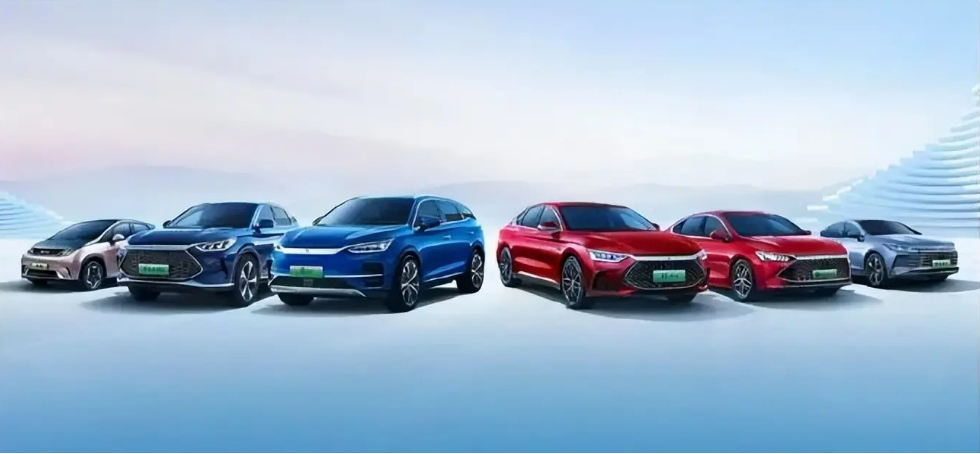
In a comprehensive research note released this week (December 16, 2025), UBS Global Research outlines a pivotal shift in the global automotive landscape. While Western policymakers busy themselves erecting tariff walls, China’s automotive juggernaut is quietly executing a strategic pivot. The report, titled "Entering 2.0 stage of overseas expansion," argues that Chinese automakers have graduated from simple export-led growth to a sophisticated era of localized manufacturing and brand entrenchment.
For investors and industry observers, the takeaway is stark: despite rising protectionism in the US and EU, Chinese manufacturers are not retreating. Instead, they are embedding themselves deeper into the global supply chain, with UBS predicting they will control 33% of the global auto market by 2030, generating the majority of their profits outside of China.
From Export to Entrenchment
The speed of China’s ascent has been relentless. UBS analysts note that after aggressive growth saw overseas sales surge from 1 million units in 2020 to 6 million in 2025, the "Phase 1" strategy of flooding markets with exports is evolving.
"We see Chinese carmakers entering a second phase of their global strategy, characterized by strengthening mainstream brand recognition and expanding localized manufacturing... We think Chinese carmakers can capture one-third of global auto market share and generate the majority of their profits from overseas by 2030."
This "Phase 2.0" is defined by capital expenditure and physical footprints. Companies like BYD and Great Wall Motor are moving beyond shipping containers to building factories in Brazil, Thailand, Indonesia, and Hungary. This shift is critical: it serves to bypass tariff barriers (such as the EU's 21% additional duty) and mitigate shipping costs, effectively neutralizing the West's primary defense mechanisms.
The Profit Arbitrage: Why Overseas Matters
Perhaps the most compelling aspect of the UBS report is the divergence in profitability. The domestic Chinese market remains a brutal arena of price wars and saturation. In contrast, overseas markets offer a massive arbitrage opportunity.
UBS highlights that despite higher costs in logistics and tariffs, Chinese OEMs are seeing significantly fatter margins abroad. BYD, for instance, is seeing a gross profit margin (GPM) on overseas sales that doubles its domestic performance.
"BYD made 17.7% GPM on domestic sales of cars with RMB 133,000 yuan (US$18,472) ex-factory ASP, compared to 27.3% GPM on overseas sales with RMB 179,000 ex-factory ASP... Overseas markets are generally more attractive than domestic."
This creates a powerful incentive loop: cash flow from high-margin exports funds the R&D and price wars necessary to survive the consolidation within China.
Navigating Geopolitics and "No-Go" Zones
The report does not shy away from the geopolitical friction points. The US and Canada are essentially written off as "no-go" markets due to prohibitive 100% tariffs and data security restrictions. The European Union remains a battleground, currently levying significant duties.
However, the "Global South" tells a different story. In markets like Brazil, Australia, and across ASEAN, Chinese brands are rapidly seizing market share from legacy Japanese and Western incumbents.
"Despite rising protectionism by developed markets... Chinese cars have been continuously gaining market share. In relatively political/economic neutral regions like ASEAN and LatAm, Chinese cars are increasingly being bought by middle class families not only as value-for-money, but increasingly as technology innovative and energy efficient choices."
For example, in Brazil—a market of over 2 million cars annually—Chinese brands have already secured over 10% market share, led by BYD and Chery Automobile. Similarly, in the tariff-free Australian market, Chinese brands are approaching a 20% share.
The Valuation Disconnect
Despite commanding over 60% of the global EV market and 30% of global auto sales, Chinese automakers are currently valued at just 12% of the global OEM market capitalization. UBS suggests that the market is pricing in excessive pessimism regarding domestic demand and policy risks, ignoring the structural shift in export profitability.
Key players like Geely and SAIC Motor are leveraging different strategies—from capital operations to leveraging British legacy brands (MG)—to penetrate these markets.
The Bottom Line
The narrative that tariffs will strangle China's EV ambitions appears increasingly flawed. As UBS notes, the "2.0 stage" is about localization. By building factories inside the tariff walls of Europe and South America, Chinese firms are becoming local employers and taxpayers, making them harder to excise politically.
If the UBS forecast holds—that one in every three cars sold globally in 2030 will be Chinese-branded—the current trade friction is merely a speed bump in a fundamental restructuring of the global automotive manufacturing base.